
Search News
Industry Portal
Hot Articles
Smart Streetlights: Key Features That Reduce Maintenance Downtime
Time
Click Count
Smart Streetlights: Key Features That Reduce Maintenance Downtime
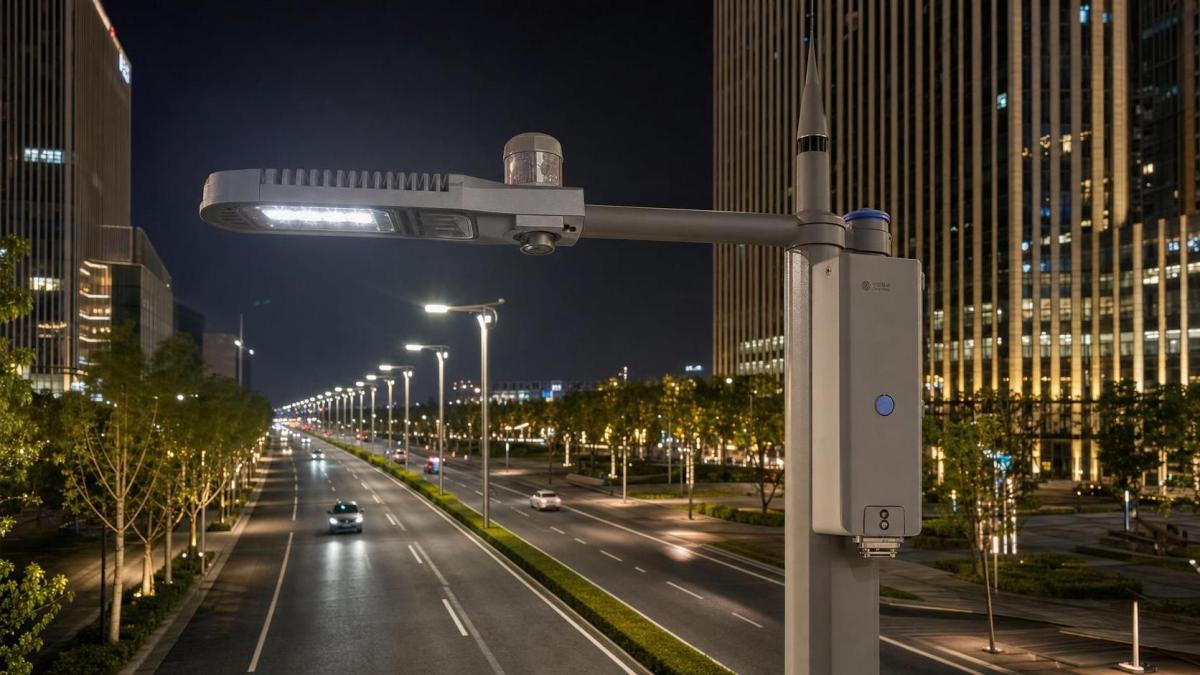
Smart streetlights now carry a bigger job than basic illumination.
They support traffic safety, public security, and daily urban continuity.
For infrastructure teams, the real issue is not only power savings.
It is whether smart streetlights stay online with fewer truck rolls and faster repair cycles.
From recent market shifts, one signal is clear.
Cities no longer evaluate smart streetlights by fixture price alone.
They compare lifecycle uptime, fault visibility, parts replacement speed, and long-term service cost.
That also means maintenance downtime has become a core procurement metric.
The best smart streetlights combine edge controls, connected diagnostics, rugged hardware, and easy field service.
When those features work together, outages shrink and maintenance planning becomes far more predictable.
Why Maintenance Downtime Matters More Than Fixture Cost
A low upfront price can hide expensive operational weakness.
If one failure needs a site visit, lift access, lane control, and manual diagnosis, costs rise quickly.
In practice, downtime also affects public trust.
Dark road sections increase accident risk and create complaints long before annual energy reports matter.
For large portfolios, even a small failure rate becomes a scheduling problem.
That is why smart streetlights should be selected as serviceable infrastructure, not just efficient luminaires.
Downtime usually comes from four weak points
- No remote fault visibility, so teams discover problems too late.
- Non-modular hardware, so small failures require full fixture replacement.
- Poor environmental protection, causing corrosion, water ingress, or driver failure.
- Closed software ecosystems that complicate integration and spare parts planning.
Remote Diagnostics: The Fastest Way to Reduce Service Delays
Remote diagnostics is often the most valuable smart streetlights feature for uptime.
Instead of waiting for public reports, operators can see failures in near real time.
More importantly, they can see the type of failure before dispatching a crew.
That changes maintenance from reactive guesswork to targeted repair.
What strong diagnostics should include
- Driver status, voltage anomalies, power quality, and burn-hour tracking.
- Node-level alerts for communication loss, lamp degradation, or abnormal temperature.
- Central dashboards that prioritize critical outages by road class or safety impact.
- Historical logs that support warranty claims and root-cause analysis.
This is where AIoT-enabled smart streetlights create real operational value.
A field team arrives with the right parts, the right tools, and a clear repair expectation.
That shortens mean time to repair and reduces repeat visits.
Modular Design: Small Repairs Instead of Full Replacements
Not all smart streetlights are easy to service.
Some fixtures still force crews to replace entire units for one failed driver or controller.
That approach increases spare stock, labor time, and disposal cost.
A modular architecture solves this by separating critical components into accessible service parts.
Look for replaceable modules such as
- LED driver units.
- Control nodes for Zigbee, NB-IoT, or DALI-based systems.
- Surge protection devices.
- Optical engines or LED boards.
- Sensors for motion, daylight, or environmental monitoring.
In actual projects, tool-less or low-tool access matters just as much.
A good smart streetlights design lets technicians open, isolate, swap, and test components quickly at height.
That reduces lane closure time and keeps service windows short.
Adaptive Controls That Extend Component Life
Smart streetlights reduce downtime not only by easing repairs.
They also prevent early wear through intelligent operation.
Adaptive dimming, traffic-based control, and ambient sensing lower thermal stress on drivers and LEDs.
Less thermal stress usually means longer component life and fewer unexpected failures.
Useful control strategies include
- Scheduled dimming during low-traffic hours.
- Motion-responsive brightening in pedestrian or mixed-use zones.
- Daylight harvesting for transitional lighting periods.
- Temperature-aware operating limits to protect internal electronics.
This matters even more in hot climates or high-demand corridors.
When smart streetlights run only as hard as needed, maintenance intervals usually improve.
Durable Construction Prevents Common Field Failures
A connected fixture still fails if the hardware cannot survive the environment.
For that reason, durable construction is a non-negotiable smart streetlights requirement.
Weather exposure, vibration, salt air, dust, and unstable power all create downtime risk.
Priority durability features
- High IP-rated sealing against water and dust ingress.
- Corrosion-resistant housings for coastal or industrial zones.
- Impact resistance for public areas prone to vandalism or debris.
- Reliable thermal management to protect LEDs and drivers.
- Strong surge protection for unstable grid conditions.
A well-built fixture reduces the number of avoidable failures before software alerts ever matter.
That is especially important for bridges, highways, ports, and industrial campuses.
Open Connectivity and Interoperability Simplify Long-Term Maintenance
Closed ecosystems often create hidden maintenance bottlenecks.
If only one vendor can supply nodes, software access, or spare modules, repair timelines stretch.
Open, standards-based smart streetlights provide much better operational flexibility.
Interoperability supports uptime by enabling
- Easier integration with city platforms and asset management systems.
- Competitive sourcing for replacement components.
- Simpler fleet expansion across districts or contractors.
- Better future readiness for sensors, cameras, or environmental devices.
In other words, interoperability reduces dependency risk.
For smart streetlights, that can be just as important as wattage or luminous efficacy.
A Practical Evaluation Checklist for Smart Streetlights
When comparing smart streetlights, a structured checklist helps avoid expensive blind spots.
The goal is to test maintainability, not just product claims.
This kind of review usually leads to better procurement decisions.
It also aligns technical selection with long-term budget control.
Choosing Smart Streetlights for Lower Downtime and Stronger ROI
The best smart streetlights do more than save energy.
They help maintenance teams act faster, replace less, and plan with more confidence.
That advantage comes from a clear combination of features.
- Remote diagnostics that identify faults early.
- Modular parts that shorten on-site repair time.
- Adaptive controls that extend service life.
- Durable construction that prevents avoidable outages.
- Open connectivity that protects long-term flexibility.
As smart city investment grows, maintenance performance will keep moving to the center of evaluation.
That makes now the right time to review whether current smart streetlights are built for serviceability.
A practical next step is simple.
Audit your lighting assets against downtime risk, then prioritize smart streetlights that make maintenance faster from day one.
Recommended News