
Search News
Industry Portal
Hot Articles
Biometric Security Systems: Face Recognition vs Vein Authentication
Time
Click Count
Biometric security decisions now sit closer to core infrastructure planning than to simple device selection. When access control protects data halls, transport hubs, factories, and smart buildings, the choice between face recognition and vein authentication affects risk exposure, user flow, compliance design, and long-term operating cost.
That is why the comparison matters beyond a single door reader. In an AIoT environment shaped by connected lighting, industrial automation, hardened hardware, and physical safety systems, identity verification becomes one of the last practical barriers between authorized activity and real-world disruption.
For platforms such as SHSS, which track how smart hardware supports secure urban operations, biometric security is not an isolated topic. It connects directly with edge intelligence, resilient facilities, privacy governance, and the broader expectation that modern infrastructure must be both efficient and difficult to breach.
What separates face recognition from vein authentication
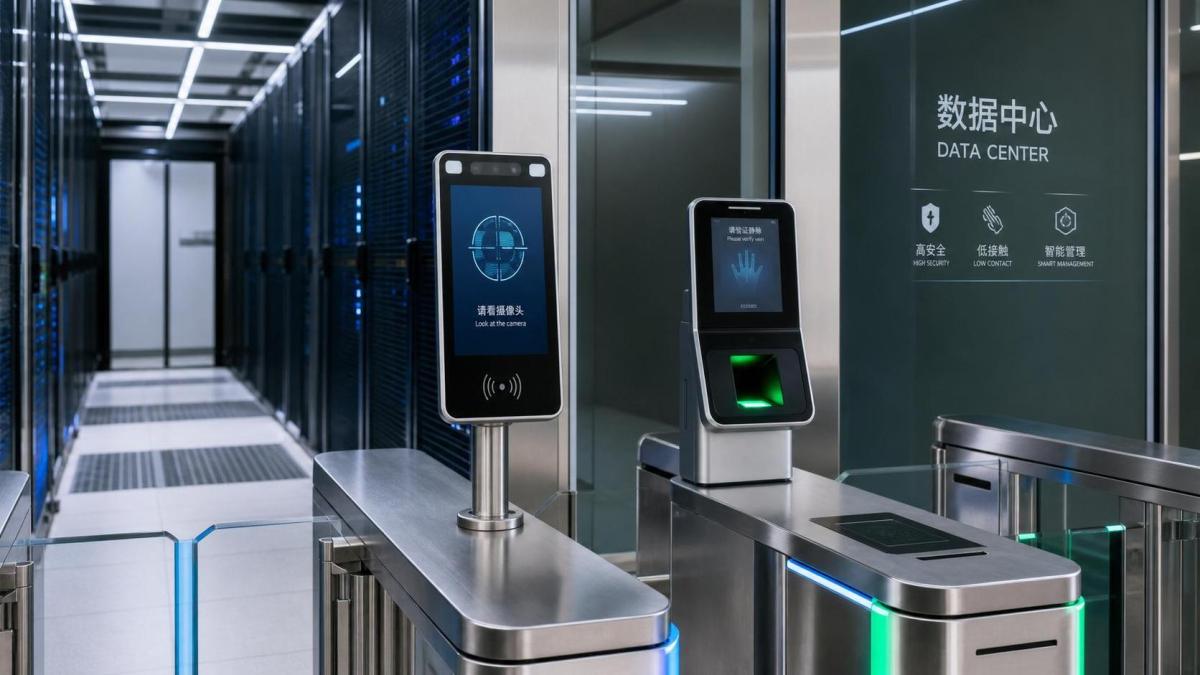
Both methods belong to biometric security, but they identify people through very different biological signals. That difference shapes performance in ways that matter during technical evaluation.
Face recognition analyzes visible and near-infrared facial features. Advanced systems may add depth sensing, structured light, or liveness detection to reduce spoofing by photos, videos, or masks.
Vein authentication reads vascular patterns, usually from a finger, palm, or the back of the hand. Because the pattern is beneath the skin, it is generally harder to capture without cooperation and harder to fake through superficial replicas.
In simple terms, face recognition prioritizes convenience and speed at a distance. Vein authentication prioritizes high-assurance identity confirmation through deeper biological uniqueness.
Why the market is paying closer attention
Interest in biometric security has expanded because threats have changed. Facilities now face presentation attacks, identity sharing, unauthorized tailgating, and pressure to reduce friction without weakening control.
Face recognition gained momentum through touchless access demand, especially in high-traffic entrances. At the same time, vein authentication gained relevance where operators need stronger resistance against fraud, credential theft, and impersonation.
Another factor is edge AI maturity. Faster processors and better sensors allow biometric security systems to make decisions locally, reducing latency and limiting unnecessary cloud transfer of sensitive data.
Compliance also shapes attention. GDPR, regional privacy rules, and internal governance policies push organizations to examine how biometric templates are collected, encrypted, stored, and deleted, not just how accurately a door opens.
Performance differences in real access control
The strongest biometric security deployments are usually designed around operating conditions, not marketing claims. A useful comparison starts with how each method behaves in live environments.
Face recognition performs well when speed and convenience drive adoption. Large offices, mixed-use buildings, and commercial sites often prefer it because it supports smooth entry and minimal queuing.
Vein authentication stands out where the cost of false acceptance is high. Research labs, data centers, restricted industrial zones, and critical infrastructure sites often value assurance over frictionless flow.
Risk, privacy, and resilience matter as much as accuracy
Accuracy numbers alone rarely settle a biometric security decision. A low false match rate is useful, but it does not answer how the system behaves under attack, stress, or poor operational discipline.
Face recognition systems must be judged by their anti-spoofing stack. Depth mapping, infrared sensing, mask detection, and challenge-based liveness checks are often more important than headline recognition speed.
Vein authentication reduces some presentation attack paths, but it still requires careful template protection, secure enrollment, and stable hygiene protocols where many users interact with the same device.
Privacy design deserves equal weight. Biometric security data should be template-based rather than image-based when possible, encrypted in transit and at rest, and governed by clear retention rules.
This is especially relevant in global deployments. A solution acceptable in one market may trigger additional consent, storage, or audit requirements in another.
Questions that usually expose weak proposals
- How is liveness detection tested against current spoof methods?
- Where are biometric templates stored and who can access them?
- What happens during network loss, sensor contamination, or power disruption?
- Can the system support local decision-making at the edge?
- How are failed matches handled without creating security bypasses?
Matching the method to the site
The better choice depends on how the space operates. In practice, biometric security should be aligned with traffic profile, threat model, environmental conditions, and the consequences of an error.
Where face recognition usually fits best
Face recognition is often a strong option for office lobbies, smart campuses, residential towers, and commercial properties with frequent user movement. It supports touchless access and integrates well with visitor management.
It also pairs effectively with connected building systems. Entry events can trigger lighting scenes, elevator calls, and occupancy logic, which aligns with the broader SHSS view of security as part of intelligent infrastructure.
Where vein authentication becomes more attractive
Vein authentication suits server rooms, pharmaceutical production areas, evidence storage, high-value manufacturing cells, and sensitive utility assets. These locations usually need stronger identity proof than simple convenience can provide.
It can also work well where face coverings, variable lighting, or reflective safety equipment make facial capture less predictable.
A practical evaluation framework
A reliable biometric security selection process should move from scenario mapping to field validation. Paper comparisons help, but controlled pilots usually reveal the real operational picture.
- Define protected zones by consequence, not by building name alone.
- Separate throughput entrances from high-assurance inner checkpoints.
- Test with real lighting, dust, PPE, and shift-change traffic.
- Review enrollment quality because poor registration corrupts later results.
- Measure exception handling, including denied access and fallback identity checks.
- Validate privacy controls with legal and cybersecurity teams before rollout.
In many cases, the best answer is not either-or. A layered design may use face recognition for perimeter convenience and vein authentication for inner sanctum control.
That approach reflects a broader industrial pattern. Just as critical hardware relies on both strong fasteners and smart monitoring, physical access can combine fast screening with deeper verification.
What to do next
Face recognition and vein authentication both have a clear place in biometric security. The stronger option depends less on vendor vocabulary and more on threat exposure, operating conditions, and governance readiness.
A sensible next step is to build a comparison matrix around spoof resistance, throughput, edge processing, template protection, integration needs, and lifecycle cost. Then test each method in the exact spaces it is expected to protect.
When that evaluation is grounded in real facility behavior, biometric security stops being a trend discussion and becomes what it should be: a measurable part of resilient, modern infrastructure.
Recommended News