
Search News
Industry Portal
Hot Articles
Wireless Access Risks That Can Disrupt Modern Facilities
Time
Click Count
Wireless access can improve speed, convenience, and visibility across modern facilities. Yet the same convenience can introduce silent weaknesses that affect entry control, network resilience, safety response, and regulatory confidence.
In smart buildings, industrial plants, logistics hubs, and commercial sites, wireless access is no longer just a door function. It now influences occupancy flow, device trust, alarm coordination, and continuity planning.
When wireless access is poorly designed, one compromised credential or unstable connection can trigger downtime, unauthorized movement, and failed audits. Understanding the risk by scenario is the clearest path to stronger protection.
Why wireless access risk changes from one facility scenario to another
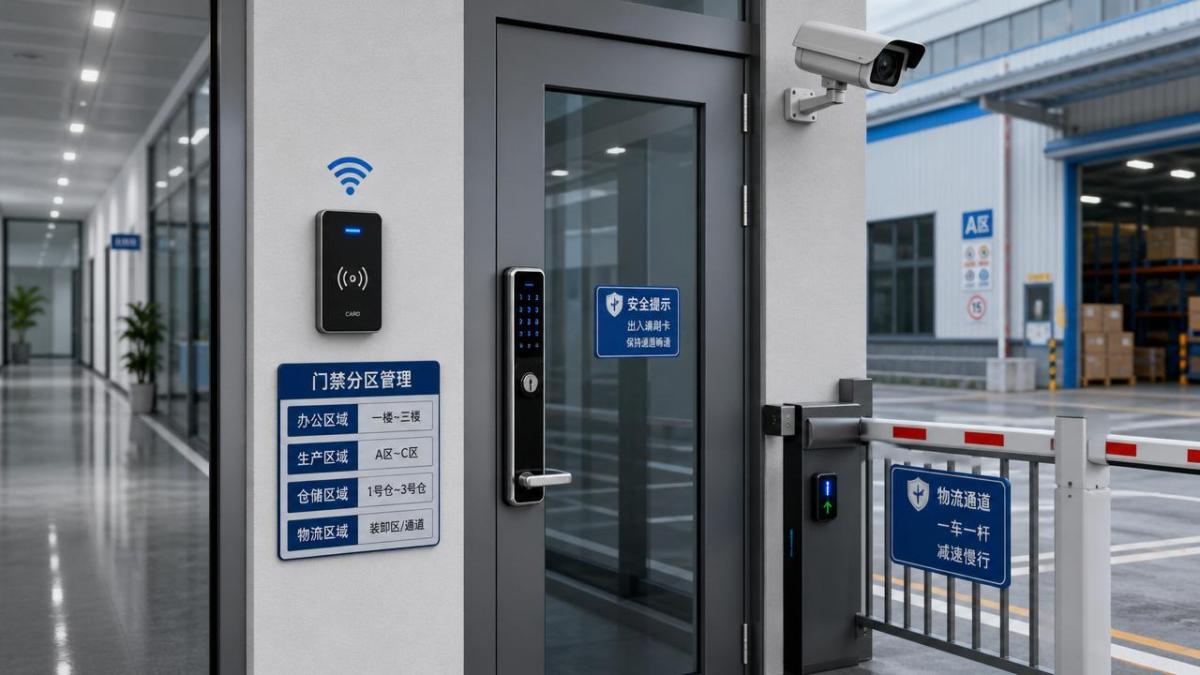
Not every site uses wireless access in the same way. A data room, hospital corridor, loading dock, and mixed-use tower all face different threat paths and different operational consequences.
Some environments prioritize rapid movement and user convenience. Others require hard segmentation, detailed audit trails, or uninterrupted secure access during power and network disturbances.
Wireless access risk grows when leaders assume one policy fits every opening, reader, and connected lock. Real protection begins with matching access design to physical exposure and business criticality.
Key variables that reshape wireless access exposure
- Door type, traffic volume, and expected operating hours
- Credential method, such as mobile, card, biometric, or hybrid
- Dependence on cloud management or local fail-secure logic
- Presence of industrial interference, metal shielding, or signal congestion
- Integration with video, alarms, visitor systems, and building automation
Scenario 1: Smart office towers where convenience can hide credential abuse
In office environments, wireless access often supports mobile badges, touchless entry, shared meeting spaces, and remote permission updates. The main value is speed with less friction.
The risk appears when convenience outruns identity assurance. Lost phones, cloned credentials, weak Bluetooth pairing, and excessive access privileges can enable silent unauthorized movement.
Core judgment points in office settings
- How quickly can revoked credentials stop working across all doors?
- Can the system detect tailgating patterns or abnormal re-entry timing?
- Are executives, server rooms, and finance zones separately protected?
- Does wireless access keep operating during local network loss?
Scenario 2: Industrial facilities where wireless access affects safety as much as security
Factories and processing sites use wireless access for restricted workshops, maintenance areas, hazardous storage, and contractor management. Here, access control is closely tied to worker safety.
The threat is not only intrusion. Signal interference, battery failure, delayed synchronization, or unlocked fallback states can expose dangerous equipment, chemical zones, or emergency pathways.
Core judgment points in industrial settings
- Can wireless access withstand dust, vibration, and metal-rich environments?
- Do lock events align with shift schedules and permit-to-work rules?
- Will emergency override actions remain traceable and tamper resistant?
- Are critical doors isolated from nonessential wireless traffic?
Scenario 3: Logistics and warehouse sites where speed creates exposure gaps
Warehouses depend on fast movement. Wireless access supports rolling shifts, temporary personnel, delivery interfaces, and perimeter gates connected to fleet and visitor workflows.
These sites face broad perimeter exposure. Shared devices, unmanaged temporary credentials, and weak zoning between docks and inventory areas can lead to shrinkage, theft, or interrupted dispatch.
Core judgment points in logistics settings
- Can temporary access expire automatically by role, area, and time?
- Are gate events linked with cameras and shipment records?
- Can wireless access separate pedestrian, vehicle, and inventory routes?
- How quickly can suspicious access patterns trigger review?
Scenario 4: High-security commercial environments where compliance pressure is highest
Data centers, research spaces, healthcare wings, and premium commercial properties demand more than convenience. Wireless access must support trust, evidence, privacy controls, and uninterrupted enforcement.
In these settings, the biggest risk is often layered failure. A weak credential process, poor biometric governance, and incomplete event logging can combine into a serious compliance problem.
Core judgment points in high-security settings
- Is wireless access backed by strong identity proofing and encryption?
- Can audits reconstruct who entered, when, how, and under what authority?
- Are biometric records stored and processed under clear legal controls?
- Do critical doors support local decision-making during cloud disruption?
How wireless access needs differ across facility types
Practical recommendations to match wireless access with real-world conditions
A reliable wireless access strategy should align physical risk, user behavior, and infrastructure maturity. The goal is not simply more devices, but better control at every sensitive point.
Priority actions that improve performance and protection
- Map all doors by criticality, not by building layout alone.
- Use layered credentials for sensitive zones, especially biometric plus mobile or card.
- Require encrypted communication and secure device onboarding for every reader and lock.
- Design offline-capable wireless access behavior for power or network disruption.
- Integrate access events with video, intrusion alerts, and building management systems.
- Review credential lifecycle controls for employees, visitors, contractors, and temporary staff.
- Test signal coverage near metal structures, shafts, gates, and shielded rooms.
Common wireless access mistakes that facilities still overlook
Many failures come from assumptions rather than advanced attacks. Sites often deploy wireless access quickly, then ignore maintenance, segmentation, and evidence quality until an incident occurs.
- Treating all doors as equal despite very different consequences of failure
- Relying on default settings, weak passwords, or outdated firmware
- Using wireless access without clear battery replacement and device health checks
- Ignoring privacy and retention policies when biometrics are involved
- Failing to document emergency access rules and post-incident review procedures
Another common mistake is overlooking cross-system impact. Wireless access problems can affect smart lighting schedules, elevator permissions, security responses, and occupancy-based automation.
That is why modern protection should connect physical security, network hygiene, and operational resilience. In complex facilities, access decisions are no longer isolated events.
Next steps for building a stronger wireless access posture
Start with a scenario-based review of current wireless access points. Identify which openings protect life safety, which protect data or inventory, and which support daily convenience only.
Then compare each zone against credential strength, offline behavior, event visibility, and integration readiness. This reveals where disruption risk is highest and where upgrades produce the greatest value.
For environments advancing toward AIoT operations, wireless access should be treated as a strategic control layer. The best results come from resilient hardware, strong identity methods, and precise governance.
A future-ready facility does not reject wireless access. It deploys wireless access with clear zoning, tested fallback logic, and continuous review so convenience never weakens security.
Recommended News