
Search News
Industry Portal
Hot Articles
How to Compare High Strength Bolts for Load and Fatigue
Time
Click Count
Comparing high strength bolts for load capacity and fatigue life requires more than checking grade labels or tensile strength tables.
For technical evaluation, the better approach is to study preload retention, cyclic stress behavior, material uniformity, coating effects, and joint design conditions.
This matters across construction, industrial equipment, transport assemblies, energy systems, and safety-critical hardware.
When high strength bolts are selected with an engineering lens, the result is lower failure risk and more reliable long-term structural performance.
Core Basis for Comparing High Strength Bolts
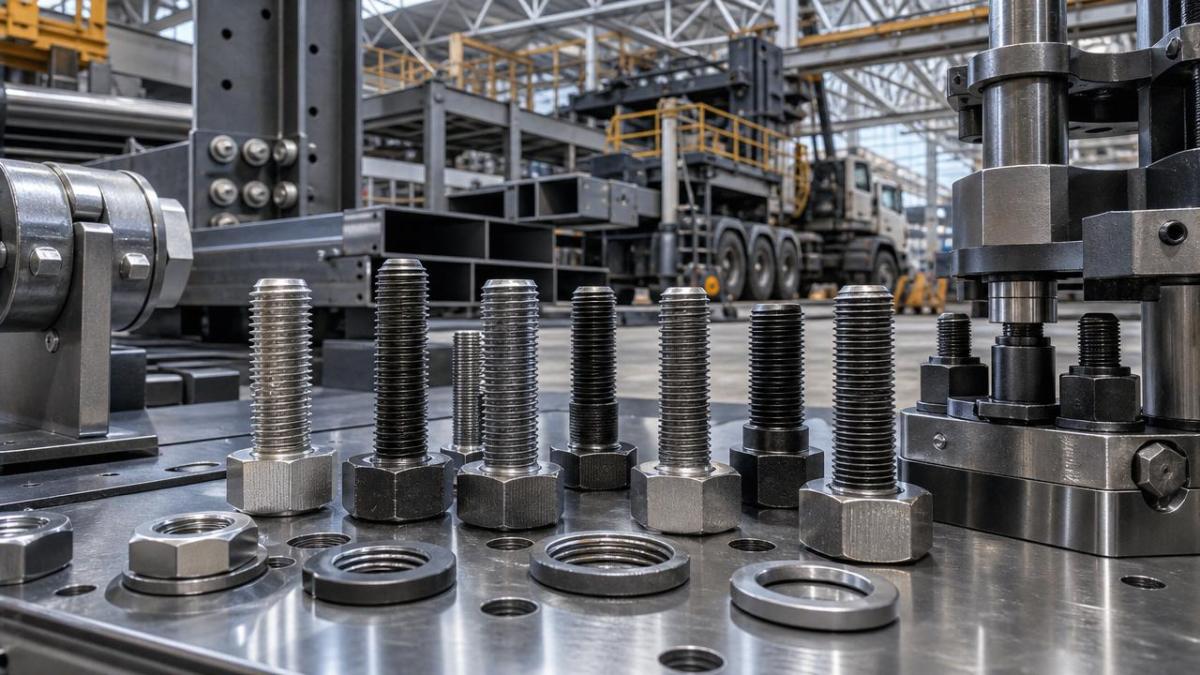
High strength bolts are load-transferring fasteners designed for demanding joints where standard bolts may lose clamp force or fail under repeated stress.
A useful comparison starts with three linked questions: how much load the bolt carries, how it maintains preload, and how it survives cyclic loading.
Static strength alone is incomplete because many field failures happen below ultimate tensile limits.
In practice, fatigue cracks often begin at thread roots, surface defects, decarburized zones, or damaged coatings.
That is why comparing high strength bolts should combine mechanical data, manufacturing quality, and service environment.
Key parameters to check
- Property class or grade, including proof load and tensile strength
- Preload target and torque-tension consistency
- Fatigue performance under expected stress ratio and cycle count
- Material chemistry, heat treatment, and hardness range
- Thread form, rolled versus cut threads, and thread root quality
- Coating type, friction coefficient, and corrosion exposure
- Applicable standards such as ISO, ASTM, SAE, or EN requirements
Load Capacity Is More Than Tensile Strength
Many comparisons of high strength bolts stop at tensile numbers, but joint behavior depends on proof load, clamp force, and load sharing.
Proof load indicates the highest tension a bolt can sustain without permanent deformation.
For preloaded joints, proof load is often more relevant than ultimate strength.
A bolt with high tensile strength but unstable preload may perform worse than a slightly lower-grade bolt with better installation consistency.
Important load comparison factors
In heavily loaded joints, external force does not transfer fully into the bolt at first.
Part of it is absorbed by clamped members, depending on joint stiffness.
This means two high strength bolts with similar strength can behave very differently in the same assembly.
Fatigue Performance as a Decisive Metric
For vibrating or fluctuating loads, fatigue resistance is often the decisive metric when comparing high strength bolts.
Bridges, wind towers, compressors, rail systems, heavy tools, and mobile equipment all create repeated stress cycles.
A bolt may easily pass static tests and still crack after millions of cycles.
What most strongly affects fatigue life
- Preload accuracy and retention over time
- Thread root geometry and rolled thread quality
- Surface finish and absence of dents or scratches
- Corrosion, especially under combined vibration
- Joint separation or embedment loss after installation
- Hydrogen embrittlement risk in very high hardness bolts
Rolled threads usually offer better fatigue performance than cut threads because the grain flow follows the thread profile.
Compressive residual stress at the thread root can also slow crack initiation.
When comparing high strength bolts, ask whether fatigue data comes from axial tests, rotating bending tests, or application-specific validation.
The test method changes the meaning of the reported life.
Manufacturing Quality, Coatings, and Standards
High strength bolts with identical dimensions and grade marks can still differ significantly because process control determines repeatability.
Heat treatment uniformity is critical.
Excess hardness can increase brittleness, while insufficient hardness can reduce load capacity and preload retention.
Coating considerations
Coatings protect against corrosion, but they also affect friction and installation torque.
Electroplated coatings can introduce hydrogen, creating embrittlement risk for some high strength bolts.
Mechanical plating, zinc flake, phosphate, or other systems may be safer depending on hardness level and exposure conditions.
Standards remain essential because they define baseline properties, testing, dimensions, and marking requirements.
Still, standards are starting points, not complete performance guarantees for every service condition.
Typical Application Paths for High Strength Bolts
Different applications prioritize different comparison criteria for high strength bolts.
The best selection path depends on whether the joint sees static loads, shock, vibration, corrosion, or thermal cycling.
- Structural steel connections: emphasize preload reliability, slip resistance, and standard compliance.
- Heavy industrial machines: emphasize fatigue life, torque consistency, and resistance to loosening.
- Transportation assemblies: emphasize weight efficiency, vibration endurance, and corrosion control.
- Energy and utility systems: emphasize long service life, inspection access, and environmental durability.
- Smart hardware enclosures and security infrastructure: emphasize compact strength, repeatable assembly, and mixed-material compatibility.
In the broader SHSS landscape, high strength bolts support the mechanical integrity behind tools, access systems, lighting frames, and protective installations.
Their value is not only strength.
It is dependable force transfer over years of real service.
Practical Evaluation Steps and Common Mistakes
A practical review of high strength bolts should combine documents, tests, and installation controls.
- Define the actual load case, including static, cyclic, shock, and environmental conditions.
- Match the bolt grade and diameter to proof load and required clamp force.
- Check fatigue-sensitive details such as thread type, surface quality, and washer seating.
- Review coating friction data before setting torque values.
- Confirm certification, traceability, and conformance to relevant standards.
- Validate with joint-level testing when failure consequences are high.
Frequent mistakes
- Choosing only by ultimate tensile strength
- Ignoring preload scatter caused by coatings or lubrication
- Overlooking relaxation after embedding or thermal cycling
- Assuming catalog fatigue values apply directly to a real joint
- Using very hard bolts in corrosive conditions without embrittlement review
Careful comparison of high strength bolts should always end at the assembled joint, not the bolt alone.
Joint geometry, tightening method, and service environment decide whether nominal strength becomes usable performance.
Actionable Next Step for Better Bolt Selection
Start with a comparison sheet covering proof load, preload target, fatigue evidence, coating friction, corrosion class, and standard references.
Then compare high strength bolts against the exact joint conditions rather than broad catalog descriptions.
If the application is safety-critical, request installation guidance and joint-level validation data in addition to material certificates.
That process turns bolt selection from a simple parts decision into a reliable engineering control for load safety and fatigue durability.
Recommended News