
Search News
Industry Portal
Hot Articles
IoT Security Gaps That Raise Compliance Costs in 2026
Time
Click Count
As 2026 compliance rules tighten, unnoticed IoT security gaps are becoming a direct budget risk for finance decision-makers.
From biometric access control to smart lighting and connected tools, weak governance now creates measurable financial exposure.
Audits, fines, insurance scrutiny, delayed certifications, and emergency retrofits increasingly start with overlooked IoT security weaknesses.
For integrated facilities, industrial sites, and smart city projects, IoT security is no longer just an IT concern.
It directly shapes compliance cost, capital planning, vendor selection, and long-term operational resilience.
Why 2026 makes hidden IoT security gaps more expensive
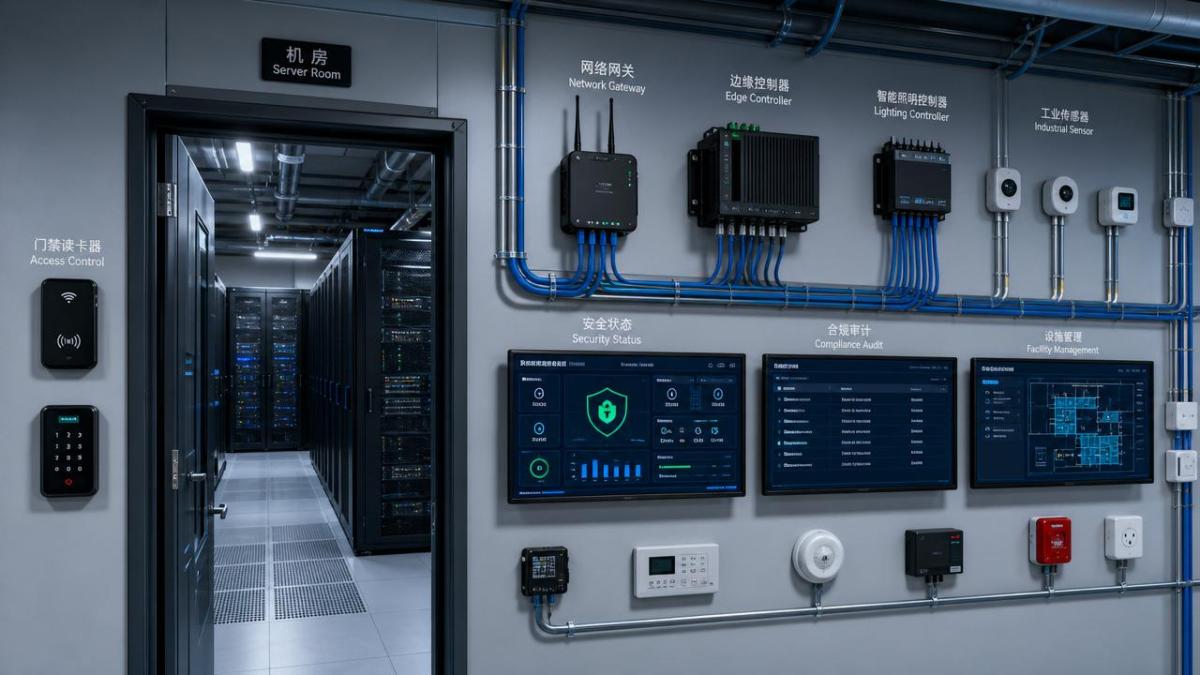
The compliance environment is shifting from policy review to evidence-based control verification across physical and digital assets.
That change matters because many connected devices were deployed for convenience, efficiency, or visibility, not for audit readiness.
In 2026, regulators and insurers increasingly ask how each device is identified, patched, monitored, and isolated.
They also examine where data moves, who can access it, and how incidents are documented.
This is especially relevant in blended environments such as factories, office campuses, warehouses, hospitals, and municipal infrastructure.
A single unmanaged reader, gateway, or sensor can now trigger broader findings during compliance review.
That finding often spreads beyond cybersecurity into privacy, safety, procurement, and business continuity obligations.
The strongest trend signals behind rising IoT security compliance costs
Several market signals explain why IoT security now carries a bigger compliance price tag than in earlier deployment cycles.
These signals affect both new smart deployments and installed fleets across lighting, access, tools, sensors, gateways, and edge controllers.
Where IoT security failures usually begin
The most expensive IoT security problems are rarely advanced attacks at first contact.
They usually begin as ordinary operational shortcuts that remain invisible until audit season or incident review.
1. Incomplete asset visibility
Many organizations still cannot produce a reliable inventory of connected endpoints, firmware versions, and communication paths.
Without that baseline, IoT security controls cannot be proven, prioritized, or budgeted accurately.
2. Default credentials and weak authentication
Shared passwords, unchanged factory settings, and broad admin access remain common in edge and facility systems.
For compliance, that creates a basic control failure, not just a technical weakness.
3. Poor handling of sensitive device data
Biometric templates, entry logs, occupancy patterns, and maintenance telemetry can all become regulated records.
If storage locations, retention periods, and transfer paths are unclear, compliance costs rise quickly.
4. Patch delays and unsupported devices
Industrial and building devices often remain active far longer than standard IT hardware.
That longevity becomes expensive when vendors stop issuing updates but operations still depend on the equipment.
5. Flat networks and weak segmentation
Smart lighting, readers, cameras, gateways, and engineering workstations often share trust zones they should not share.
Weak segmentation enlarges both breach impact and remediation scope, increasing compliance expense.
How these IoT security gaps affect different business layers
The impact is not limited to one department or one audit checkpoint.
IoT security failures create cross-functional costs across operations, legal review, insurance, facilities, and capital planning.
- Operational layer: incident response, downtime, emergency isolation, and manual fallback procedures.
- Compliance layer: broader audit sampling, corrective action plans, external validation, and repeated evidence requests.
- Financial layer: unplanned replacement cycles, consultant fees, premium changes, and contract penalties.
- Reputation layer: lower confidence in smart infrastructure, especially where safety and identity data are involved.
In sectors combining physical security and connected infrastructure, one finding often multiplies across several frameworks.
That is why IoT security should be reviewed as a cost-control discipline, not only as a defensive technology topic.
The most expensive blind spots in biometric, lighting, and connected hardware environments
Some blind spots repeatedly appear in modern smart hardware environments.
They look minor during rollout, then become expensive when evidence, traceability, and security assurance are requested.
- Biometric systems collecting more identity data than policy teams realize.
- Smart lighting gateways acting as overlooked network entry points.
- Industrial tools and chargers connecting through unmanaged wireless or USB workflows.
- Access readers and edge panels lacking centralized log retention.
- Mixed-vendor environments with uneven update cycles and inconsistent encryption support.
These issues are common in buildings, industrial campuses, logistics hubs, and public infrastructure upgrades.
They also align closely with SHSS coverage areas, where physical hardware and security intelligence increasingly overlap.
What deserves attention first when reviewing IoT security exposure
A practical review should focus on the controls most likely to influence compliance cost in the next budget cycle.
- Asset inventory accuracy, including device ownership, firmware status, and physical location.
- Authentication quality for installers, administrators, support teams, and remote vendors.
- Data mapping for biometric, occupancy, access, and maintenance records.
- Patchability, vendor support timelines, and end-of-life exposure.
- Network segmentation between security systems, lighting controls, OT assets, and business systems.
- Logging depth, retention rules, and incident evidence availability.
- Supplier documentation, including secure update practices and vulnerability response commitments.
This approach helps translate IoT security into measurable control gaps rather than abstract technical concerns.
A practical response path before costs escalate further
The next step is not to replace every device immediately.
The smarter move is to rank IoT security gaps by regulatory exposure, operational dependence, and remediation difficulty.
This phased method improves IoT security while preserving budget discipline and operational continuity.
What to do next as IoT security becomes a compliance budget variable
Before the next audit cycle, review which connected assets handle identity, access, safety, occupancy, or infrastructure control.
Then compare those assets against actual evidence: inventory, patch records, segmentation rules, access logs, and vendor commitments.
Where evidence is weak, compliance costs usually rise first and technical debt surfaces later.
In 2026, stronger IoT security is not only about breach prevention.
It is a direct lever for controlling audit friction, avoiding rushed remediation, and protecting smart infrastructure investment value.
For environments shaped by connected hardware, physical security, and intelligent facilities, early IoT security review is now a financial necessity.
Recommended News