
Search News
Industry Portal
Hot Articles
Cobalt Spike Pressures Brushless Li-ion Tool Costs
Time
Click Count
On July 10, 2026, the cobalt market sent a sharp cost signal to manufacturers tied to battery-powered tools. LME data shows battery-grade cobalt intermediate (CoSO₄·7H₂O) jumped 18.3% in a single day to $42,800 per ton, the highest level since 2024. For companies involved in brushless Li-ion tools, this matters because the move is directly linked to cost pressure in BLDC motor magnetic material and battery BMS structures, with Q3 export quotations expected to rise by 5-7%.
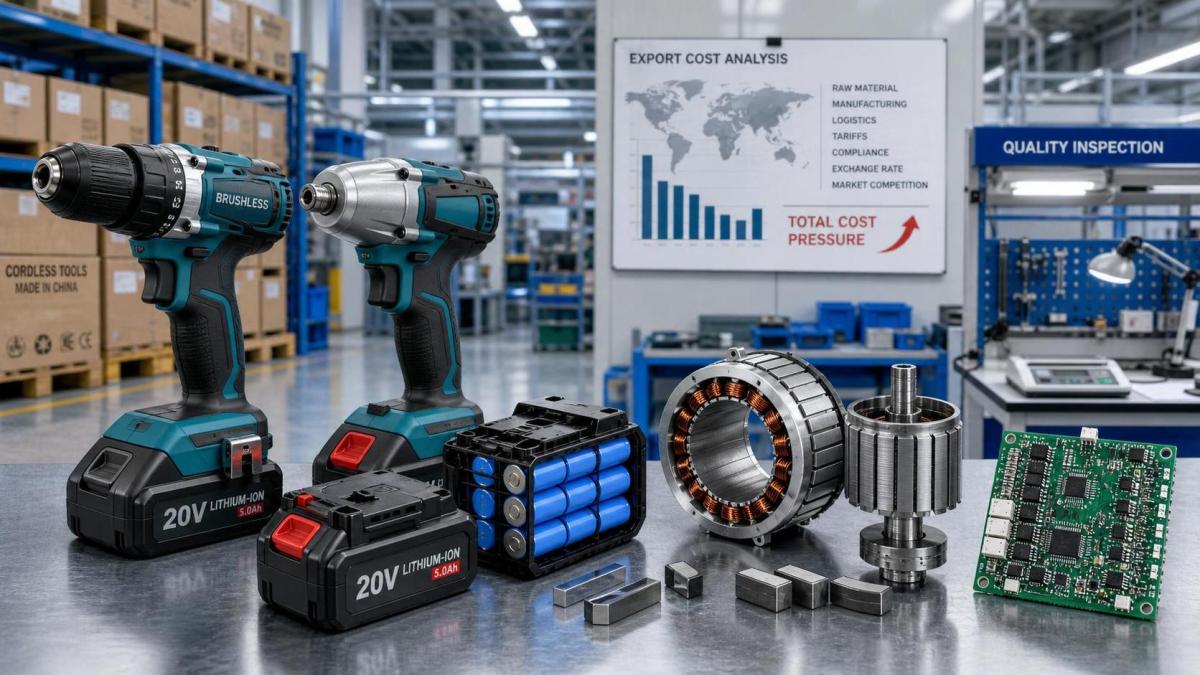
A one-day cobalt jump with immediate cost relevance
According to the information provided, the spot price of battery-grade cobalt intermediate (CoSO₄·7H₂O) rose to $42,800 per ton on July 10, 2026, marking an 18.3% single-day increase and the highest level since 2024.
The stated drivers were a new export restriction in the Democratic Republic of the Congo together with a fire-related production stoppage at a nickel-cobalt smelter in Indonesia.
The same information indicates that this price movement directly affects the cost structure of BLDC motor magnetic components and battery BMS used in brushless Li-ion tools. It also states that Q3 export quotations are expected to move up by 5-7%.
Where the pressure is likely to appear first
Export-facing tool manufacturers may see pricing stress earliest
From an industry perspective, manufacturers shipping brushless Li-ion tools are among the first groups likely to feel the impact because the provided information already points to expected Q3 export quote increases. The immediate business effect is less about retail demand and more about whether existing quotation models can absorb sudden upstream material changes.
What deserves closer attention is how quickly cost revisions move into offer sheets, margin calculations, and customer negotiations for products built around BLDC motors and battery systems.
Procurement teams will need to watch cobalt-linked components more closely
Analysis shows purchasing teams are exposed where cobalt-related cost changes feed into component sourcing, especially in motor-related magnetic materials and battery BMS cost structures identified in the event summary. The key issue is not every part in the bill of materials, but the items whose pricing may adjust faster after a raw-material shock.
For procurement roles, the practical concern is whether supplier quotes, validity periods, and replenishment assumptions remain reliable under a sharp one-day move.
Supply chain and delivery coordination may become more sensitive
Observably, supply chain service providers and operations teams may face tighter coordination demands if suppliers revise terms or if quotation windows shorten. Even without confirmed broad disruption beyond the stated events, a sudden raw-material spike can affect lead-time discussions, cost confirmation, and shipment planning for export business.
The main point to monitor is whether the price spike remains a quotation issue or starts affecting delivery commitments and contract execution rhythm.
What companies should be watching now
Separate confirmed facts from rolling market interpretation
Companies should keep a clear internal distinction between what is confirmed and what is still developing. The confirmed elements here are the July 10 price jump, the cited causes, the direct cost impact on BLDC motor magnetic material and battery BMS structures, and the expectation of a 5-7% Q3 export quote increase. Further market effects still require ongoing verification.
Review quotation validity and cost pass-through mechanisms
Analysis shows this is a practical moment to check how export quotations are structured, especially for brushless Li-ion tool lines with higher exposure to motor and battery-system costs. Businesses should pay attention to whether quotation validity periods, adjustment clauses, and customer communication processes are aligned with short-term raw-material volatility.
Focus on supplier documentation and fulfillment timing
What deserves closer attention is the operational side of procurement. Where suppliers are revising prices or lead times, teams should verify quotation dates, supporting documents, and fulfillment cycles carefully. This matters most for orders that sit between cost confirmation and shipment scheduling.
Track policy signals and actual business impact separately
Observably, the market move was tied to a new export restriction in the Democratic Republic of the Congo and a smelter fire stoppage in Indonesia. Companies should therefore watch subsequent official wording, implementation details, and supplier-side execution separately from headline market reaction, because policy signals and real transaction impact do not always move at the same pace.
Why this looks important, but not yet fully settled
Analysis shows this development should be read first as a sharp short-term cost shock with direct implications for pricing discipline in brushless Li-ion tools. It already carries enough weight to affect Q3 export quotation expectations, which makes it more than a routine commodity fluctuation.
At the same time, it is more appropriate to understand this as an industry dynamic that still needs continued observation rather than a fully formed long-term trend. The current information confirms the price jump and its immediate pressure points, but it does not yet establish how long the disruption will persist or how broadly downstream pricing will reset.
How the market is best reading this signal
The significance of this update lies in its speed and in the specificity of its downstream effect. A one-day 18.3% rise in battery-grade cobalt intermediate is not just a raw-material headline; for brushless Li-ion tools, it points directly to cost pressure in motor and battery-management-related structures and raises the likelihood of higher Q3 export quotes.
A neutral reading is that this is currently best understood as an actionable cost warning rather than a final market outcome. For manufacturers, procurement teams, and export-focused operators, the priority is to follow whether the current price shock remains temporary or starts reshaping transaction terms more broadly.
Basis of this article and what still needs verification
This article is based on the user-provided news title, event date, and event summary. The confirmed information used here includes the July 10, 2026 timing, the LME-referenced cobalt price movement, the cited causes, the stated impact on BLDC motor magnetic material and battery BMS cost structures, and the expectation of a 5-7% increase in Q3 export quotations.
For this type of industry update, common source categories typically include official announcements, company disclosures, industry association updates, authoritative media reporting, and standard-setting or market-reference documents. A specific official source link was not provided in the input, so further verification is still required.
The main follow-up areas to monitor are whether there are additional official statements related to the export restriction, whether production at the affected smelter resumes, and whether the expected Q3 quotation increase becomes more widely reflected in actual export transactions.
Recommended News