
Search News
Industry Portal
Hot Articles
Choosing Construction Safety Equipment for Fall Hazards
Time
Click Count
Selecting the right construction safety equipment for fall hazards is not just a compliance task—it is a frontline decision that directly affects worker survival, project continuity, and audit performance. For safety managers and quality control teams, the challenge is to match harnesses, anchors, lifelines, guardrails, and rescue systems to real site conditions, evolving standards, and human behavior. This guide explains how to evaluate fall protection solutions with a practical, risk-based approach, helping you reduce incident exposure while building a safer, more accountable construction environment.
Falls remain among the most severe hazards on construction sites because they combine height, changing work surfaces, tight schedules, and subcontractor variability. Effective construction safety equipment must therefore be selected as part of a controlled system, not as isolated PPE purchased only by unit price.
Understanding Fall Hazards Before Selecting Equipment
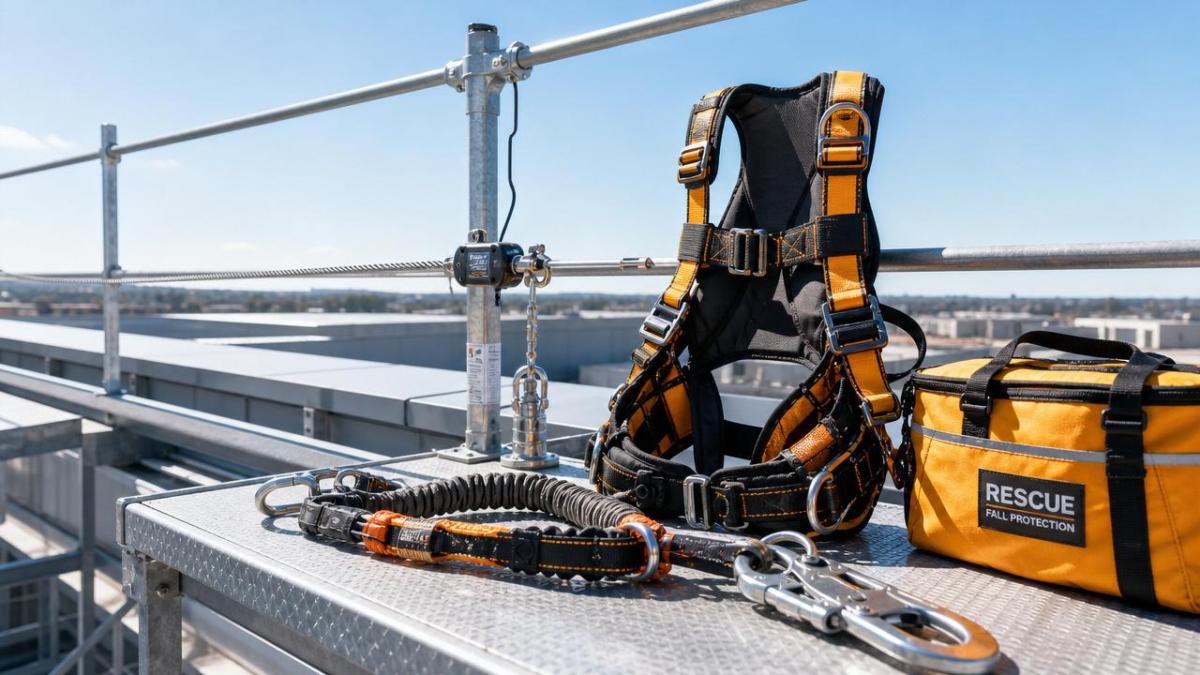
A reliable fall protection program starts with hazard mapping. Before comparing harnesses or lifelines, safety managers should identify where workers operate above 1.8 m, 2 m, or 6 ft, depending on local rules and project specifications.
Quality control teams should also review how the structure changes over time. A site may move from excavation edges to steel erection, roof works, façade access, and maintenance zones within 4–12 weeks, requiring different construction safety equipment at each phase.
Typical High-Risk Work Areas
Fall exposure is rarely limited to obvious roof edges. Open shafts, temporary platforms, scaffold transitions, loading bays, formwork decks, ladder access points, and elevated mechanical rooms can all create serious risk if controls are incomplete.
- Leading edges where floor openings or unprotected sides change daily.
- Steel structures where anchorage points may be temporary or difficult to verify.
- Scaffolds and mobile platforms where guardrails, toe boards, and access points require frequent inspection.
- Roofing, solar installation, HVAC work, and façade maintenance where horizontal movement is continuous.
Risk Assessment Factors for Safety and QC Teams
A practical assessment should cover 6 core factors: fall distance, clearance below the worker, anchorage strength, swing fall potential, rescue time, and worker competency. Missing any one of these can undermine the full system.
For example, a shock-absorbing lanyard may require more clearance than a self-retracting lifeline. In low-clearance zones of 3–5 m, equipment selection must account for deceleration distance, harness stretch, and worker height.
Why Equipment Cannot Be Chosen in Isolation
A compliant harness does not protect a worker if the anchor is unsuitable, the lanyard is too long, or rescue is delayed beyond practical recovery limits. Construction safety equipment must operate as a connected chain.
This system view is especially important for B2B procurement. The lowest-cost item may create hidden costs through rework, failed inspections, additional training, or higher replacement frequency after 6–12 months of heavy site use.
Core Categories of Construction Safety Equipment for Fall Protection
Fall protection normally combines passive controls, active personal systems, and emergency response components. Safety managers should prioritize elimination and guardrails where feasible, then use personal fall arrest systems for remaining exposure.
The following table compares common construction safety equipment categories by application, inspection focus, and selection criteria. It can help QC teams standardize reviews across multiple contractors or project zones.
The key conclusion is simple: procurement should not approve equipment without confirming the work method. A harness, lifeline, and anchor must be compatible, traceable, inspected, and supported by site-specific rescue planning.
Harnesses: Fit, Durability, and Worker Acceptance
Harness selection should account for body sizes, tool loads, climate, and shift duration. A design that fits 90% of workers poorly may lead to loose leg straps, incorrect dorsal positioning, or skipped usage during short tasks.
For demanding construction environments, inspect webbing abrasion, chemical exposure, UV degradation, buckles, and stitching before each shift. Formal documented inspection is commonly scheduled every 3–6 months, depending on usage intensity.
Anchors and Lifelines: The Load Path Must Be Verified
Anchorage is often the weakest decision point. Safety managers should verify whether the anchor is engineered, temporary, reusable, or part of a certified system, and whether the substrate can tolerate expected dynamic loads.
Horizontal lifelines require careful spacing, sag calculation, end-anchor capacity, and user count limits. A system suitable for 1 user may not be appropriate for 2 or 3 workers unless specifically designed for that load case.
Selection Criteria That Reduce Audit and Incident Risk
Quality control personnel need criteria that are easy to verify in the field. Construction safety equipment should be assessed against standards, traceability, environmental exposure, usability, and maintenance burden before purchase approval.
Common standards and local regulations may reference fall arrest performance, gate strength, labeling, testing, and user instructions. Buyers should request documentation in the project language and retain records for the full project lifecycle.
A 7-Point Procurement Checklist
- Confirm the fall protection method: restraint, positioning, fall arrest, or passive guarding.
- Verify equipment ratings, labels, user manuals, and applicable standard references.
- Check compatibility among harness, connector, lanyard, lifeline, and anchor.
- Calculate clearance, swing radius, and rescue access for each work zone.
- Assess environmental factors such as dust, concrete slurry, sharp edges, heat, and salt spray.
- Define inspection frequency, quarantine rules, and replacement triggers.
- Confirm training needs for users, supervisors, inspectors, and rescue personnel.
Inspection, Traceability, and Service Life
A strong fall protection program uses serial numbers, inspection logs, and clear removal-from-service rules. Equipment exposed to a fall event must be quarantined immediately, even if visible damage appears limited.
Service life is not only a calendar number. A harness stored properly may last longer than one exposed daily to welding sparks, rebar edges, cement dust, or temperatures above 40°C during summer operations.
Compatibility With Other Site Systems
Construction safety equipment also interacts with tools, fasteners, lighting, and access control. For example, high-torque brushless tools used at height should be tethered to prevent dropped objects during drilling or fastening tasks.
Smart lighting can improve visibility around access points, while biometric access control can restrict entry to trained personnel only. This integrated approach aligns PPE decisions with broader site safety and security governance.
Matching Equipment to Real Construction Scenarios
Different tasks require different controls. A façade team, steel erection crew, roofing contractor, and maintenance technician may all need fall protection, but the ideal construction safety equipment configuration can vary substantially.
The table below outlines practical configurations for common site scenarios. It is designed for safety managers building tender specifications, site method statements, or acceptance checklists for subcontractor mobilization.
The safest configuration is usually the one that reduces exposure before a fall can occur. Where arrest systems are necessary, clearance, rescue, and worker movement must be validated before work authorization.
Environmental and Material Considerations
Construction sites expose equipment to water, concrete dust, oil, weld spatter, sharp metal edges, and UV radiation. These conditions can degrade textile fibers, corrode connectors, or impair the locking mechanism of retractable lifelines.
For abrasive zones, consider edge-rated lifelines, protected webbing, steel cable SRLs, and storage cases. For hot work, isolate fall protection from sparks or use materials specified for that exposure where applicable.
Human Factors: Comfort Drives Compliance
Even technically correct equipment fails if workers avoid using it. Harness padding, quick-connect buckles, intuitive adjustment, tool compatibility, and weight distribution can improve consistent use during 8–10 hour shifts.
Training should include hands-on fitting, anchor selection, pre-use inspection, suspension trauma awareness, and rescue communication. A 30-minute toolbox talk is helpful, but high-risk crews often need practical drills.
Implementation Workflow for Safety Managers and Quality Teams
Once construction safety equipment is selected, implementation determines whether the system works under pressure. A disciplined workflow can turn procurement decisions into consistent field behavior and auditable records.
A 5-Step Deployment Process
- Survey tasks and mark fall exposure zones on drawings or digital site maps.
- Select controls using the hierarchy: eliminate, guard, restrain, arrest, rescue.
- Approve equipment lists with compatibility checks and documented technical references.
- Train users and supervisors before mobilization, with refresher sessions every 3–6 months.
- Audit field use weekly, record defects, and close corrective actions within defined deadlines.
Digital records can support accountability. QR-coded inspection tags, equipment registers, and mobile checklists allow teams to track service life, inspection status, and user assignment across multiple work fronts.
Common Mistakes That Increase Fall Exposure
One common mistake is relying on generic harnesses without checking worker fit. Another is installing anchor points without verifying structure, load direction, edge distance, or the manufacturer’s installation instructions.
Teams also underestimate rescue. If a fallen worker remains suspended, time becomes critical. A rescue plan should include equipment location, trained responders, communication method, access route, and backup procedure.
Audit Questions Worth Asking Weekly
- Are all open edges and floor openings protected before trade handover?
- Are anchors identified, rated, and suitable for the direction of loading?
- Are defective lanyards, connectors, or harnesses removed from service immediately?
- Can the crew explain the rescue plan in less than 2 minutes?
Building a Smarter Fall Protection Procurement Strategy
For B2B buyers, the best construction safety equipment strategy balances compliance, total cost of ownership, worker acceptance, and operational resilience. Unit price matters, but lifecycle performance matters more.
A procurement specification should define standards, rated capacity, documentation, packaging, inspection method, spare parts availability, training support, and expected delivery window. For project-based supply, 2–4 weeks may be needed for consolidated orders.
What to Request From Suppliers
Safety managers should request product data sheets, user instructions, conformity documentation, inspection templates, and compatibility guidance. If the project has multilingual crews, visual instructions and simplified checklists can reduce misuse.
For high-volume projects, consider standardized kits by task: roof restraint kits, steel erection kits, rescue kits, and scaffold inspection kits. Standardization reduces training variation and simplifies stock control.
Where SHSS Intelligence Adds Practical Value
SHSS views PPE as the last physical armor in modern construction and industry. Its cross-disciplinary perspective connects fall protection with fasteners, smart lighting, access control, power tools, and site accountability systems.
For quality teams and safety leaders, that means better questions during product selection: Will the anchor interface match the structural fasteners? Is the work area visible at night? Can access be limited to trained workers?
Final Guidance for Safer, More Accountable Work at Height
Choosing construction safety equipment for fall hazards requires more than buying harnesses and lanyards. It requires a documented system that connects hazard assessment, equipment compatibility, inspection, training, and rescue readiness.
Safety managers and quality control teams should prioritize controls that prevent falls, verify the full load path, and ensure every worker understands the equipment before exposure begins. This reduces incidents, delays, and audit failures.
If your project involves complex fall hazards, multi-trade coordination, or high-volume PPE procurement, SHSS can help you evaluate construction safety equipment with a practical, risk-based lens. Contact us to get a customized solution, consult product details, or learn more about integrated safety and security strategies for modern construction environments.
Recommended News