
Search News
Industry Portal
Hot Articles
Smart Building ROI: Costs, Payback, and Hidden Risks
Time
Click Count
Smart Building ROI: Costs, Payback, and Hidden Risks
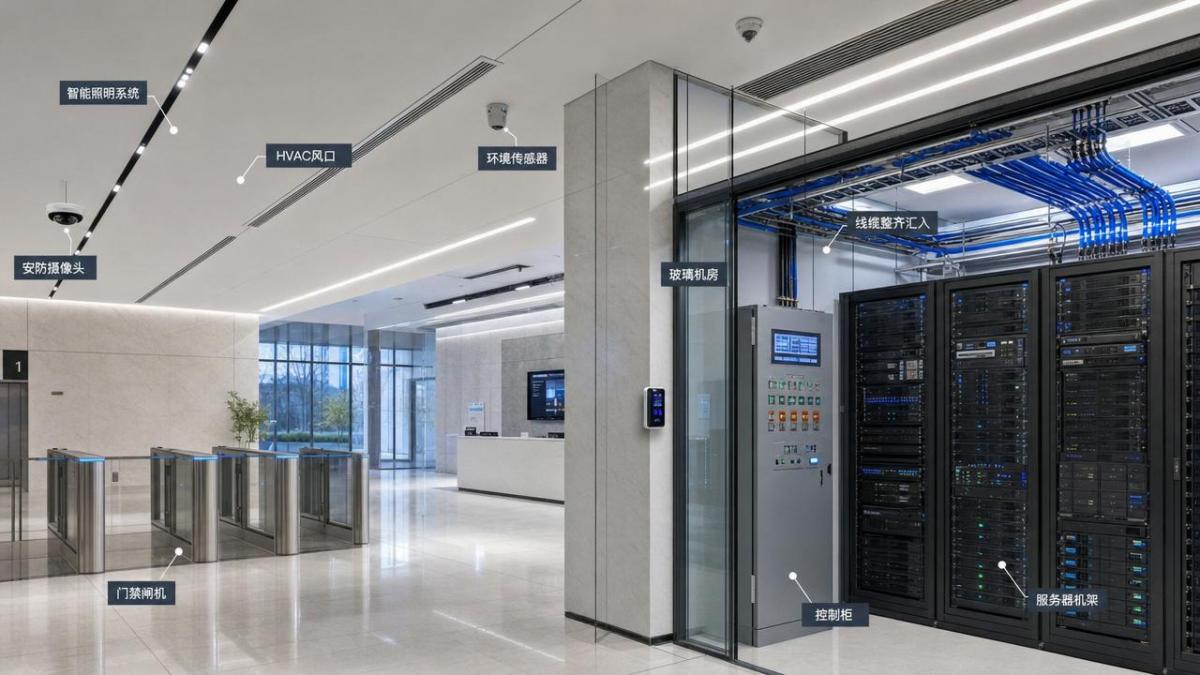
A smart building is no longer a futuristic upgrade. It is a capital decision tied to energy, resilience, security, and asset value.
Yet headline ROI can mislead when integration, cybersecurity, data compliance, maintenance, and vendor lock-in are ignored.
This article breaks down realistic smart building costs, payback periods, and hidden risks across practical operating scenarios.
Where Smart Building ROI Starts: The Scenario Comes First
The return from a smart building depends heavily on the operating environment.
An office tower, hospital, logistics hub, hotel, and industrial campus all consume energy differently.
They also face different occupancy patterns, security risks, compliance duties, and maintenance pressures.
A strong smart building business case therefore begins with scenario mapping, not device selection.
The same sensor network may generate rapid savings in one site and limited value in another.
Lighting controls, biometric access, HVAC analytics, and predictive maintenance must match actual building behavior.
Three Questions Before Budget Approval
- Which operating costs are measurable today?
- Which risks create direct financial loss?
- Which systems can integrate without major rework?
If these answers are unclear, the smart building ROI model will likely become optimistic and fragile.
Scenario 1: Commercial Offices Seeking Energy and Occupancy Efficiency
In offices, smart building ROI often begins with lighting, HVAC scheduling, access control, and space utilization.
Hybrid work has made fixed operating schedules less reliable.
Occupancy sensors and smart lighting can reduce energy waste in low-use floors, meeting rooms, and shared zones.
Payback is strongest when energy tariffs are high and legacy systems run continuously.
However, office projects often underestimate commissioning time.
A smart building platform must align lighting scenes, HVAC zones, visitor access, and tenant privacy boundaries.
Core Judgment Points
- Measure current energy use by floor and time period.
- Separate tenant savings from owner savings.
- Check whether BMS data is clean and accessible.
- Confirm privacy rules for occupancy analytics.
Scenario 2: Industrial Facilities Needing Reliability and Safety
Industrial smart building value is rarely limited to lower utility bills.
Downtime, unsafe zones, unauthorized access, and poor environmental monitoring can create larger losses.
A smart building in this setting may combine vibration monitoring, secure access, LED lighting, and emergency response systems.
ROI improves when alerts prevent production interruption or reduce incident response time.
The hidden risk is ruggedization.
Dust, heat, moisture, vibration, and electromagnetic interference can shorten sensor life and increase maintenance costs.
Hardware selection must reflect industrial conditions, not only software features.
Core Judgment Points
- Prioritize systems linked to downtime reduction.
- Use industrial-grade sensors and secure enclosures.
- Connect access control with safety zoning.
- Validate network resilience during power events.
Scenario 3: Data Centers and Critical Buildings Requiring Security
For critical facilities, smart building ROI includes risk avoidance.
Energy optimization matters, but physical security, uptime, and audit evidence are often more valuable.
Biometric access, video analytics, smart locks, and environmental monitoring protect restricted rooms and sensitive assets.
A breach, cooling fault, or access control failure can exceed years of energy savings.
The main hidden risk is compliance complexity.
Biometric data, visitor logs, and cloud storage may trigger strict privacy and cybersecurity obligations.
A smart building deployment must define retention periods, encryption, role permissions, and incident response ownership.
Core Judgment Points
- Calculate avoided breach and downtime exposure.
- Require documented biometric data governance.
- Test fail-safe access during outages.
- Demand audit trails across connected systems.
Scenario 4: Hotels, Retail, and Public Venues Focused on Experience
In hospitality and retail, smart building returns depend on comfort, convenience, and operational agility.
Smart lighting, indoor air monitoring, automated shading, and mobile access can improve service quality.
Energy savings are useful, but guest satisfaction and staff efficiency may drive stronger value.
The challenge is fragmentation.
Property management systems, lighting controls, HVAC, security, and payment platforms often operate separately.
A smart building project should avoid adding another isolated dashboard.
Integration with service workflows determines whether automation reduces labor or creates extra manual checks.
Cost Structure: What a Smart Building Really Requires
Smart building budgets usually include more than sensors and software licenses.
A realistic model separates capital costs, integration costs, operating costs, and risk reserves.
The largest surprise is usually integration.
Legacy equipment may use closed protocols, outdated cabling, or incomplete documentation.
A smart building retrofit can become expensive when basic system visibility is missing.
Payback Timelines by Scenario and Value Driver
Smart building payback commonly ranges from two to seven years.
Simple lighting upgrades may pay back faster than full platform integration.
Security-heavy or compliance-heavy projects may justify investment through avoided losses rather than direct savings.
The payback period should include both measurable savings and quantified risk reduction.
A smart building model that ignores downtime, safety, and compliance may undervalue critical systems.
Hidden Risks That Can Destroy Smart Building ROI
The most dangerous smart building risks appear after installation.
They are often buried in operating procedures, data flows, vendor contracts, and maintenance schedules.
Cybersecurity Exposure
Connected locks, cameras, lighting gateways, and HVAC controllers expand the attack surface.
Weak passwords, flat networks, and outdated firmware can turn building systems into entry points.
Data Compliance Gaps
Occupancy analytics, facial recognition, iris access, and visitor records may involve sensitive personal data.
A compliant smart building requires clear consent, minimization, retention, and deletion policies.
Vendor Lock-In
Closed platforms may limit future upgrades, competitive servicing, and integration with new applications.
Open protocols and exportable data reduce long-term dependency.
Maintenance Complexity
More connected devices mean more firmware, batteries, calibration cycles, and failure points.
A smart building without maintenance planning can lose accuracy and trust quickly.
Demand Differences Across Smart Building Scenarios
Different environments require different technical priorities.
The table below shows how scenario demands should guide investment decisions.
Scenario Fit Checklist Before Implementation
A smart building program should start with a controlled pilot.
The pilot must test measurable value, integration difficulty, and operational acceptance.
- Define baseline energy, downtime, incidents, and maintenance costs.
- Select one high-value zone instead of the entire property.
- Confirm protocol compatibility with existing systems.
- Require cybersecurity architecture before device rollout.
- Document data ownership and compliance responsibilities.
- Calculate lifecycle cost, not only installation cost.
- Set performance thresholds for scaling investment.
This approach prevents a smart building initiative from becoming a broad technology experiment.
It also creates evidence for future capital planning.
Common Misjudgments in Smart Building Projects
The first misjudgment is assuming automation always reduces labor.
If alerts are noisy or dashboards conflict, staff workload may increase.
The second misjudgment is treating cybersecurity as an IT add-on.
In a smart building, cyber risk can become physical risk through locks, elevators, lighting, and ventilation.
The third misjudgment is ignoring human behavior.
Occupants may override controls if comfort, privacy, or access convenience is poor.
The fourth misjudgment is using average payback across every site.
Each smart building asset needs its own cost profile, risk exposure, and operational baseline.
Action Plan: Turning Smart Building Investment into Controlled ROI
A smart building can become a profit engine when value drivers are specific and measurable.
It can also become unmanaged complexity when systems are purchased before scenarios are understood.
The practical next step is a scenario-based ROI assessment.
Map the site, identify the strongest value driver, and quantify the cost of inaction.
Then test the solution in one zone with clear technical, financial, and security success criteria.
For high-value assets, prioritize open integration, hardened security, and lifecycle maintenance from the beginning.
That discipline turns smart building technology from a feature list into resilient infrastructure with defensible payback.
Recommended News