
Search News
Industry Portal
Hot Articles
Zigbee IoT Security Risks in Smart Street Lighting
Time
Click Count
As smart street lighting becomes a core layer of urban AIoT infrastructure, Zigbee IoT networks offer scalable control, energy optimization, and real-time sensing—but they also expand the attack surface for municipalities and integrators. For technical evaluators, understanding risks such as weak key management, insecure device onboarding, mesh network abuse, firmware tampering, and gateway exposure is essential before deployment. This article examines the practical security challenges behind Zigbee-enabled streetlights and outlines what to assess when balancing operational efficiency with resilient, city-scale protection.
Where Zigbee IoT Fits in Smart Street Lighting Architecture
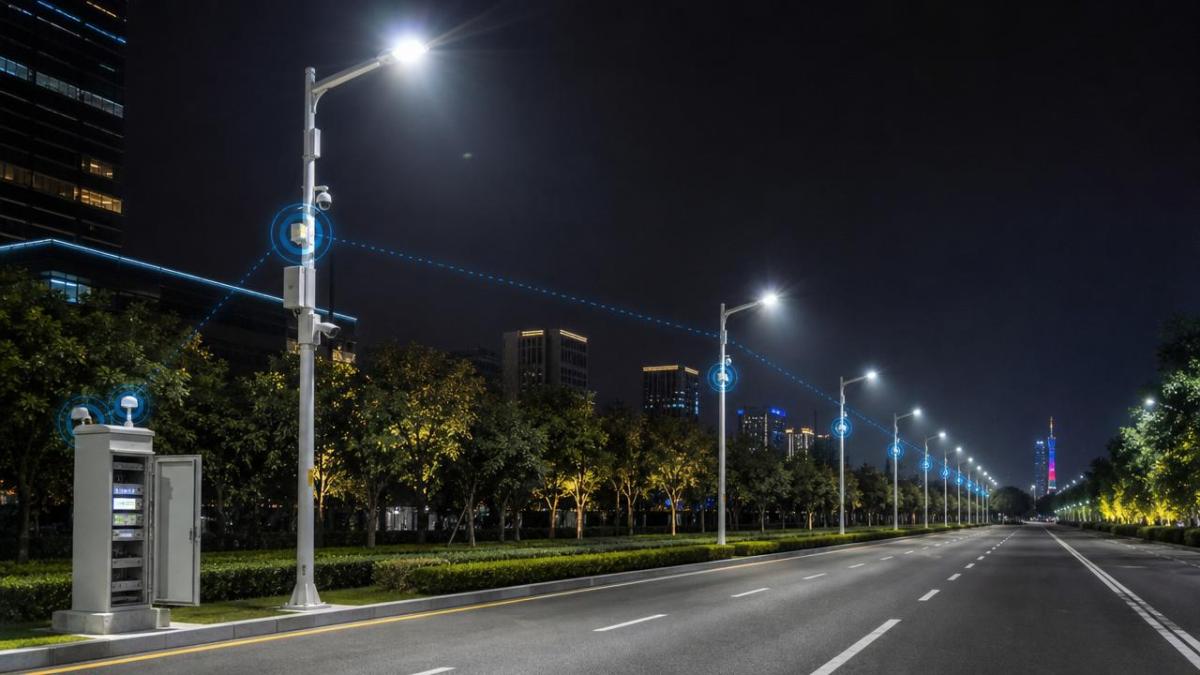
A Zigbee IoT street lighting system usually includes luminaires, controllers, sensors, routers, gateways, a management platform, and maintenance tools. Each layer carries operational value and security responsibility.
Technical evaluators should not assess the radio protocol in isolation. A lighting pole may also host cameras, environmental sensors, emergency buttons, EV charging points, or traffic devices.
For SHSS, smart lighting is not only an energy-saving device category. It is an urban safety anchor, tied to access control, industrial hardware, protective systems, and lifecycle reliability.
Typical Layers to Review Before Deployment
- Field devices: LED drivers, dimming controllers, motion sensors, photocells, and pole-mounted nodes that exchange local Zigbee IoT messages.
- Mesh routing: relay nodes that extend coverage but may also spread malformed traffic if authentication is weak.
- Gateway layer: cellular, Ethernet, or fiber-connected concentrators translating Zigbee IoT traffic into IP-based management commands.
- Cloud or command platform: dashboards for scheduling, energy reports, alarms, device inventory, and remote firmware maintenance.
A strong evaluation begins by mapping data flow. Who can join the mesh? Who can update firmware? Which commands can turn lights off citywide?
Which Zigbee IoT Security Risks Matter Most to Evaluators?
The main risk is not that Zigbee IoT is inherently unsuitable. The risk is deploying it with default assumptions, incomplete commissioning controls, or weak gateway governance.
Street lighting differs from indoor building automation. Devices are exposed outdoors, distributed across public roads, and often maintained by multiple contractors over many years.
Risk Categories to Prioritize
The following table helps technical evaluators translate Zigbee IoT risks into procurement questions, acceptance tests, and operational controls.
The table shows why a bid document should require evidence, not promises. Ask vendors to demonstrate controls during pilot testing, not after citywide rollout.
How to Compare Zigbee IoT With Other Lighting Control Options
Zigbee IoT is attractive because it supports low-power mesh networking, device-level control, and mature integration ecosystems. Yet it is not the only option.
Technical evaluators often compare Zigbee IoT with DALI-based wiring, cellular node controllers, LoRaWAN, NB-IoT, or hybrid architectures. The best choice depends on topology.
Protocol and Architecture Comparison
Use this comparison to identify where Zigbee IoT delivers value and where complementary controls may be required.
A hybrid design can be reasonable. Zigbee IoT may handle local pole clusters, while gateways use cellular or fiber backhaul with stronger perimeter controls.
Procurement Checklist: What Should Be Written Into the Specification?
A secure project starts before purchase. Technical evaluators should convert cybersecurity expectations into measurable requirements, acceptance criteria, and supplier responsibilities.
Many failures come from vague language such as “secure communication supported.” A stronger Zigbee IoT specification defines how security is provisioned, verified, and maintained.
Recommended Bid Requirements
- Require device identity mechanisms that prevent unknown controllers from joining the lighting network during routine maintenance.
- Request documentation on network keys, application keys, factory reset behavior, key renewal, and device decommissioning.
- Define firmware requirements, including signed updates, version inventory, rollback handling, and emergency patch delivery channels.
- Specify gateway controls, including encrypted backhaul, least-privilege accounts, remote access logging, and disabling unused services.
- Ask for pilot-stage penetration review or configuration audit aligned with municipal security policy and operational risk tolerance.
Selection Matrix for Technical Evaluation
This selection table connects Zigbee IoT technical features with real procurement decisions for municipalities, EPC contractors, and system integrators.
A scoring matrix should weight security and maintainability beside luminaire efficiency. Low unit cost can become expensive if devices cannot be patched or audited.
Implementation Controls That Reduce City-Scale Exposure
Even well-selected Zigbee IoT products require disciplined deployment. Installation quality, network segmentation, and contractor access rules often decide real security outcomes.
Street lighting projects also face tight schedules. Evaluators should plan security tasks as project milestones, not as optional work after commissioning.
Deployment Controls for Field Teams
- Limit device join windows to controlled installation periods and document which crew activated each group of nodes.
- Use separate administrative roles for installers, municipal operators, security reviewers, and maintenance contractors.
- Segment lighting control traffic from public Wi-Fi, CCTV, parking systems, and unrelated municipal applications.
- Maintain an asset inventory linking pole location, controller serial number, firmware version, gateway, and network group.
- Test failure modes, including gateway outage, mesh congestion, power cycling, and recovery after firmware updates.
For SHSS, this mirrors the logic behind high-strength fasteners and PPE: a system is only as reliable as its weakest interface under stress.
Standards, Compliance, and Documentation Evaluators Should Request
A Zigbee IoT lighting project may involve radio compliance, electrical safety, cybersecurity documentation, data protection rules, and municipal procurement requirements.
Exact obligations depend on country and project scope. Evaluators should request relevant declarations and avoid assuming one certificate covers every risk.
Useful Compliance Review Areas
- Radio and electromagnetic compatibility documentation for the deployed region, especially when gateways and controllers use multiple radios.
- Electrical safety, surge protection, and outdoor environmental ratings suitable for pole-mounted equipment and harsh weather exposure.
- Cybersecurity documentation aligned with common practices such as secure development, vulnerability handling, and controlled remote access.
- Privacy review when lighting poles include cameras, pedestrian counting, Bluetooth sensing, or data that may identify movement patterns.
SHSS evaluates security across physical and digital boundaries. That perspective is useful when a lighting pole becomes both infrastructure and data collection point.
FAQ: Practical Questions About Zigbee IoT Street Lighting Security
Is Zigbee IoT secure enough for municipal street lighting?
It can be suitable when implemented with controlled commissioning, strong key handling, gateway hardening, and monitored updates. The concern is configuration quality, not only protocol choice.
What is the most common procurement mistake?
Many buyers compare wattage, dimming functions, and unit price while ignoring update commitments. A 50,000-hour luminaire still needs a security lifecycle.
Should every streetlight have direct cloud connectivity?
Not necessarily. Zigbee IoT mesh with hardened gateways can reduce cellular costs and simplify local control, but gateway compromise must be carefully prevented.
How should pilot testing be structured?
Test at least onboarding, command authentication, gateway isolation, firmware update behavior, outage recovery, and abnormal traffic alerts before approving large-scale rollout.
Can Zigbee IoT coexist with DALI lighting control?
Yes. Hybrid systems may use DALI inside cabinets or luminaires and Zigbee IoT for pole-to-gateway coordination, depending on project topology.
Why Choose SHSS for Technical Evaluation and Procurement Support?
SHSS connects smart lighting analysis with physical security, industrial reliability, biometric access governance, fastener-grade durability thinking, and PPE-level risk discipline.
For technical evaluators, our value is structured judgment. We help translate Zigbee IoT risks into specifications, comparison matrices, supplier questions, and acceptance checkpoints.
Consult Us When You Need Clearer Decisions
- Parameter confirmation for controllers, gateways, sensors, dimming interfaces, radio range, and outdoor protection requirements.
- Product selection guidance comparing Zigbee IoT, DALI, cellular, LoRaWAN, NB-IoT, and hybrid lighting architectures.
- Procurement support for certification requirements, security documentation, pilot testing scope, and vendor response review.
- Project discussion on delivery timeline, sample support, customization needs, lifecycle maintenance, and quotation evaluation.
If your team is assessing a smart street lighting rollout, contact SHSS to build a practical Zigbee IoT security checklist before the purchase order is locked.
Recommended News