
Search News
Industry Portal
Hot Articles
Safety Equipment Checklist for High-Risk Job Sites
Time
Click Count
On high-risk job sites, the right safety equipment is more than a requirement—it is the last line of defense between daily operations and serious injury.
From helmets and cut-resistant gloves to respirators and visibility gear, every item supports safer work, stronger compliance, and lower downtime.
This safety equipment checklist explains what to inspect, why each item matters, and how to align protection with real site hazards.
It also reflects a wider industrial trend shaped by smart tools, advanced PPE, and stricter expectations for reliable risk control.
Core Definition of a Safety Equipment Checklist
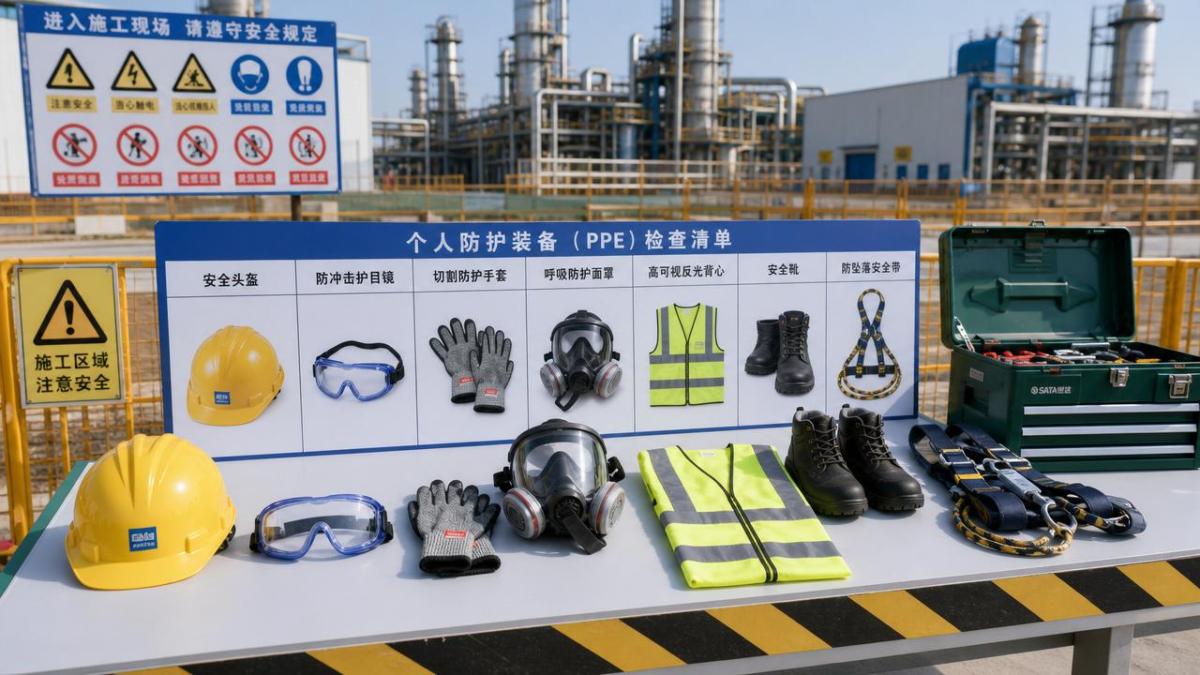
A safety equipment checklist is a structured review of personal and site-level protection required before work begins.
It covers condition, fit, certification, quantity, storage, and task suitability for every critical safety equipment item.
On high-risk sites, the checklist should include both standard PPE and specialized gear for mechanical, chemical, electrical, and visibility hazards.
A useful checklist does more than confirm presence. It verifies readiness, compatibility, and correct worker use.
What the checklist should confirm
- Equipment matches the hazard profile of the task.
- Items meet applicable safety standards and inspection dates.
- Wearers have the right size, fit, and training.
- Damaged or expired safety equipment is removed immediately.
- Emergency backup gear is available on site.
Industry Context and Current Safety Priorities
Across construction, utilities, logistics, manufacturing, and infrastructure maintenance, job sites are becoming faster and more complex.
Brushless tools deliver higher torque. Smart access systems control restricted zones. Stronger fasteners support heavier loads. PPE must keep pace.
This means safety equipment planning now depends on both traditional hazard control and compatibility with modern workflows.
The current focus is not just owning safety equipment, but proving it performs under real operating conditions.
Essential Safety Equipment Categories for High-Risk Sites
Every site should build its checklist around core protective categories. The exact combination depends on hazard severity and task duration.
Head, eye, and face protection
- Hard hats for impact and falling object protection
- Safety glasses with side shields
- Face shields for grinding, cutting, or splash risk
- Welding helmets where radiant exposure exists
Hand and arm protection
- Cut-resistant gloves for metal, glass, and sharp hardware
- Impact gloves for tool handling and heavy assembly
- Chemical-resistant gloves for solvents or corrosives
- Sleeves where forearm exposure is likely
Respiratory and hearing protection
- Disposable or reusable respirators matched to contaminants
- Full-face respirators for higher-risk environments
- Earplugs or earmuffs for sustained noise exposure
- Fit-testing and seal checks for respiratory safety equipment
Body, foot, and fall protection
- High-visibility vests or jackets
- Flame-resistant or arc-rated clothing where needed
- Steel-toe or composite-toe boots with slip resistance
- Harnesses, lanyards, and anchors for work at height
Operational Value of a Complete Safety Equipment Program
A complete safety equipment program protects people first, but its value also appears in daily operations and long-term asset performance.
Fewer injuries mean less disruption, fewer stoppages, and better continuity in demanding schedules.
Reliable safety equipment also supports smoother audits, better incident documentation, and clearer accountability across mixed-risk areas.
In modern industrial settings, this matters because advanced tools and automated systems can increase risk speed, even when they improve efficiency.
That is why SHSS closely tracks the link between smart hardware performance and the last physical layer of worker protection.
Typical High-Risk Scenarios and Matching Equipment
The best safety equipment checklist is task-specific. Generic lists often miss critical exposure points.
Practical Inspection and Maintenance Guidance
Even premium safety equipment fails when inspection is irregular or storage conditions are poor.
Daily visual checks should happen before use. Formal records should follow a scheduled review cycle.
Inspection points to include
- Look for cracks, tears, corrosion, deformation, or missing parts.
- Confirm labels, ratings, and certification marks remain readable.
- Check expiration dates on helmets, filters, and other time-sensitive items.
- Verify harness webbing, stitching, and connectors show no wear.
- Clean reusable safety equipment according to manufacturer instructions.
Common mistakes to avoid
- Using one glove type for every task
- Ignoring fit and comfort during long shifts
- Storing respirators in dusty or wet areas
- Replacing damaged parts with non-matching components
- Treating hearing protection as optional during intermittent noise
Implementation Steps for a Stronger Checklist
To improve results, build the safety equipment checklist around actual workflow, not only general policy language.
- Map hazards by task, tool, material, and zone.
- Group safety equipment by mandatory, conditional, and emergency use.
- Standardize inspection timing at shift start and task change.
- Keep replacement stock for high-turnover protective items.
- Review incidents to update the checklist continuously.
Where advanced tools, biometric access, or smart lighting systems are present, include interface risks in the checklist review.
That approach creates stronger alignment between operational technology and physical safety equipment controls.
Next-Step Action for Safer Job Sites
A high-risk site should never rely on assumptions about safety equipment readiness.
Start with a documented checklist covering head, eye, hand, respiratory, foot, body, and fall protection.
Then compare each item against real hazards, equipment condition, worker fit, and replacement availability.
When safety equipment is selected carefully and inspected consistently, job sites become safer, more efficient, and more resilient under pressure.
Use this checklist as a working baseline, then refine it to match the risks, tools, and protective demands of every active site.
Recommended News