
Search News
Industry Portal
Hot Articles
How to Evaluate a Construction Safety Equipment Manufacturer for Compliance and Lead Time
Time
Click Count
How to Evaluate a Construction Safety Equipment Manufacturer for Compliance and Lead Time
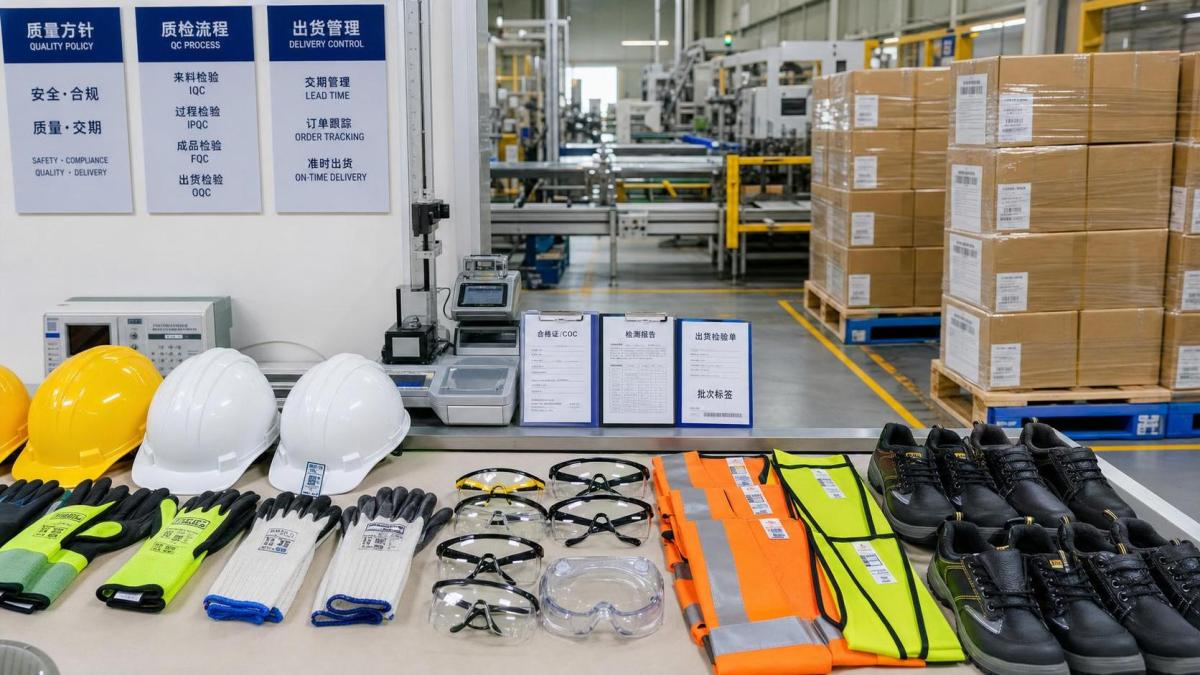
Choosing the right construction safety equipment manufacturer is not just about price. It shapes compliance results, delivery stability, and daily worker protection on site.
A weak supplier creates hidden costs fast. Missed certifications, delayed shipments, or uneven product quality can stall jobs and increase safety exposure.
That is why supplier evaluation needs a practical structure. You need evidence, not claims, especially when projects depend on regulated PPE and repeat deliveries.
A reliable construction safety equipment manufacturer should prove four things clearly. It must meet compliance rules, control quality, support volume, and commit to realistic lead times.
This guide walks through the checks that matter most. It also shows how to compare suppliers without getting lost in polished presentations.
Start With Compliance Before Commercial Terms
For any construction safety equipment manufacturer, compliance is the first filter. Price discussions should come after basic legal and technical requirements are verified.
In actual purchasing work, this means checking both product certification and factory management systems. One without the other is rarely enough.
Documents That Should Be Easy to Produce
Ask the construction safety equipment manufacturer for current certificates, test reports, and declaration documents. Slow responses often signal weak document control.
- ISO 9001 or equivalent quality management certification
- Product-specific standards for helmets, gloves, eyewear, footwear, or fall protection
- CE, ANSI, OSHA-related evidence, or local market approvals where applicable
- Material safety information and traceability records
- Recent third-party lab reports, not outdated samples
Look closely at certificate scope. A factory may hold ISO 9001, yet the certified scope may not cover the PPE category you plan to buy.
More importantly, verify issuing bodies. Legitimate certificates should be easy to cross-check through registries or directly with the notified body.
Check Market Fit, Not Just Generic Compliance
A construction safety equipment manufacturer may be compliant for one region but unsuitable for another. This happens often in cross-border sourcing.
For example, products sold into Europe, North America, and the Middle East can face different labeling, test, and documentation expectations. That affects approval speed.
A capable supplier understands those differences early. That saves time during onboarding and prevents costly relabeling or customs delays later.
Review Quality Control Beyond the Sample Stage
Samples can look excellent and still tell you very little about steady production. The real question is whether the construction safety equipment manufacturer can repeat the same result at scale.
This is where factory process discipline matters. You are assessing consistency, not just product appearance.
What to Ask During Quality Review
- How are incoming raw materials inspected and released?
- What in-process checks happen during molding, stitching, coating, or assembly?
- How are nonconforming units isolated and logged?
- What final inspection standard is used before shipment?
- Can the supplier provide batch traceability by order and production date?
These questions reveal whether control is built into the process or only applied at the end. The difference matters when volumes rise quickly.
Ask for defect data over the last six to twelve months. A serious construction safety equipment manufacturer should track complaints, returns, and corrective actions.
If possible, review inspection photos, lab records, and packaging checks. Construction PPE can fail in transit as easily as it fails in production.
Audit the Factory With Risk in Mind
A site audit, remote or on-site, often exposes issues sales materials hide. Focus on layout, cleanliness, material flow, staffing stability, and calibration control.
Watch for mixed inventory, unclear labeling, or unfinished rework piles. Those are common signs of process drift and shipment risk.
The best construction safety equipment manufacturer usually has simple, visible discipline. Documents match the floor, and operators know the standard without hesitation.
Test Lead Time Claims Against Real Capacity
Lead time is often where supplier selection goes wrong. Many factories quote an aggressive number before confirming material availability and line loading.
A credible construction safety equipment manufacturer should explain how lead time is built. That includes raw materials, tooling, production, testing, packing, and outbound logistics.
Key Questions That Reveal Delivery Reality
- What is the standard lead time for repeat orders versus first orders?
- Which materials are imported and exposed to long replenishment cycles?
- How much monthly capacity is reserved for existing customers?
- What happens during peak season or urgent project demand?
- What percentage of orders shipped on time last quarter?
Numbers matter here. If the supplier cannot share average output, line count, or order backlog, the lead time promise is likely weak.
Also ask about subcontracting. Some construction safety equipment manufacturer groups rely on external plants for overflow, which can change quality and timing.
Separate Production Lead Time From Total Delivery Lead Time
This distinction is easy to miss. Production might take fifteen days, while total delivery takes forty because of testing queues, export bookings, or port delays.
A dependable construction safety equipment manufacturer will map the full timeline clearly. That makes project planning more realistic and less reactive.
From recent supply chain shifts, this has become even more important. Component shortages and freight disruptions can turn a minor gap into a missed site milestone.
Compare Commercial Terms With Total Risk Cost
A lower unit price can be expensive if the supplier misses compliance, ships late, or creates warranty issues. Good evaluation looks at total cost, not only quoted cost.
This is especially true when buying from a new construction safety equipment manufacturer for a recurring project pipeline.
Include These Cost Factors in Comparison
Ask each construction safety equipment manufacturer to quote against the same specification, volume, packaging, and delivery term. That keeps comparison fair.
Then score suppliers with weighted criteria. Compliance and delivery performance should usually carry more weight than minor price differences.
Build a Practical Supplier Evaluation Framework
The most useful approach is simple and repeatable. A structured scorecard helps compare every construction safety equipment manufacturer using the same decision logic.
Recommended Evaluation Categories
- Compliance readiness: certificates, reports, market approvals
- Quality maturity: inspection process, defect control, traceability
- Capacity strength: output, labor stability, equipment, backup plans
- Lead time reliability: on-time history, material planning, logistics support
- Commercial fit: payment terms, MOQ, flexibility, claim handling
- Communication quality: speed, accuracy, technical clarity
This framework works well for helmets, protective gloves, high-visibility clothing, eyewear, and other construction PPE categories.
It also helps when two suppliers look similar on paper. The stronger construction safety equipment manufacturer usually stands out through consistency and response quality.
Final Checks Before Approval
Before placing a large order, run a pilot. Start with one SKU or one moderate batch, then test document accuracy, quality consistency, and actual shipment timing.
That small step gives better evidence than long presentations. It also shows how the construction safety equipment manufacturer handles change requests and exceptions.
A strong supplier relationship is built on operational truth. When compliance is proven and lead time is realistic, procurement decisions become safer and far more stable.
Use that standard every time. It reduces surprises, supports site safety, and helps turn supplier selection into a controlled business decision.
Recommended News