
Search News
Industry Portal
Hot Articles
Industrial Protective Supplies Checklist for Reducing Hand and Face Injury Risks
Time
Click Count
Industrial Protective Supplies Checklist for Reducing Hand and Face Injury Risks
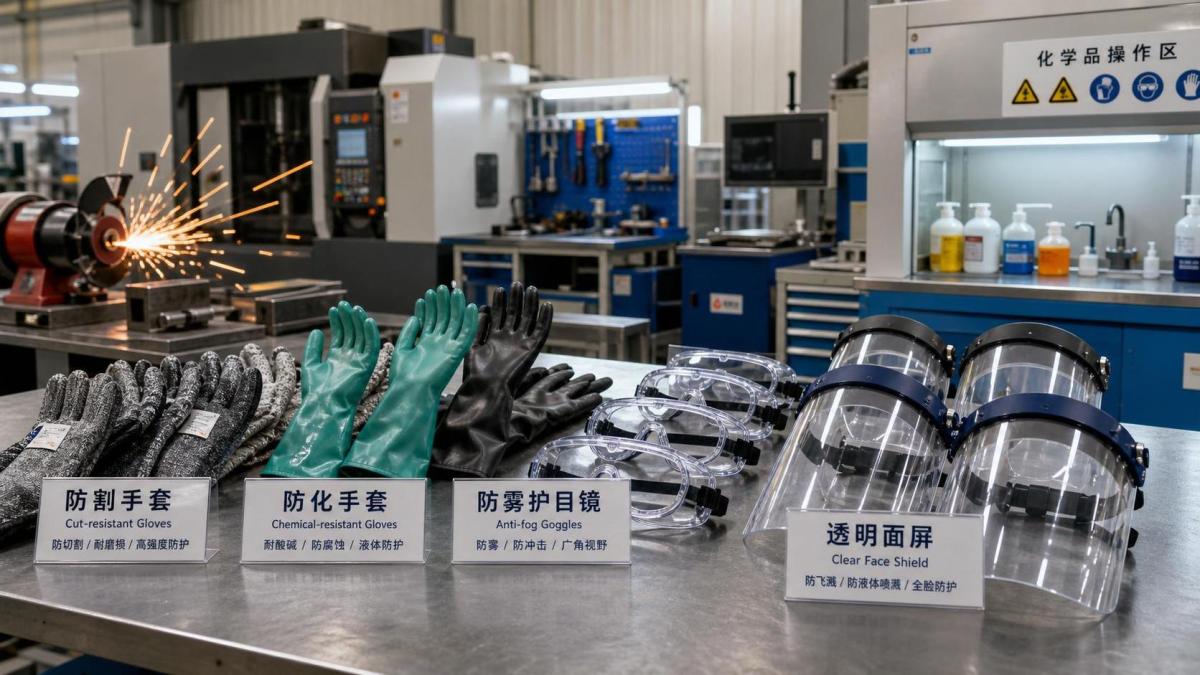
Hand and face injuries still rank among the most frequent incidents in industrial work.
Cuts, flying particles, hot sparks, chemical splashes, and impact hazards often happen during routine tasks.
That is why industrial protective supplies should be managed as a control system, not a purchasing afterthought.
A practical checklist helps turn PPE selection into a repeatable process.
It also supports better inspections, clearer accountability, and faster correction of unsafe conditions.
From recent site reviews, the biggest gap is rarely missing equipment alone.
More often, the issue is mismatch.
Workers wear gloves with poor grip, shields with fogging problems, or eyewear that conflicts with other gear.
In practice, effective industrial protective supplies reduce exposure only when task fit, durability, and compliance work together.
The checklist below is built for day-to-day industrial environments where speed, consistency, and injury prevention matter.
Start With the Hazard Map, Not the Catalog
Before comparing products, define exactly how hands and faces are exposed.
This step prevents overspending on the wrong industrial protective supplies.
It also reveals where current controls no longer match production changes.
Core Questions for the Assessment
- Are hands exposed to sharp edges, rotating parts, heat, vibration, or chemicals?
- Is the face at risk from grinding debris, molten splash, compressed air, or liquid spray?
- Do tasks require high dexterity, touchscreen use, wet grip, or frequent tool handling?
- Are multiple hazards present at the same workstation?
- Does the task change by shift, material batch, or machine setup?
A simple hazard map often shows that one glove type cannot cover every task.
The same applies to face protection.
Safety glasses may be enough in one cell, while a full face shield is essential in another.
When industrial protective supplies are mapped to real exposures, training becomes easier and compliance gets stronger.
Checklist for Hand Protection Selection
Hand injuries often come from familiar work done under time pressure.
That is why glove selection should follow a written checklist, not habit.
What to Verify
- Cut resistance level matches the sharpness and force of the task.
- Grip performance works in dry, oily, or wet conditions.
- Glove thickness does not compromise safe tool control.
- Cuff length protects the wrist where exposure continues past the palm.
- Material resists abrasion, puncture, heat, or chemicals as required.
- Sizing is available across the actual workforce, not only standard averages.
- Workers can remove gloves quickly in contamination or entanglement scenarios.
For metal handling, cut resistance usually drives the decision.
For assembly work, dexterity and tactile control may matter just as much.
This is where many industrial protective supplies programs break down.
A technically stronger glove can still fail if workers remove it to complete precise tasks.
In actual operations, the best option is often the highest protection level that people will consistently wear.
Checklist for Face and Eye Protection
Face injuries escalate quickly because exposure happens in seconds.
The right industrial protective supplies must address impact, splash, heat, and visibility together.
Inspection Points
- Safety glasses meet the relevant impact standard for the environment.
- Face shields extend below the chin and wrap the sides where needed.
- Lenses resist fogging in hot, humid, or fast-paced work zones.
- Headgear remains stable during bending, lifting, and machine access.
- Eye and face PPE stays compatible with helmets, respirators, and hearing protection.
- Replacement visors and lenses are stocked and easy to issue.
A common mistake is treating face shields as a substitute for safety glasses.
In many tasks, they should work together.
That layered approach matters during grinding, chipping, liquid transfer, and maintenance cleaning.
Reliable industrial protective supplies also need clear visibility.
Scratched lenses and distorted shields reduce compliance because workers stop trusting the gear.
Standardize Inspection and Replacement Cycles
Even well-chosen industrial protective supplies lose value when inspection is inconsistent.
A visible checklist keeps supervisors and operators aligned.
Daily Check Items
- Tears, holes, frayed seams, or hardened glove surfaces.
- Loose face shield mounts, cracked visors, or damaged brow guards.
- Clouding, deep scratches, or residue that blocks sightlines.
- Contamination from oils, solvents, metal dust, or chemicals.
- Signs that workers are modifying PPE for comfort or fit.
Replacement Triggers
Do not rely only on fixed calendar intervals.
Tie replacement to wear rate, exposure level, and failure history.
This is especially useful in mixed operations where some stations consume industrial protective supplies much faster than others.
When replacement rules are clear, teams stop stretching PPE past its safe life.
Connect PPE Performance to Behavior and Procurement
In many facilities, injury reduction stalls because procurement and field use are disconnected.
Better industrial protective supplies decisions come from combining usage feedback with incident data.
Useful Metrics to Track
This approach moves the conversation away from unit price alone.
It frames industrial protective supplies as operational controls tied to downtime, recordability, and workforce reliability.
That shift usually improves both budget decisions and frontline acceptance.
A Practical Rollout Plan
For sites that need a cleaner process, start small and build consistency.
- Review the top five hand and face injury exposures by task.
- Match each task to approved industrial protective supplies and backup options.
- Pilot the checklist in one department for two to four weeks.
- Collect worker feedback on fit, grip, fogging, and replacement timing.
- Adjust the approved list, then scale sitewide with supervisor accountability.
The most effective industrial protective supplies program is rarely the most complicated one.
It is the one people can inspect, understand, and follow every shift.
When glove choice, face protection, inspection, and replacement are standardized, injury risk drops in a measurable way.
Use the checklist as a working control document.
Update it whenever processes, materials, or incident patterns change.
That is how industrial protective supplies become part of prevention, not just compliance.
Recommended News