
Search News
Industry Portal
Hot Articles
Vietnam Tightens Checks on Transit Li-ion Tool Shipments
Time
Click Count
On July 2, 2026, Vietnam Customs signaled a practical change in enforcement for China-made brushless Li-ion tools moving through Vietnamese seaports toward Western markets. The new internal operating guidance raises attention on transit cargo routed via Hai Phong and Ho Chi Minh ports, with inspection centered on whether battery cell UN38.3 test reports match the batch numbers on the physical goods. For exporters, distributors, logistics providers, and compliance teams, the development matters less as a headline and more as an immediate execution issue affecting documentation readiness, port dwell time, and delivery planning.
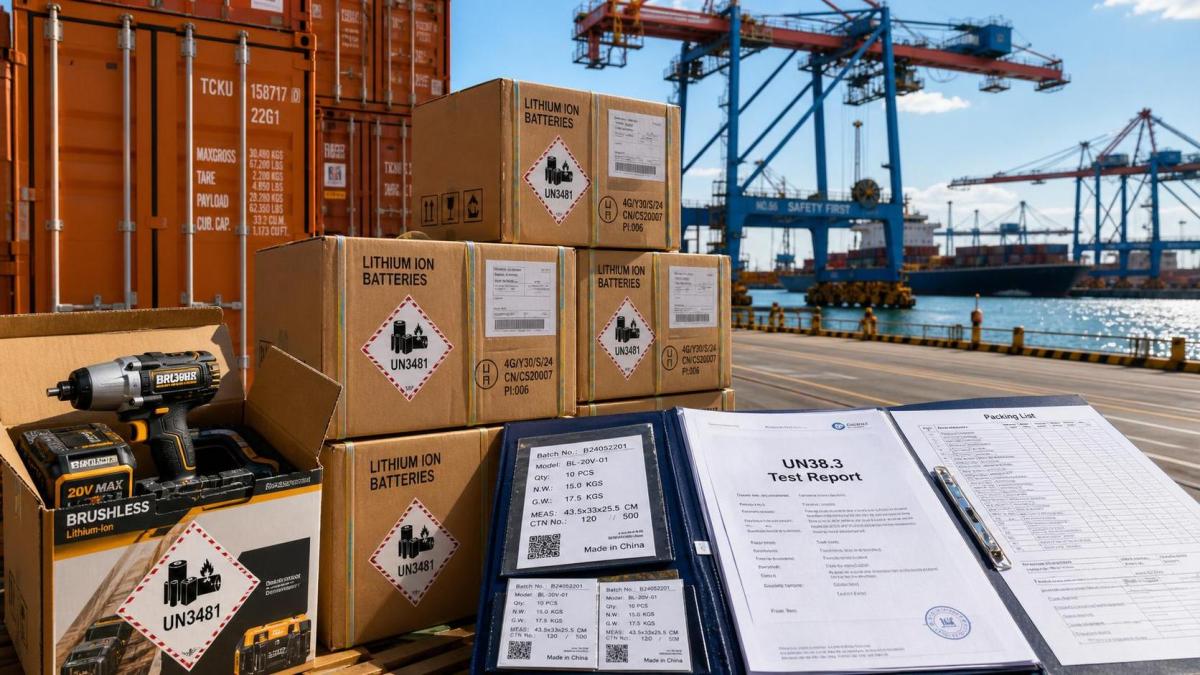
A sharper customs screen on transit cargo
The General Department of Vietnam Customs issued internal operating guidance Ref. GDVC/OPS/2026/0702 on July 2, 2026. According to the provided event summary, the guidance took effect immediately and applies enhanced inspections to China-made brushless Li-ion tools transiting through Vietnamese seaports, specifically Hai Phong and Ho Chi Minh, when the cargo is destined for European and US markets.
The stated inspection focus is the consistency between battery cell UN38.3 test reports and the batch numbers found on the physical products. The same summary states that the current average inspection rate has reached 42% and that average port delay has extended by 3.8 working days. It also states that this is materially increasing logistics costs and delivery uncertainty for distributors operating in Southeast Asia.
Where the disruption is likely to be felt first
Export shipments routed through Vietnam face a documentation-to-cargo check
From an industry perspective, exporters of brushless Li-ion tools are likely to feel the first impact because the inspection point is not only the product category but also the traceability link between test documentation and physical batch identification. The affected business step is the transit export process itself, where any mismatch or incomplete alignment between reports and cargo markings could create additional handling time. What deserves closer attention is the readiness of shipment files accompanying battery-containing tools, especially where multiple batches may be consolidated into one container.
Distributors and channel operators may see planning volatility
Analysis shows that distributors handling transit cargo through Vietnam may face the issue as a scheduling and inventory risk rather than a purely customs matter. The provided facts already indicate longer dwell time and higher logistics pressure, which means channel operators need to watch delivery windows, replenishment timing, and commitments tied to onward shipment. The practical exposure is in order fulfillment and handover predictability, particularly where transit timing is already tight.
Logistics and supply chain service providers need closer shipment-level coordination
Observably, freight forwarders, customs-facing service providers, and other supply chain intermediaries are exposed because the control point is operational and batch-specific. Their main risk lies in shipment preparation, document consistency checks, and communication across exporter, warehouse, and port handling teams. The rule change draws attention to whether cargo identification and supporting compliance records remain aligned throughout the transit process.
Testing and compliance support functions come under greater scrutiny
For testing-related and compliance support teams, the key issue is not the existence of a UN38.3 report alone, but whether the report can be tied clearly to the actual battery cell batch in the shipment under review. Analysis shows this can shift attention toward internal record control, version control of technical files, and the completeness of supporting documentation used in export and transit operations.
What companies should review now
Check the traceability link between reports and physical batch numbers
It is more appropriate to understand this as an immediate documentation consistency issue. Companies involved in affected shipments should pay close attention to whether battery cell UN38.3 test reports can be matched directly to the batch numbers shown on the goods or related shipment identifiers. The provided information does not describe a broader technical review, so the most concrete current focus remains traceability consistency.
Reassess lead times for Vietnam transit routes
Analysis shows that the reported average delay of 3.8 working days is significant enough to affect transit planning. Businesses using Vietnamese ports for onward movement to Europe or the United States should closely monitor whether current lead-time assumptions, booking schedules, and promised delivery dates still reflect the added inspection exposure.
Pay attention to execution language and any further clarification
The summary confirms an internal operating guidance and immediate enhanced inspection, but it does not provide the full operational wording beyond the stated scope and focus. For that reason, companies should continue watching for any subsequent clarification in enforcement language, documentation expectations, or port-level implementation practice before treating the current position as fully settled in every operational detail.
Review supplier and shipment file discipline
From an industry perspective, this development also puts pressure on supplier qualification and shipment file discipline. Where exporters, assemblers, and trading parties rely on layered sourcing or repacking arrangements, the practical concern is whether the final shipment set preserves a clean link between the battery cell batch and the compliance evidence carried with the cargo.
Why this reads as an enforcement signal
Observably, this update is more than a routine customs notice because it points to a specific control method: comparing UN38.3 battery documentation with physical batch identifiers on transit cargo. Analysis shows that the market should read this primarily as an enforcement signal already affecting execution, given the stated inspection rate and delay impact. At the same time, it is still too early to frame it as a fully matured rule environment with all implementation details settled, because the input does not provide wider guidance on exceptions, document format preferences, or how consistently the checks will be applied over time.
How the market may need to frame this development
At this stage, the event is best understood as a live operational tightening around transit compliance for China-made brushless Li-ion tools moving through Vietnam to Western markets. The confirmed facts point to real friction in clearance and delivery planning, but they do not yet support broader conclusions beyond the stated inspection focus, inspection rate, and delay impact. A cautious industry reading is that traceability between battery documentation and physical cargo has become a more immediate control point in this route.
Basis of this article
This article is generated based on the user-provided news title, event date, and event summary. For developments of this kind, relevant source types typically include official notices, releases from regulatory authorities, customs or trade administration information, industry association updates, standard-setting documents, and reporting from established trade media. A specific official source link was not provided in the input, so the underlying notice and any later interpretive materials still require continued verification. What deserves closer attention going forward is whether further policy detail, enforcement interpretation, certification handling, tender document language, market feedback, or company execution practices reveal a more stable implementation pattern.
Recommended News