
Search News
Industry Portal
Hot Articles
How to Choose Cut-Resistant Clothing for High-Risk Industrial Tasks
Time
Click Count
In high-risk production settings, choosing cut-resistant clothing is a practical safety decision, not a box-ticking exercise. When sheet metal, sharp offcuts, broken glass, blades, and abrasive edges are part of daily work, the right garment can reduce injury severity, protect workflow continuity, and support consistent compliance without slowing people down.
That makes this topic especially relevant across construction, fabrication, logistics, utilities, smart infrastructure, and advanced manufacturing. In environments shaped by higher tool speeds, tighter delivery schedules, and more automated handling, protective apparel has to match real exposure, remain wearable through long shifts, and hold up under repeated laundering and field use.
Why cut-resistant clothing now carries more operational weight
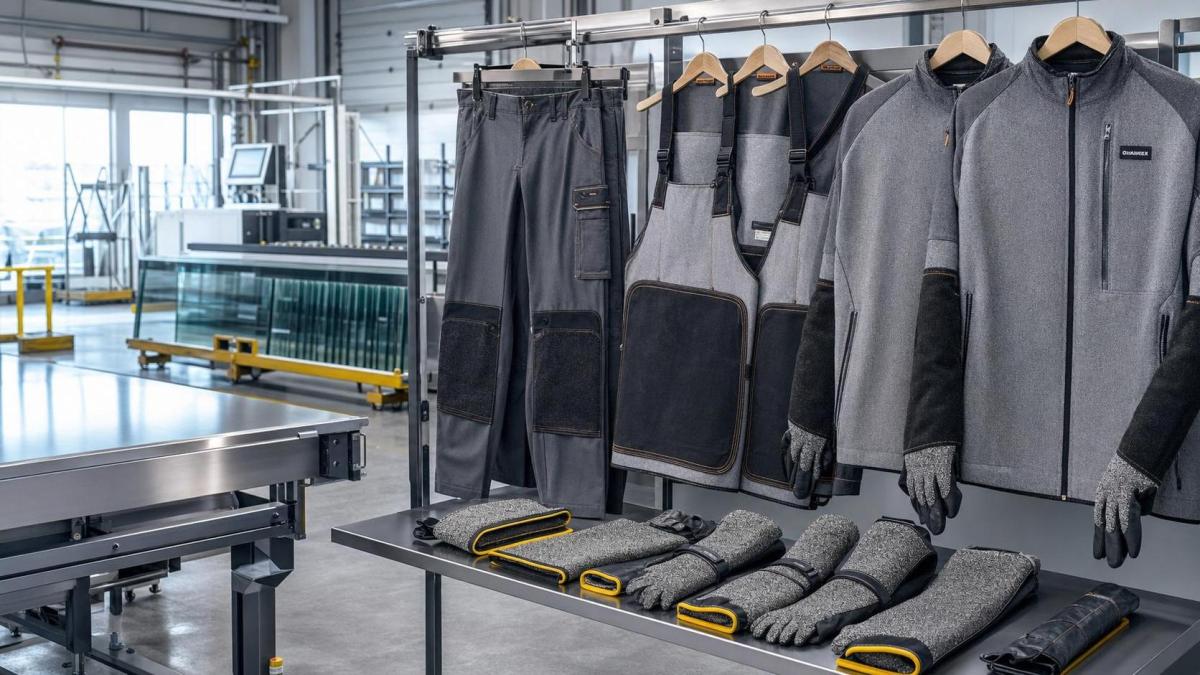
Across industrial systems, equipment is becoming stronger, faster, and more compact. Brushless power tools deliver high torque in smaller formats, precision fasteners support heavier structural loads, and modular workstations increase handling speed. As output rises, contact with sharp surfaces often becomes more frequent, not less.
At the same time, safety expectations are rising. Incident reporting is tighter, traceability is better, and buyers increasingly want PPE that fits a broader risk-control strategy. In that context, cut-resistant clothing sits alongside gloves, arm guards, face protection, lighting quality, and process design as part of one integrated defense line.
This perspective aligns with SHSS, where protective gear is viewed as the last physical armor in industrial and urban operations. The point is not to chase the highest protection rating on paper. The point is to choose clothing that matches exposure patterns, task movement, and the wider safety architecture of the site.
What cut-resistant clothing actually covers
Cut-resistant clothing refers to garments designed to reduce injury from slicing, sharp-edge contact, and repeated abrasion. It may include jackets, sleeves, aprons, trousers, base layers, coveralls, and reinforced panels used around vulnerable body zones.
The material story matters. Many garments combine engineered fibers such as aramid, HPPE, glass fiber blends, steel-core yarns, or advanced composites. These fabrics are often layered or mapped into specific zones so protection appears where risk is highest rather than across every square inch.
It is also important to separate cut resistance from other properties. A garment can resist cuts but perform poorly against heat, sparks, chemicals, puncture, or impact. In real operations, protective value usually depends on how those risks overlap during the same task.
Certification is a starting point, not the finish line
Standards and test ratings provide a useful baseline for comparing options. They help screen out unsuitable products and create a more consistent procurement process. Still, lab scores do not fully describe body movement, sweat load, snagging risk, or garment fatigue after repeated washing.
That is why a technically correct purchase can still underperform on the floor. The best decisions combine certification, wear trials, laundering data, seam quality, and task observation.
How to match protection with the actual hazard
The most common mistake is choosing cut-resistant clothing by product category alone. A sleeve that works in glass handling may not be enough for metal stamping. A heavy apron may protect well but create heat stress and poor mobility during repetitive assembly.
A better approach is to map the hazard before comparing garments. Look at the object being handled, edge sharpness, force direction, frequency of contact, body zone exposure, and the likely consequence of failure.
This mapping step often reveals that no single garment solves everything. In many cases, layered protection and task zoning work better than one heavy all-purpose solution.
Key selection factors that deserve closer attention
When comparing cut-resistant clothing, performance should be reviewed through both safety and usability. A garment that stays in lockers or gets modified on site is not a successful control, no matter how strong the fabric looks in a specification sheet.
Protection level and coverage zone
Check where protection is built into the garment. Full-body coverage is not always necessary. More often, forearms, abdomen, thighs, and chest need targeted defense based on workflow and handling posture.
Fit, mobility, and fatigue
Restricted movement creates its own safety problems. If reaching, climbing, bending, or machine access becomes awkward, the risk profile changes. Good cut-resistant clothing should move naturally, stay in place, and avoid bunching around joints or fasteners.
Heat management and shift tolerance
In hot workshops or outdoor summer conditions, breathability matters. Heavy fabrics may be technically protective but operationally weak if they drive heat stress, rushed removal, or non-compliant wear habits.
Durability after laundering
Repeated washing, industrial detergents, contamination, and rough storage can degrade seams and fibers. Procurement decisions should include wash-life claims, inspection rules, and replacement triggers, not just day-one performance.
Compatibility with other PPE
Cut-resistant clothing rarely works alone. It needs to integrate with gloves, high-visibility wear, respiratory protection, harnesses, and eye or face protection. Cuff design, overlap zones, and closure systems affect whether those layers actually protect the body together.
Where selection decisions often go wrong
Several recurring errors appear in industrial PPE reviews. One is buying the highest-rated garment for every area, even when the task only needs selective reinforcement. Another is treating clothing and gloves as separate decisions, despite injuries often happening at transition points.
A third issue is ignoring process change. When a site upgrades cutting tools, adds robotic cells, changes metal stock, or shifts packaging formats, the clothing plan may need revision. Protection that was adequate last year may now be misaligned with exposure.
- Do not rely on certification labels without field trials.
- Do not overlook laundering, repair, and inspection routines.
- Do not assume thicker always means safer in practice.
- Do not separate clothing choice from task redesign.
This is where a broader SHSS-style systems view becomes useful. Safety outcomes are shaped by tools, hardware, lighting, access control, workflow discipline, and PPE together. Clothing selection works best when it is tied to that larger operating picture.
A practical review framework for site use
A strong evaluation process does not need to be complicated. It needs to be consistent, observable, and easy to repeat when tasks or suppliers change.
- Document the sharp-object source, contact frequency, and affected body zone.
- Shortlist garments by certified cut performance and relevant multi-risk properties.
- Run wear trials during normal shifts, not controlled demonstrations.
- Check comfort, movement, overlap with gloves, and heat buildup.
- Review wash-life, seam integrity, and replacement cost over time.
- Update the selection after process changes or incident trends.
This kind of review is especially useful in mixed environments where fabrication, installation, maintenance, and logistics overlap. It keeps cut-resistant clothing tied to actual exposure instead of generic catalog claims.
Choosing with long-term performance in mind
The best cut-resistant clothing is rarely the cheapest item or the most extreme specification. It is the option that protects reliably, supports movement, survives maintenance cycles, and remains suitable as operations evolve.
For that reason, the next step is usually not a larger order. It is a clearer risk map, a better wear trial, and a sharper comparison of garments by task, body zone, and service life. When those factors are visible, selection becomes more defensible and safety performance becomes easier to sustain.
In high-risk industrial tasks, cut-resistant clothing should be judged the same way any critical hardware is judged: by how well it performs under real conditions, how consistently it fits the system around it, and how confidently it protects the people inside that system.
Recommended News