
Search News
Industry Portal
Hot Articles
GDPR Compliance Checklist: Key Risks, Costs, and Documentation Steps
Time
Click Count
Why has GDPR compliance become a board-level issue instead of a legal side task?
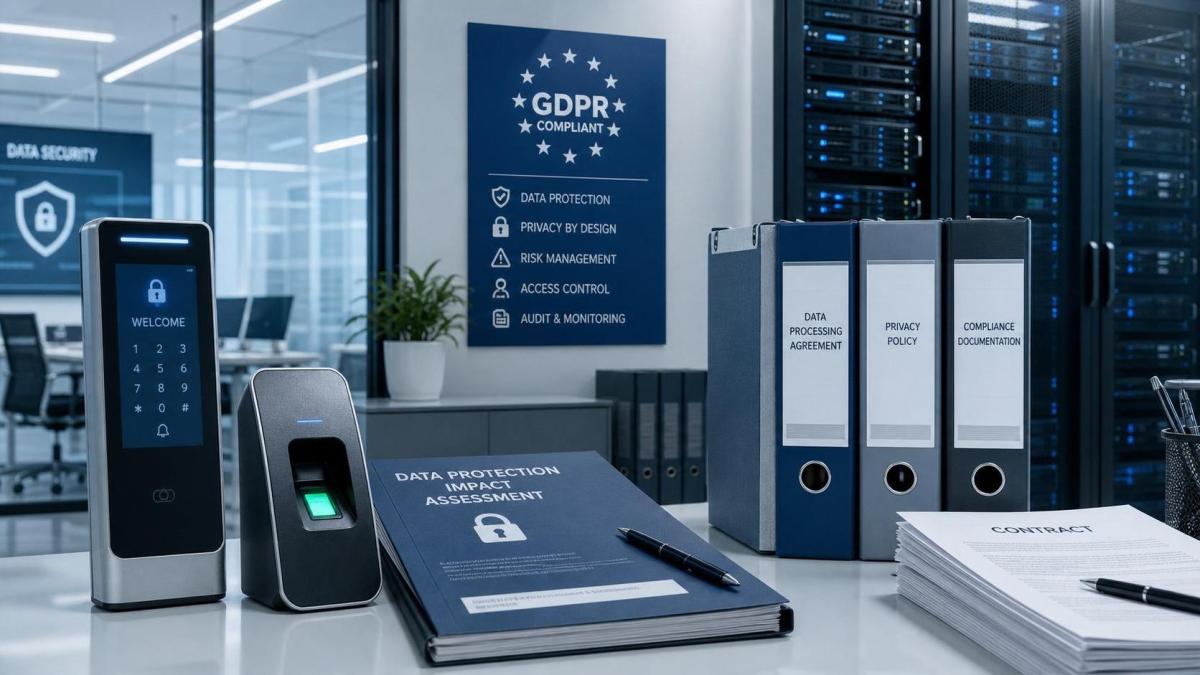
GDPR compliance now affects cost control, operational resilience, and trust, not just legal exposure.
That shift matters across connected industries.
A smart lock platform stores biometric templates.
A lighting system logs occupancy patterns.
A PPE portal tracks worker health checks.
In each case, personal data becomes part of the operating model.
That is why GDPR compliance sits close to product design, procurement, security architecture, and vendor governance.
For organizations following industrial intelligence sources like SHSS, this is especially relevant.
The convergence of AIoT, edge security, and cloud analytics creates value.
It also expands data handling responsibilities.
Put simply, GDPR compliance is the discipline that keeps advanced systems usable, auditable, and defensible.
When leaders ignore it, the usual damage appears in three places.
- Regulatory risk grows because records, lawful bases, and retention logic are incomplete.
- Commercial risk grows because clients increasingly ask for privacy evidence during tenders and audits.
- Technical risk grows because engineers inherit unclear rules for access, storage, and deletion.
So the practical question is no longer whether GDPR compliance matters.
The better question is where risk actually hides and how to document control.
Which operations usually trigger the biggest GDPR compliance risks?
The highest risks rarely come from one dramatic event.
More often, they come from ordinary workflows that scale quietly.
Biometric access systems are a strong example.
Facial recognition, iris scans, and fingerprint templates involve sensitive personal data.
That means GDPR compliance must address necessity, proportionality, retention, and security from the start.
A second risk area is cross-system data reuse.
For example, access logs collected for facility security may later be reused for productivity tracking.
That change of purpose can create immediate compliance issues.
A third risk appears in vendor ecosystems.
Cloud hosting, mobile apps, firmware updates, support tools, and remote diagnostics may all process personal data.
If contracts and processor terms are weak, GDPR compliance breaks at the supply-chain level.
The table below helps separate high-frequency issues from the controls that usually matter most.
In practice, strong GDPR compliance starts by mapping these routine decisions before they become embedded in products and contracts.
What does GDPR compliance really cost, and where do hidden expenses appear?
Many teams underestimate cost because they only count legal review.
The real cost profile is broader.
It includes data mapping, contract remediation, engineering changes, policy updates, training, and audit preparation.
For AIoT and smart hardware operations, technical redesign can be the largest line item.
A biometric device may need template minimization.
A mobile app may need consent separation.
A cloud dashboard may need role-based access and deletion automation.
Hidden costs usually appear when GDPR compliance is delayed.
- Sales cycles slow down because enterprise buyers ask for privacy answers that nobody owns.
- Product launches slip because a DPIA or transfer review starts too late.
- Incident response becomes expensive because logs, responsibilities, and breach workflows are fragmented.
- Legacy data cleanup consumes budget that could have been avoided through better retention rules.
There is also a less visible financial angle.
Mature GDPR compliance often improves procurement quality.
Vendors with clearer documentation, tighter access controls, and better deletion logic create fewer downstream surprises.
That is why privacy controls should be treated like durability or cybersecurity controls.
They protect long-term operating value.
Which documents prove GDPR compliance instead of just claiming it?
This is where many programs become fragile.
Policies alone do not prove GDPR compliance.
Evidence comes from records that connect decisions, controls, and accountability.
The core file set usually includes operational documents, not just legal statements.
- Records of processing activities showing data categories, purposes, systems, recipients, and retention logic.
- Data protection impact assessments for higher-risk processing, especially biometrics and surveillance-linked workflows.
- Processor agreements, sub-processor lists, and cross-border transfer assessments.
- Privacy notices and internal handling rules aligned with actual processing behavior.
- Access control records, deletion procedures, breach response logs, and training evidence.
Needless complexity is not the goal.
What matters is that documentation reflects the live environment.
If a security platform uses edge recognition, cloud backup, and third-party maintenance, the documentation should show that chain clearly.
This is especially important in sectors covered by SHSS intelligence themes.
Physical security systems, connected lighting, and site access tools often blend operational technology with personal data processing.
That blend needs disciplined records, not broad promises.
How do you build a workable GDPR compliance checklist without slowing the business down?
A useful checklist should support decisions, not generate paperwork for its own sake.
The better approach is to tie GDPR compliance reviews to existing business gates.
For instance, attach privacy checks to vendor onboarding, new feature approval, market entry review, and security change control.
That keeps the process practical.
A focused checklist usually covers these points
- Identify what personal data is collected, including device logs, identifiers, images, and biometric templates.
- Confirm the lawful basis for each processing purpose and test whether the scope is necessary.
- Check whether any high-risk processing requires a DPIA before deployment.
- Review vendor contracts, hosting regions, and cross-border transfer safeguards.
- Set retention periods, deletion workflows, and evidence trails for completed actions.
- Align technical controls such as encryption, access roles, and audit logging with documented rules.
- Prepare procedures for data subject requests, incidents, and recurring policy review.
In real operations, this checklist should not sit only with legal teams.
Engineering, procurement, information security, and service operations all influence GDPR compliance outcomes.
That shared ownership is often the difference between a polished policy set and a resilient system.
What mistakes cause GDPR compliance programs to fail even after investment?
One common mistake is treating all personal data the same.
Biometric data, location-linked access logs, and worker identity records often require stricter analysis.
Another mistake is assuming cybersecurity equals privacy compliance.
Strong encryption helps, but it does not answer why the data was collected, how long it stays, or whether secondary use is lawful.
A third problem is static documentation.
Businesses change vendors, launch new apps, add sensors, and enter new regions.
If records do not change with them, GDPR compliance becomes outdated on paper and unreliable in practice.
The safer path is straightforward.
Review high-risk processing first.
Prioritize evidence over statements.
Use documentation to support product, sourcing, and security decisions as they happen.
For organizations operating around smart hardware, secure facilities, industrial systems, and connected environments, that approach is far more sustainable.
GDPR compliance works best when it becomes part of design discipline.
The next practical step is to map current data flows, flag sensitive processing, and compare existing records against live operations.
That gap review usually reveals where risk, cost, and documentation priorities should start.
Recommended News