
Search News
Industry Portal
Hot Articles
Can thermal facial recognition access control work in complete darkness?
Time
Click Count
Can Thermal Facial Recognition Access Control Work in Complete Darkness?
Introduction: Can thermal facial recognition access control work in complete darkness? For technical evaluators, the answer depends on sensing architecture, not merely whether a device contains a thermal camera.
A well-designed system can support secure identity verification when visible light is zero. However, thermal imaging alone rarely delivers the consistency, identity accuracy, and attack resistance required at high-security entrances.
The strongest deployments combine thermal sensing with near-infrared cameras, active infrared illumination, depth sensing, liveness detection, and edge AI. Evaluators should assess the full authentication chain, not a single sensor specification.
What Technical Evaluators Are Actually Trying to Determine
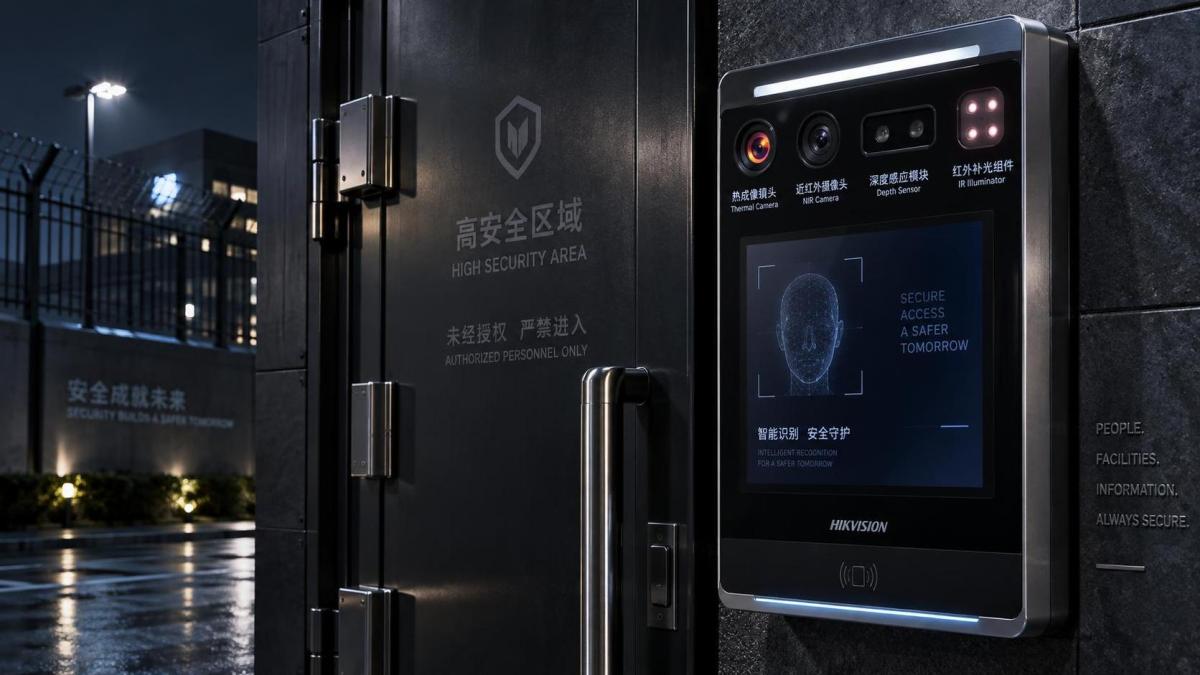
Searchers evaluating thermal facial recognition access control usually want a practical answer: can the system identify authorized people reliably without visible lighting, while rejecting fraud and minimizing operational exceptions?
They also need to separate several commonly confused capabilities: detecting a human presence, capturing a usable facial image, matching an enrolled identity, and confirming that the presenting subject is alive.
A thermal camera may detect a warm human face in darkness very effectively. That does not automatically mean it can generate a stable biometric template suitable for one-to-many identification.
Technical teams should ask whether the claimed recognition result comes from thermal imagery, near-infrared imagery, visible-light imagery, or a fusion model using multiple data streams simultaneously.
This distinction matters because each sensing method captures different facial information. Surface temperature patterns, reflected infrared texture, three-dimensional contours, and visible color data contribute different strengths and weaknesses.
The operational question is also broader than darkness. Evaluators must consider access speed, false accepts, false rejects, presentation attacks, mask usage, outdoor temperature variation, and integration with existing door hardware.
A credible vendor should provide test conditions, not only a headline accuracy figure. Recognition performance changes significantly with enrollment quality, user distance, angle, motion, glasses, face coverings, and ambient conditions.
For most enterprise access points, the desired outcome is not experimental identification in darkness. It is repeatable authentication within a defined lane, at a controlled distance, with measurable security and throughput targets.
How Thermal Imaging Performs When Visible Light Reaches Zero
Thermal imaging measures emitted long-wave infrared energy rather than reflected visible light. Therefore, it does not need room lights, streetlights, or active illumination to detect temperature differences.
In complete darkness, a thermal sensor can usually distinguish a person from a cooler background. Facial regions often show recognizable heat distribution around the forehead, eyes, nose, and cheeks.
This capability makes thermal sensing valuable for perimeter monitoring, low-light detection, night-time occupancy awareness, and initial subject acquisition. It remains functional where conventional RGB cameras return nearly black images.
However, human thermal signatures are not as stable as facial geometry. Exercise, fever, wind, rain, skin moisture, cosmetics, outdoor temperature, and recent entry from another environment can alter patterns.
Thermal resolution is another limitation. Many security thermal cameras are designed for detection at distance, not fine-grained face matching. Their pixel density may be insufficient for dependable biometric feature extraction.
Facial recognition algorithms typically benefit from detailed landmarks, texture, contour, and eye-region features. Thermal frames can obscure or distort some of these features, especially with low-resolution sensors or side-facing subjects.
Eyeglasses present a specific challenge. Glass often blocks long-wave infrared radiation, causing lenses to appear dark and concealing important periocular thermal details used by some recognition models.
Face coverings can create a similar problem. A respirator, scarf, or medical mask may hide useful shape and temperature information, reducing match confidence even if a thermal camera still detects a person.
Thermal facial recognition access control can work in total darkness, but standalone thermal matching should be treated as a specialized solution. It requires validation against the actual user population and environment.
For high-assurance applications, thermal imaging is usually more valuable as a complementary sensor. It can improve liveness evidence and low-light resilience without becoming the sole basis for identity decisions.
Why Near-Infrared Recognition Is Often the Better Dark-Access Foundation
Near-infrared, or NIR, facial recognition systems use active infrared emitters to illuminate a face invisibly. The camera captures reflected NIR light rather than relying on ambient visible light.
Because the device controls its own illumination, NIR systems can produce consistent facial images in complete darkness. This makes them common in access terminals, turnstiles, data centers, and secured office entrances.
Unlike thermal sensors, NIR cameras can capture reflected facial texture and landmarks more closely aligned with the images used by many biometric recognition models. This generally supports stronger identity matching.
Controlled NIR illumination also reduces dependence on room lighting design. A dark loading entrance or emergency power condition does not necessarily prevent a properly positioned terminal from acquiring a facial sample.
Still, NIR performance depends on illumination wavelength, emitter power, exposure settings, camera sensitivity, working distance, and compliance with applicable eye-safety requirements. “Infrared capable” is not enough information.
Direct sunlight can be difficult for NIR systems because solar infrared energy may reduce contrast or interfere with projected patterns. Outdoor installations require testing in both darkness and bright daytime conditions.
For this reason, an access control terminal should be evaluated across the full lighting range. A device optimized only for a dark hallway may perform differently at a glass entrance exposed to morning sun.
Technical buyers should identify whether NIR image capture supports passive matching, active liveness, or both. The answer affects emitter requirements, spoof resistance, privacy considerations, and fallback operating procedures.
In many deployments, the most reliable dark-environment architecture uses NIR as the primary recognition channel. Thermal sensing may add environmental robustness, anti-spoofing signals, or fever-screening functionality where appropriate.
The key procurement lesson is simple: a thermal camera proves that the system can see heat in darkness. An NIR biometric pipeline more directly proves that it can recognize a specific person.
Liveness Detection Determines Whether Darkness Becomes a Security Gap
Recognition accuracy is only half of access security. A terminal must also determine whether the biometric sample comes from a live, present person rather than a photograph, video, mask, or replayed image.
Darkness can increase presentation-attack risk if a system relies on a basic infrared camera without robust liveness controls. Attackers may exploit low-quality acquisition conditions to obscure spoof artifacts.
Effective liveness detection uses multiple signals. These may include depth maps, structured-light patterns, stereo disparity, skin reflectance behavior, eye movement, challenge-response prompts, and thermal consistency checks.
Three-dimensional structured light is particularly useful because a flat photograph does not create the same depth pattern as a real face. It can operate with invisible infrared projection in dark environments.
Thermal sensing can contribute evidence because a printed image generally lacks human heat distribution. Yet sophisticated attack scenarios may use warmed materials, masks, or display devices, so thermal checks should not stand alone.
Vendors should explain their presentation attack detection approach in measurable terms. Technical evaluators should request standards alignment, independent test reports, attack coverage definitions, and known excluded attack types.
ISO/IEC 30107 provides a relevant framework for biometric presentation attack detection. A supplier claiming compliance should clarify which parts were tested, the laboratory involved, and the specific configuration assessed.
A robust terminal should also define what happens when liveness confidence is uncertain. Security policy may require a retry, secondary credential, remote verification, or denial rather than silent acceptance.
Evaluate false-reject behavior carefully. Excessive liveness sensitivity can create queueing and user frustration, especially for workers wearing safety glasses, hard hats, gloves, face shields, or weather-related protective equipment.
For dark, high-risk access points, the best approach is layered authentication. Combine biometric liveness with a badge, mobile credential, PIN, or security-operator workflow based on the required assurance level.
Environmental Conditions That Can Reduce Recognition Reliability
Complete darkness is only one operating condition. A credible thermal facial recognition access control assessment must account for the physical environment surrounding the entrance and the behavior of intended users.
Extreme cold or heat can change skin-temperature contrast between facial regions. A person entering from outdoors may have a temporary thermal profile that differs from the enrolled sample or training baseline.
Rain, condensation, fog, sweat, and dust can affect sensor windows and facial visibility. Industrial sites should consider ingress protection, cleaning schedules, heater requirements, and installation positions away from direct exposure.
Wind and HVAC airflow can cool exposed skin unevenly. This matters more for thermal matching than for NIR matching, although both systems can suffer when condensation or debris accumulates on optics.
Backlighting is usually less damaging to thermal cameras than to visible cameras. However, mixed sensor systems still need placement analysis because visible and NIR channels may respond differently to the same doorway conditions.
Mounting height, user distance, and approach angle strongly affect biometric capture. A system that works in a controlled demonstration can fail operationally when users walk quickly, carry equipment, or arrive in groups.
Access lanes should guide subjects into the terminal’s optimal capture zone. Clear floor placement, appropriate mounting geometry, and reasonable dwell time improve consistency without requiring intrusive user instructions.
Enrollment quality deserves equal attention. If user templates are captured with poor pose, inconsistent lighting, or an outdated algorithm version, dark-environment recognition will not achieve its potential.
Organizations with shift workers should test realistic conditions. Include dirty workwear, helmets, prescription glasses, PPE, fatigue, fast entry, wet weather, and the actual temperature transitions experienced at shift changes.
These tests should produce documented false accept, false reject, failure-to-acquire, and average transaction-time results. A single marketing accuracy percentage cannot replace scenario-specific operational evidence.
How to Evaluate a Thermal Facial Recognition Access Control System
Start by defining the access decision required at each door. A low-risk staff entrance, a laboratory, a server room, and a critical infrastructure control area should not share identical acceptance criteria.
Next, document lighting and environmental conditions. Record lux levels, darkness duration, sunlight exposure, temperature range, user approach direction, expected traffic volume, and any relevant PPE or facial-covering requirements.
Ask the supplier to identify every sensor in the terminal. The bill of capabilities should distinguish RGB cameras, NIR cameras, thermal imagers, structured-light projectors, time-of-flight modules, and dedicated liveness sensors.
Request separate performance results for zero visible light. Testing should state whether the terminal used active NIR illumination and whether thermal data was involved in detection, matching, liveness, or temperature measurement.
Run a pilot using enrolled employees who represent the operational population. Include diverse facial characteristics and legitimate accessories, while handling biometric data under applicable privacy, labor, and data-protection obligations.
Test common presentation attacks under controlled authorization. At minimum, include printed photographs, high-resolution screen replays, video replays, and simple mask attempts relevant to the threat model.
Measure tailgating risk separately from biometric performance. A highly accurate facial terminal does not prevent unauthorized followers unless the doorway, turnstile, occupancy sensor, or security procedure addresses physical passage control.
Review integration behavior with the existing access platform. Confirm event logging, credential revocation, anti-passback support, emergency egress, offline operation, time synchronization, and audit export capabilities before deployment.
Edge processing should be evaluated for latency, resiliency, and privacy. Local matching can keep access decisions operating during network outages and may reduce the amount of biometric information transmitted centrally.
Finally, establish acceptance thresholds before procurement. Define the maximum tolerable false acceptance rate, false rejection rate, transaction time, liveness failure rate, and maintenance burden for each protected zone.
Privacy, Compliance, and Lifecycle Requirements Cannot Be Secondary
Biometric access control processes sensitive personal data. Technical feasibility in darkness does not remove the need for a lawful purpose, proportional system design, security controls, and transparent governance.
Organizations should determine whether raw images, thermal frames, facial templates, or derived metadata are stored. Each data type creates different retention, access-control, incident-response, and cross-border transfer considerations.
Where GDPR or similar privacy regimes apply, biometric data used for unique identification may require heightened safeguards. Legal counsel should assess the organization’s lawful basis and local employment-law obligations.
Data minimization should shape system architecture. Retain only the data necessary for access decisions, restrict administrator access, encrypt templates, document retention periods, and provide an approved deletion workflow.
Template security matters because biometric identifiers cannot be reset like passwords after compromise. Evaluate hardware-backed key storage, encryption practices, secure boot, signed firmware, and vulnerability disclosure processes.
Ask whether the vendor can update algorithms without forcing complete re-enrollment. Model improvements can improve dark-environment performance, but update procedures must preserve auditability and avoid unexpected template incompatibility.
Plan for accessibility and exception management. Some authorized users may not achieve reliable facial matches because of medical changes, religious coverings, injuries, assistive equipment, or practical worksite conditions.
A secure fallback credential is essential. It should be controlled, logged, and proportionate to the protected area, rather than becoming an informal bypass that undermines the biometric deployment.
System ownership should include facilities, security, IT, privacy, and operational leaders. Thermal facial recognition access control affects physical security, network security, workforce processes, and compliance simultaneously.
Lifecycle planning also includes lens cleaning, firmware management, periodic performance reviews, re-enrollment policies, replacement parts, and a documented process for retiring devices and securely deleting biometric information.
Conclusion: The Right Answer Is Architecture, Evidence, and Fit
Thermal facial recognition access control can function in complete darkness, but thermal sensing alone is rarely sufficient for dependable high-security identity verification. It is strongest as one component of a layered architecture.
For most technical evaluations, prioritize a solution with active NIR capture, proven liveness detection, controlled acquisition geometry, edge processing, and transparent test evidence for zero-light operation.
Use thermal imaging where its unique strengths matter: detecting people without illumination, supporting anti-spoofing analysis, improving night-time resilience, or monitoring specialized environments where conventional cameras struggle.
Do not accept generic claims that a device “works in darkness.” Require the vendor to show which sensor performs recognition, how liveness is verified, and what performance looks like under your conditions.
The deployment decision should be based on measured false accepts, false rejects, failure-to-acquire rates, throughput, attack resistance, privacy controls, and integration reliability across the system’s expected lifecycle.
When these requirements are specified and validated through a realistic pilot, darkness becomes a manageable engineering condition rather than an unexamined weakness in the physical access control design.
- Last One:No more articles
- Next Article:A product specification checklist for ordering high-strength boltsSep 12, 2026
Recommended News