
Search News
Industry Portal
Hot Articles
Brushless Drill vs Brushed: Which One Lasts Longer on Site?
Time
Click Count
On active job sites, tool lifespan affects uptime, safety, and total ownership cost. When comparing a brushless drill with a brushed model, the difference goes far beyond motor design.
Heat, dust, load cycles, trigger habits, battery quality, and maintenance all influence durability. This article explains which drill type usually lasts longer on site and how to choose with confidence.
Motor Design and Why It Matters on Site
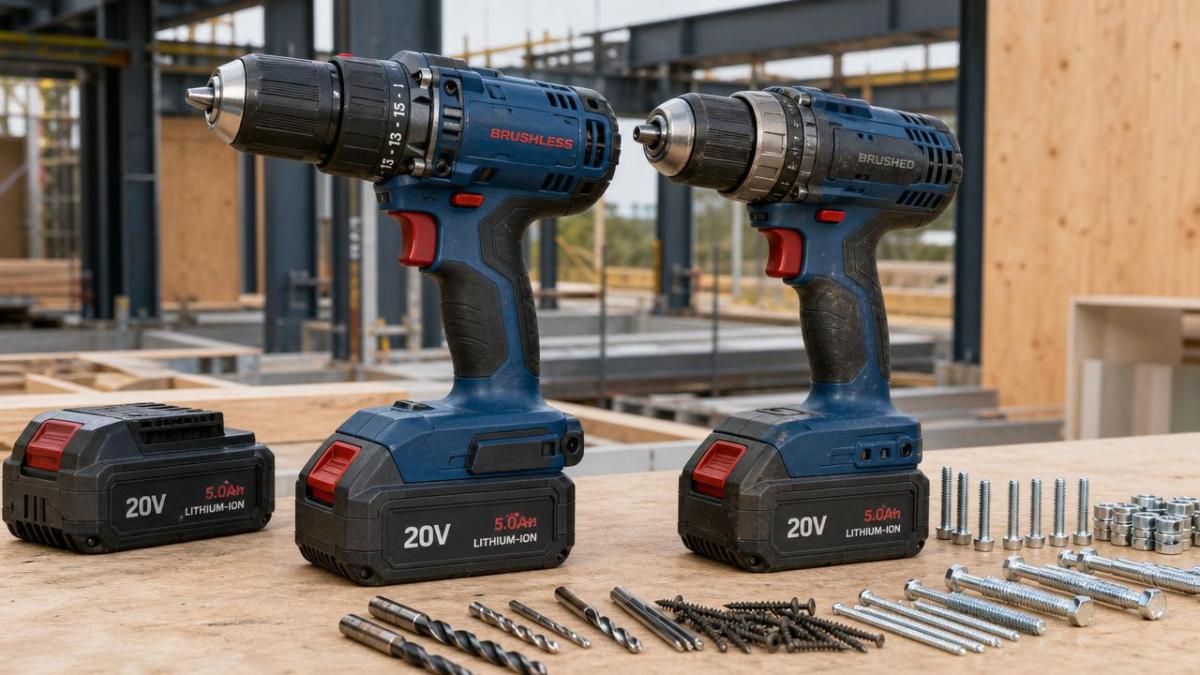
A brushed drill uses carbon brushes to transfer electricity inside the motor. Those brushes wear down through friction, arcing, and heat during regular drilling and fastening work.
A brushless drill replaces that contact system with electronic control. Fewer internal wear parts usually mean less friction, lower heat buildup, and more stable performance under repeated site use.
That design difference is the core reason brushless tools often outlast brushed alternatives. On dusty, high-cycle projects, reduced internal contact helps protect the motor over a longer service life.
However, lifespan is not decided by motor type alone. Housing quality, gearbox strength, battery management, and overload protection can matter just as much in real construction conditions.
Key Durability Factors in a Brushless Drill vs Brushed Drill Comparison
Job site life is shaped by several stress points. Comparing them side by side makes the durability gap easier to understand.
In most long-term comparisons, the brushless drill lasts longer because it manages stress more efficiently. Less wasted energy becomes less heat, and less heat usually means less damage.
Brushed drills can still perform reliably in lighter duty cycles. But under constant fastening, hole saw work, masonry pilot tasks, or repetitive metal drilling, wear tends to appear sooner.
Industry Conditions That Shorten Tool Life
Across construction, maintenance, fit-out, utilities, and industrial assembly, site conditions are often more destructive than nameplate ratings suggest.
- Fine concrete dust entering vents and electronic sections
- Repeated high-torque fastening near stall conditions
- Long drilling runs in steel or dense timber
- Frequent drops from ladders, scaffolds, or carts
- Battery overheating from fast charging and hard discharge
- Poor bit selection increasing drag and motor load
These conditions favor a brushless drill because electronic motor control can respond faster to changing load. It can reduce stress during startup, surge demand, and near-stall events.
This matters in a broader smart hardware context too. Efficient motors support lower downtime, improved battery use, and safer operation, which aligns with modern expectations for reliable industrial equipment.
Where a Brushless Drill Delivers More Practical Value
Longer service life is only one part of the equation. A brushless drill often brings several operational advantages that extend value over months or years.
Better runtime efficiency
Brushless motors waste less power as heat. That often means more holes per charge, fewer battery swaps, and less interruption during repetitive work cycles.
Lower maintenance demand
There are no motor brushes to replace. That reduces routine servicing and eliminates one common wear point that can stop a brushed drill unexpectedly.
More consistent torque behavior
A brushless drill often maintains power more smoothly under changing resistance. This helps with structural fastening, anchor setting, cabinet installation, and repeated pilot drilling.
Improved thermal control
Cooler operation supports longer component life. Electronics, battery packs, windings, and gear grease all benefit when heat exposure is reduced during demanding tasks.
Typical Use Scenarios and Expected Longevity Outcomes
Not every site demands the same tool. The better choice depends on duty cycle, materials, and how often the drill works close to its limit.
For active sites, the answer is usually clear. A brushless drill tends to last longer, especially when workdays involve continuous load, dust exposure, and many battery cycles.
What Can Make a Brushed Drill Fail Earlier
Brushed models usually do not fail because they are inherently weak. They fail earlier because common site stresses attack their most vulnerable internal parts.
- Brush wear reduces contact quality and efficiency.
- Electrical arcing increases heat and internal contamination.
- Heavy load can damage the commutator faster.
- Neglected maintenance allows minor wear to become motor failure.
If a brushed drill is used for long structural screws, spade bits, or wide hole saws every day, the durability gap becomes more visible over time.
Practical Selection and Maintenance Guidance
Choosing the longest-lasting drill means looking beyond advertising claims. Focus on workload, thermal control, battery ecosystem, and mechanical build quality.
Selection checklist
- Match torque and speed ranges to actual materials
- Check overload and kickback protection features
- Review gearbox, chuck, and housing durability
- Use high-quality batteries with sound thermal management
- Prioritize sealed designs for dusty environments
Site care habits
- Clean vents regularly without forcing debris deeper inside
- Avoid running the tool near stall for long periods
- Use sharp bits to reduce motor strain
- Let overheated batteries cool before recharging
- Inspect the chuck and gearbox for play or abnormal noise
Even the best brushless drill will lose life if overloaded daily with the wrong accessory. Good operating practice remains essential to getting the expected lifespan.
Final Assessment for Long-Term Site Use
For demanding site work, a brushless drill usually lasts longer than a brushed drill. The main reasons are lower internal wear, cooler operation, stronger efficiency, and better load management.
A brushed drill may still suit lighter use or tighter initial budgets. Yet on active projects, earlier wear, more maintenance, and reduced endurance often increase lifetime cost.
When uptime, reliability, and tool longevity matter, compare duty cycle first, then motor type. In most professional conditions, the brushless drill is the stronger long-term choice.
Use this comparison as a practical baseline. Review site conditions, workload intensity, and battery strategy before the next purchase to select a drill that truly lasts on site.
Recommended News