
Search News
Industry Portal
Hot Articles
Industrial Automation Tools: When Upgrades Actually Pay Off
Time
Click Count
For finance approvers, investing in industrial automation tools is not about chasing trends—it is about measurable payback, lower downtime, and stronger operational control. When upgrade decisions align with labor costs, maintenance cycles, energy efficiency, and output gains, the returns can become surprisingly clear. This article examines when automation upgrades truly justify the budget and how to evaluate them with confidence.
When do industrial automation tools create real financial value?
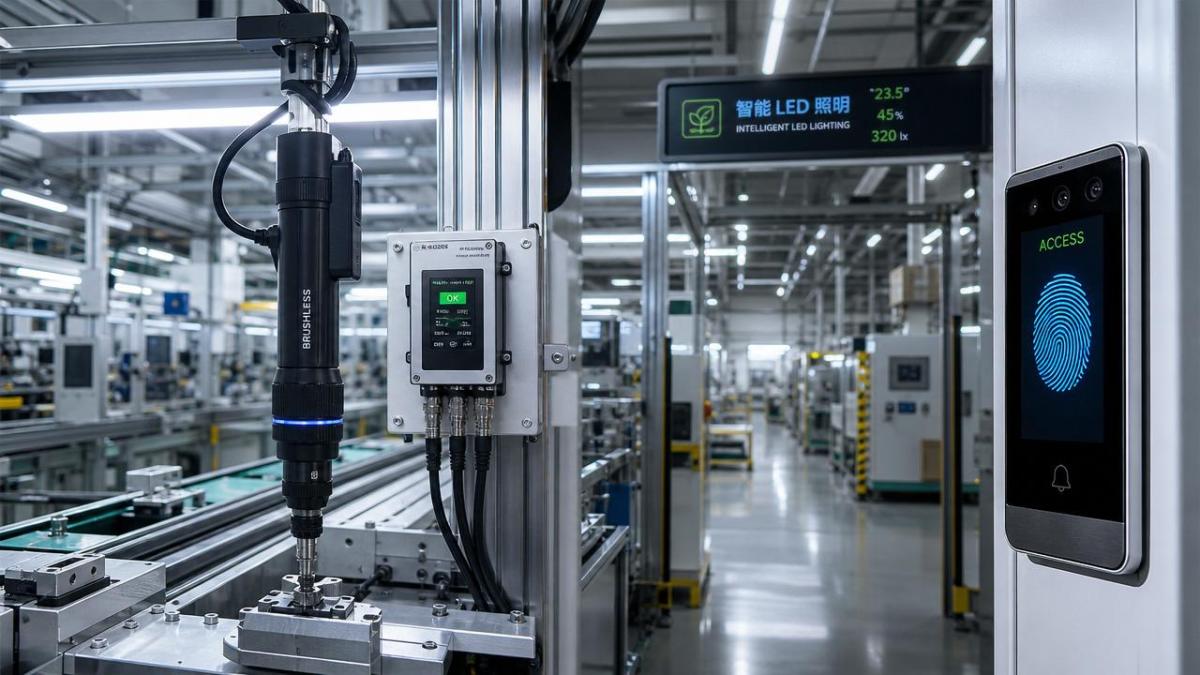
The phrase industrial automation tools covers more than robots on a production line. In a broad industrial environment, it includes brushless fastening tools, pneumatic systems, biometric access control, sensor-based smart lighting, torque monitoring, connected maintenance devices, and supporting digital controls.
For a finance approver, the key question is simple: does the upgrade reduce total operating cost faster than it increases capital burden? If the answer is yes, the project deserves serious review. If not, even advanced equipment can become an expensive distraction.
SHSS follows this issue across five hardware and security pillars because the same financial logic repeats across sectors. Better tools and smarter control systems pay off when they remove recurring loss: excess labor time, preventable rework, energy waste, compliance exposure, theft risk, or unplanned shutdowns.
- High labor cost environments benefit when automation shortens repetitive tasks such as fastening, inspection, access logging, or lighting control.
- Facilities with downtime penalties gain faster when predictive maintenance and reliable brushless tools cut stoppages.
- Energy-intensive sites see stronger returns when smart LED systems, occupancy sensing, and automated scheduling reduce wasted load.
- Security-sensitive sites justify upgrades when biometric systems lower unauthorized access risk and improve traceability for audits.
In other words, industrial automation tools pay off best where they convert unstable manual processes into measurable, auditable, repeatable performance.
What costs should finance teams measure before approving an upgrade?
Many weak business cases look only at purchase price. Strong cases map the full cost stack. That means finance, operations, EHS, maintenance, and procurement should evaluate the same project through a common model rather than separate assumptions.
The table below shows a practical framework for reviewing industrial automation tools in mixed-use industrial, construction, and smart facility environments.
This approach helps finance teams avoid a common mistake: rejecting an upgrade with a higher upfront cost even when it produces a lower lifecycle cost. In many industrial settings, downtime and rework destroy more value than the initial invoice suggests.
A practical approval checklist
- Verify the baseline. Use real labor, energy, failure, and scrap data from the current process.
- Separate one-time installation cost from recurring savings, so payback is not distorted.
- Assign a value to risk reduction, especially for security breaches, lockout issues, and safety incidents.
- Check whether the new system integrates with existing maintenance, access, or building controls.
- Ask whether the supplier can support compliance documentation, configuration guidance, and staged deployment.
Which industrial automation tools usually pay off faster?
Not every upgrade delivers the same return speed. Finance approvers should prioritize tools that affect a large number of daily transactions or reduce a high-cost failure point. In SHSS-covered sectors, four categories often stand out.
1. Brushless industrial power tools
BLDC-powered fastening and drilling tools often outperform legacy brushed units through longer service intervals, better energy efficiency, and improved torque consistency. The return appears fastest where assembly volume is high and rework from inconsistent fastening is costly.
2. Smart access and biometric security
For data centers, industrial campuses, warehouses, and commercial buildings, biometric control systems can reduce key management overhead, improve access traceability, and support incident review. The financial benefit is not just labor saving; it is also lower security exposure and better compliance control.
3. Smart LED lighting with controls
Lighting projects often show the cleanest payback logic. Long-life LED fixtures paired with DALI, Zigbee, occupancy sensing, and daylight harvesting can lower energy cost and maintenance frequency. Large facilities with long operating hours usually see the strongest effect.
4. Condition-aware fastening and hardware verification
In structural, transport, utility, and heavy manufacturing settings, improper fastener selection or torque verification creates hidden liability. Automation tools that standardize fastening records, reduce manual variation, or support inspection workflows can prevent expensive downstream failures.
Upgrade now or keep the current system? A comparison for budget decisions
Finance teams often need a side-by-side view rather than a technical pitch. The following comparison can help determine whether industrial automation tools should be approved immediately, piloted, or deferred.
A full replacement is not always necessary. In some sites, a staged upgrade delivers better cash-flow management. Finance can approve one production zone, one building, or one access layer first, then expand after verified results.
Good candidates for immediate approval
- Processes with high overtime, repeated fastening errors, or frequent manual adjustments.
- Facilities where lighting runs long hours and maintenance access is expensive.
- Security-critical spaces where badge sharing, lost keys, or poor logs create exposure.
- Sites facing expansion, where manual systems will become less manageable within one budget cycle.
How should finance approvers evaluate payback by scenario?
Industrial automation tools do not pay back in the same way across all environments. A warehouse, a fabrication plant, a municipal project, and a smart building each produce value through different channels. Scenario-based review is more reliable than generic ROI claims.
Manufacturing and assembly
In manufacturing, the main levers are cycle time, fastening accuracy, scrap reduction, and maintenance uptime. Brushless tools and monitored torque processes make the most sense where output volume is high and defects are expensive.
Commercial buildings and data centers
Here, smart access and biometric security matter because one incident can trigger business disruption, compliance review, and reputational cost. Payback combines lower administrative overhead with stronger control over who enters, when, and under what authorization.
Infrastructure and municipal projects
For public lighting and distributed assets, long-life LED systems can deliver lower maintenance dispatch cost, reduced power consumption, and centralized control. Finance teams should compare lifetime service cost, not fixture price alone.
Hazardous or high-risk operations
In tough environments, automation is tied to safety as much as productivity. When upgraded tools and protective systems reduce fatigue, exposure, or access mistakes, they may prevent events that carry much larger financial consequences than the equipment budget.
What technical and compliance details should not be ignored?
Financial approval becomes stronger when technical and compliance questions are answered early. This is particularly true when industrial automation tools involve power systems, biometric data, connected controls, or site-wide retrofits.
- For brushless tools, review duty cycle, torque range, battery platform, charging logistics, and service interval.
- For biometric security, review data handling policy, storage location, enrollment process, anti-spoofing capability, and local privacy obligations.
- For smart lighting, review control protocol compatibility, rated lifetime, surge protection, driver replacement strategy, and commissioning method.
- For structural hardware workflows, review material grade traceability, torque specification control, and inspection record retention.
Standards review should remain practical. Depending on project type, finance may need confirmation related to electrical safety, EMC, building regulations, data privacy expectations, or workplace safety requirements. SHSS adds value here by connecting hardware decisions with compliance-sensitive use cases rather than treating them as separate topics.
Common mistakes that make industrial automation tools look less profitable than they are
Mistake 1: Using purchase price as the main decision metric
A cheaper tool or control system may consume more labor, fail sooner, or create data gaps. The correct metric is total cost of ownership, including maintenance, downtime, and process variance.
Mistake 2: Ignoring implementation friction
Even strong industrial automation tools can underperform if training, commissioning, battery logistics, user rights, or spare parts planning are missing. Finance should ask for an adoption plan, not just a quotation.
Mistake 3: Expecting every site to have the same ROI
A high-volume line may justify immediate automation, while a low-use workshop may not. A 24-hour warehouse lighting upgrade can pay back quickly, while a lightly used corridor may take longer. Site segmentation matters.
Mistake 4: Underpricing security and compliance risk
Biometric access, audit trails, and controlled permissions are sometimes treated as overhead. In reality, they can reduce incident cost, simplify investigations, and support business continuity in ways that pure labor metrics miss.
FAQ: what finance approvers ask before signing off
How do I know whether industrial automation tools are a necessity or a nice-to-have?
Look for repeatable losses. If the current process creates regular overtime, frequent rework, access management burden, lighting waste, or downtime, the upgrade is likely addressing a structural issue rather than an optional enhancement.
What payback period is usually reasonable?
That depends on asset type and usage intensity. Smart lighting and high-use power tools often justify shorter payback expectations. Security and compliance projects may involve a mixed return model where direct savings combine with risk reduction and audit value.
Should we replace everything at once?
Usually not. A pilot in one line, zone, building, or access layer often gives finance better evidence. Staged rollout also reduces disruption and improves budgeting accuracy for the next phase.
What documents should finance request before approval?
Request a baseline cost model, implementation scope, expected savings assumptions, maintenance plan, training plan, integration notes, and any relevant compliance or certification references applicable to the project environment.
Why choose us for industrial automation tools evaluation and sourcing support?
SHSS is built for decision-makers who cannot afford vague recommendations. Our coverage spans industrial brushless tools, biometric security, high-strength hardware, smart lighting, and protective systems because real-world capital decisions often cut across all of them.
That cross-disciplinary view matters for finance approvers. A tool upgrade can affect maintenance planning. A lighting retrofit can change service dispatch cost. A biometric project can trigger privacy review. A fastening system can shape warranty exposure. We help connect these variables before money is committed.
- Parameter confirmation for tool performance, access control architecture, lighting lifetime assumptions, and hardware selection factors.
- Product selection support based on use frequency, duty conditions, risk level, and budget threshold.
- Delivery cycle discussions for staged implementation, pilot rollout, and procurement scheduling.
- Customized solution review for industrial campuses, smart buildings, construction programs, and municipal infrastructure.
- Guidance on applicable certification expectations, data handling concerns, sample support, and quotation comparison.
If you are comparing industrial automation tools and need a clearer investment case, contact us with your current process data, target scenario, and approval constraints. We can help you frame the right questions on specification, lifecycle cost, compliance, rollout timing, and supplier fit before the purchase becomes a long-term commitment.
Recommended News