
Search News
Industry Portal
Hot Articles
Smart Access Control Trends Shaping Building Security in 2026
Time
Click Count
As enterprises face rising threats, stricter compliance demands, and growing expectations for seamless user experience, smart access control is becoming a core pillar of building security in 2026. From biometric authentication to AI-driven monitoring and cloud-based management, these innovations are helping decision-makers strengthen physical protection while improving operational efficiency across commercial and critical infrastructure environments.
For business leaders, the issue is no longer whether to modernize entry management, but how to invest in a system that reduces risk, supports compliance, and scales across offices, campuses, warehouses, and high-security facilities. In 2026, smart access control is closely tied to broader building intelligence, linking doors, identity, lighting, alarms, and operational data into one actionable security layer.
This shift matters across the SHSS landscape. Smart access and biometric security now interact with commercial LED lighting, edge AI infrastructure, industrial facilities, and protective site management. Decision-makers need a practical view of the trends, deployment models, and purchasing criteria that can turn a fragmented access setup into a measurable security asset.
Why Smart Access Control Is Reshaping Building Security in 2026
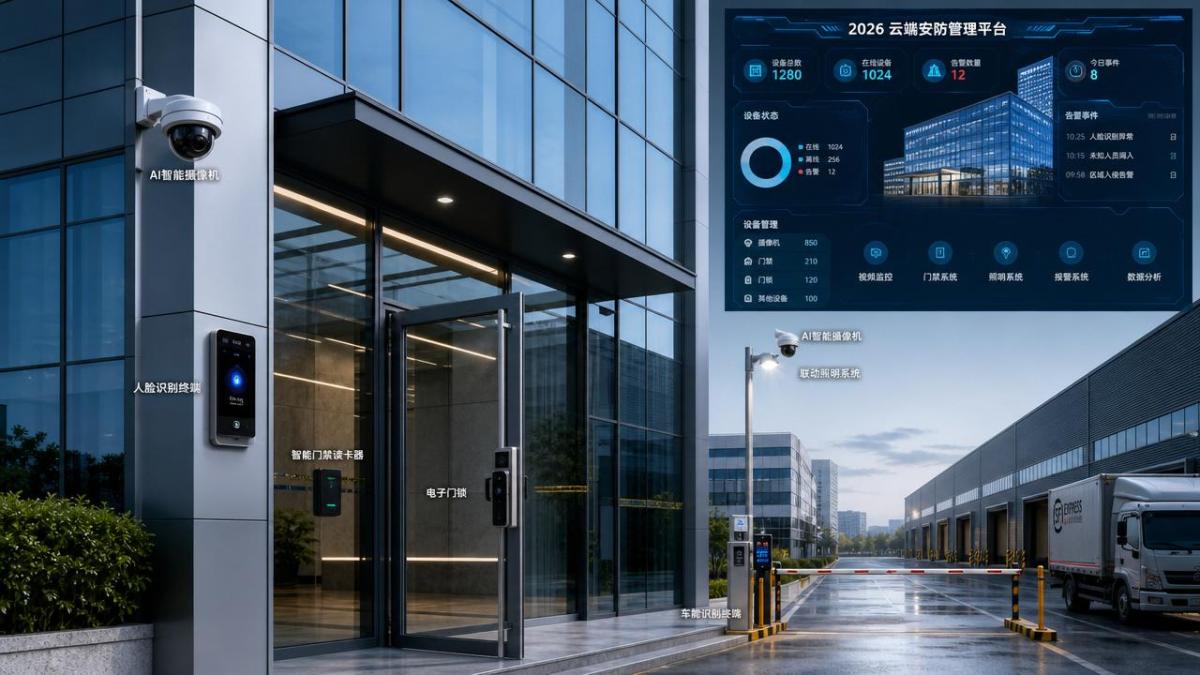
Traditional key-based systems create visible weaknesses: lost credentials, delayed revocation, manual audits, and poor visibility across multiple sites. Smart access control replaces these gaps with digital credentials, biometric verification, event logs, and remote administration that can cut response time from hours to minutes.
In commercial buildings, access events are no longer isolated door actions. They are operational signals. A badge entry at 7:30 a.m. can trigger lobby lighting, elevator permissions, visitor workflows, and occupancy updates. In data centers or industrial environments, a failed authentication attempt can activate layered alerts in less than 1 second.
Three forces pushing adoption
- Higher threat exposure across shared offices, logistics hubs, and critical infrastructure.
- Stricter compliance requirements for personal data, visitor records, and audit trails.
- Demand for frictionless user experience, especially in mixed-use buildings with 24/7 activity.
From door hardware to intelligent security nodes
A modern reader, controller, and lockset are now part of a larger security fabric. Edge processors can validate credentials locally in 0.2 to 0.5 seconds, even if cloud connectivity is interrupted. This architecture supports business continuity while keeping identity decisions fast enough for busy entrances and shift changes.
This is especially relevant for enterprise portfolios with 3 to 50 sites. Centralized management reduces administrative overhead, while local fail-safe logic protects critical entry points during power, network, or server disruptions.
What executives should measure
The strongest business case for smart access control combines security and efficiency. Leaders should evaluate at least 4 metrics: unauthorized access incidents, credential management time, audit readiness, and user throughput at peak periods. These indicators reveal whether a system improves both protection and building operations.
The following table shows how traditional and modern approaches differ in practical enterprise use.
The key conclusion is clear: smart access control is no longer only a security purchase. It is an infrastructure decision that influences staffing efficiency, compliance posture, and tenant or employee experience over a 3- to 7-year lifecycle.
Core Smart Access Control Trends Enterprises Should Watch
The market is moving beyond simple credential replacement. In 2026, leading deployments combine identity assurance, edge computing, AI analysis, and building system integration. Enterprises that understand these trends can avoid under-specifying a system that becomes outdated within 24 months.
1. Biometric authentication is becoming more selective and more secure
Biometric access is expanding, but not every door needs the same level of identity proof. Face, iris, and fingerprint verification are increasingly reserved for server rooms, R&D labs, executive floors, and restricted production areas. Typical verification time ranges from 0.3 to 1 second, depending on modality and anti-spoofing depth.
For enterprise buyers, the most important question is where biometrics add value. A tiered approach often works best: mobile or card access for common areas, then multi-factor access for high-risk zones. This reduces friction while keeping stronger controls where the impact of a breach is highest.
Privacy and governance are now board-level concerns
Biometric deployment requires clear rules on consent, retention periods, template encryption, and cross-border data handling. Many enterprises now require a 3-step governance process: legal review, technical validation, and employee communication before rollout. Without this, even a capable smart access control platform can create compliance friction.
2. Cloud-based management is replacing fragmented site-by-site administration
Cloud platforms allow security teams to provision users, revoke credentials, review alerts, and export logs from one interface. This is especially valuable for organizations with 5, 15, or 100 locations. Administrative actions that once required local visits can often be completed remotely in under 10 minutes.
However, cloud does not mean abandoning resilience. Leading systems balance remote administration with local processing, ensuring that door decisions continue even during temporary WAN outages. For critical buildings, a 4- to 8-hour offline continuity threshold is a practical baseline during system design.
3. AI-driven monitoring is reducing blind spots around the door
Access control now works alongside video analytics, tailgating detection, occupancy analysis, and anomaly monitoring. Instead of logging only valid or invalid entries, the system can flag unusual behavior patterns such as repeated failed attempts, after-hours movement, or door-held-open events exceeding 30 to 60 seconds.
For decision-makers, this trend is important because it shifts security from passive record keeping to active intervention. Smart access control becomes more effective when it can correlate identity, time, location, and behavioral context rather than recording a simple open-or-closed event.
4. Integration with smart building systems is driving operational value
A standalone system secures a door. An integrated system improves a facility. In 2026, more projects connect access control to DALI or Zigbee lighting, visitor platforms, elevators, HVAC schedules, and emergency response workflows. Occupancy-triggered lighting and zone-based permissions can reduce unnecessary energy use while reinforcing access policies.
This matters in office towers, hospitals, industrial parks, and data centers where access, lighting, and life-safety systems must coordinate. A secure entry at a restricted area can activate lighting scenes, camera presets, and environmental controls in seconds, improving both safety and usability.
How to Choose the Right Smart Access Control Architecture
The best smart access control solution depends on risk profile, building type, user volume, and compliance obligations. A logistics hub handling 2,000 daily entries has different needs from a law firm with 80 staff or a multi-tenant tower with rotating visitors. Selection should be based on operational fit, not feature lists alone.
Five evaluation criteria for enterprise procurement
- Credential flexibility: cards, mobile, PIN, biometrics, and multi-factor options.
- Scalability: support for future sites, added doors, and user growth over 3 to 5 years.
- Integration readiness: APIs, video, visitor management, elevator control, and alarm linkage.
- Cybersecurity and privacy: encryption, logging, role-based permissions, and retention controls.
- Service model: implementation support, spare parts, firmware updates, and response SLAs.
Practical configuration guidance by scenario
Not every site should start with the same package. A common mistake is overspending on low-risk openings while under-protecting sensitive areas. The table below outlines a practical starting point for different enterprise environments.
The main takeaway is to align system depth with asset criticality. Smart access control creates the highest return when design choices match user flow, regulatory exposure, and physical risk, rather than treating every entry point the same.
Questions procurement teams should ask suppliers
- How many doors and users can the platform support before controller or license changes are needed?
- What is the standard deployment timeline: 2 weeks, 6 weeks, or 12 weeks?
- Which integrations are native, and which require custom development?
- How are biometric templates stored, encrypted, and deleted?
- What happens during power loss, network outage, or credential sync failure?
Implementation, Risk Control, and Long-Term Value
A successful deployment depends as much on execution as on technology. Even advanced smart access control can underperform if door schedules, permission hierarchies, user enrollment, and maintenance responsibilities are not clearly defined. For most enterprises, implementation works best in 4 phases rather than one large switchover.
A practical 4-phase rollout model
- Assessment: map doors, user groups, risk zones, and compliance requirements.
- Pilot: test 1 to 3 high-value areas with selected credentials and workflows.
- Scale-up: expand to additional zones, integrate video and visitor systems, train staff.
- Optimization: review logs, fine-tune policies, and update retention and response settings.
This phased approach reduces disruption. It also gives facility, IT, HR, and legal teams time to align on governance. In many projects, the pilot phase lasts 2 to 6 weeks, while full building rollout may take 1 to 3 months depending on door count, cabling conditions, and integration scope.
Common implementation mistakes
Treating access control as an isolated hardware project
When procurement focuses only on readers and locks, the organization may miss software licensing, credential lifecycle management, cybersecurity reviews, and user training. Smart access control should be specified as an operating system for physical identity, not only as door equipment.
Ignoring environmental and durability requirements
Industrial and outdoor environments require stronger attention to enclosure ratings, vibration tolerance, and temperature range. A reader suitable for an office lobby may not perform well near dust, moisture, metal interference, or high-frequency shift traffic.
Underestimating maintenance and lifecycle planning
Enterprises should define firmware review intervals, credential audit cycles, and hardware replacement planning from day one. A practical benchmark is quarterly access review, annual policy validation, and hardware inspection every 6 to 12 months depending on site conditions.
Where long-term value is created
The value of smart access control extends beyond unauthorized entry prevention. It helps reduce manual administration, strengthens audit trails, supports safer restricted-area management, and improves coordination with lighting and building operations. For many enterprises, these gains justify investment even before considering incident avoidance.
Within the broader SHSS perspective, access control is most effective when connected to durable hardware, reliable power environments, smart lighting response, and site-specific safety protocols. That integrated view is what allows enterprises to build facilities that are both harder to breach and easier to manage.
What Decision-Makers Should Do Next
In 2026, smart access control is a strategic building security investment, not a routine hardware refresh. Enterprises that prioritize identity assurance, integration capability, privacy governance, and phased deployment will be better positioned to protect assets, streamline operations, and adapt to future building intelligence demands.
For decision-makers evaluating new construction, retrofit upgrades, or multi-site standardization, the right next step is a structured assessment of door categories, user flows, compliance exposure, and integration priorities. That process makes it easier to select a solution that fits both security goals and operational realities.
If you are planning your 2026 building security roadmap, now is the time to review your smart access control strategy, compare deployment options, and identify where biometrics, cloud management, and AI monitoring can deliver the strongest return. Contact us to discuss your requirements, get a tailored solution, or learn more about practical smart building security approaches for commercial and critical infrastructure projects.
Recommended News