
Search News
Industry Portal
Hot Articles
Japan Updates JIS B 1182 for PAUT-Based Bolt Certification
Time
Click Count
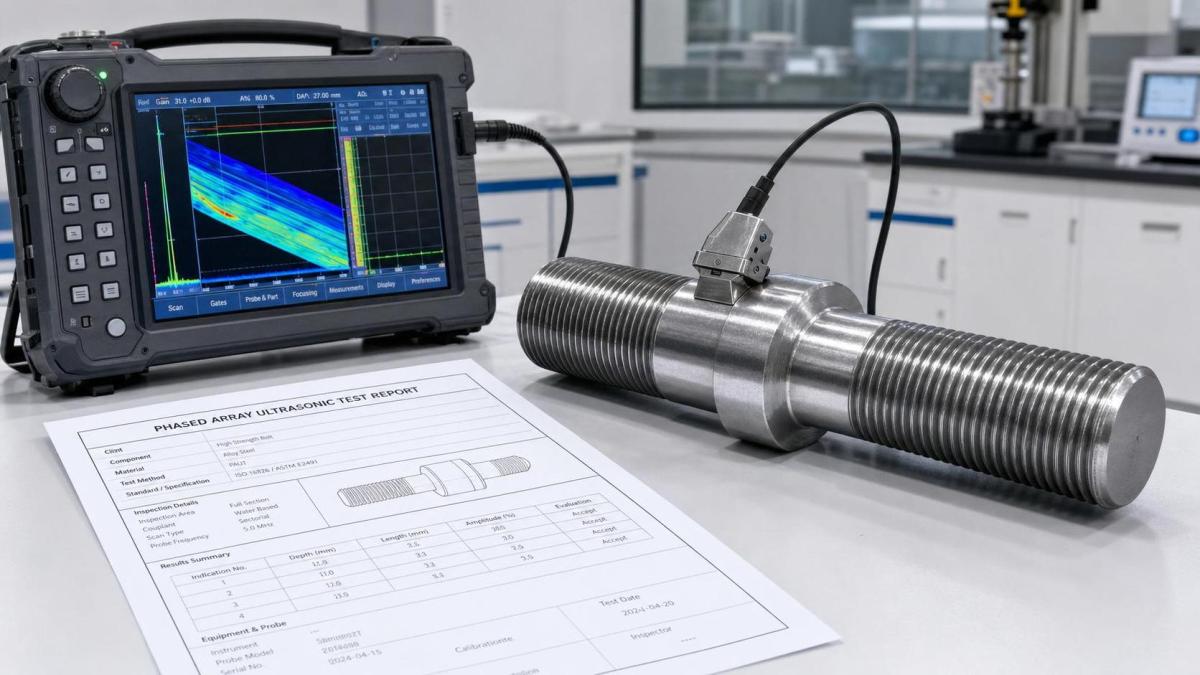
On July 11, 2026, the Japanese Industrial Standards Committee (JISC) released JIS B 1182:2026, replacing the 2019 edition of the technical requirements for high-strength bolts. The update matters directly to exporters shipping grade 8.8 and above high-strength bolts to Japan, as heat-treatment certification must now include full-cross-section phased array ultrasonic testing (PAUT) scan records and defect quantification performed under JIS Z 2353:2025. For manufacturers, trading companies, inspection providers, and buyers linked to the Japan market, the change deserves attention because it shifts both documentation expectations and the practical path to shipment approval.
What the revised standard now requires
According to the provided information, JISC formally issued JIS B 1182:2026 on 2026-07-11 as a replacement for the 2019 version. Under the revised rule, high-strength bolts of grade 8.8 and above that are exported to Japan must have heat-treatment certification reports containing full-section PAUT scan mapping and defect quantification analysis carried out in accordance with JIS Z 2353:2025. The previously used pulse-echo ultrasonic testing method (UT) is no longer accepted for this purpose. The provided summary also states that this adjustment will significantly extend submission and certification timelines, while increasing certification costs for Chinese suppliers.
Where the pressure is likely to appear in the supply chain
Export-facing bolt suppliers will face a documentation threshold shift
From an industry perspective, manufacturers and direct exporters are the first group likely to feel the impact, because the rule is tied to the acceptability of heat-treatment certification for products entering Japan. The main pressure point is not only testing itself, but whether existing certification files, inspection arrangements, and shipment schedules align with the new reporting format and method requirement.
Inspection and certification service workflows may become a bottleneck
Analysis shows that service providers involved in testing, certification, and submission support may also be affected, because the accepted inspection route has changed from conventional UT to PAUT with full-cross-section scan data and quantified defect analysis. In practical terms, the business impact is likely to concentrate in appointment scheduling, report preparation, and coordination between factories and testing bodies.
Importers and downstream buyers may need to revisit delivery expectations
For buyers, distributors, and end-use procurement teams serving the Japan market, the issue is likely to surface in delivery planning and supplier communication. Observably, if certification cycles lengthen, the first operational effect may appear in order confirmation, lead-time commitments, and acceptance of supporting documents before shipment or receipt.
What companies should watch now
Check whether product scope overlaps with the new requirement
What deserves closer attention is whether current export products fall within the stated range of grade 8.8 and above high-strength bolts destined for Japan. This is the starting point for judging exposure, because the requirement described in the provided information is product- and market-specific rather than a general statement covering all bolt categories.
Review whether existing reports still match customer and market expectations
Companies should examine whether current heat-treatment certification packages still rely on traditional pulse-echo UT. If they do, the practical issue is that such reports are no longer accepted under the revised requirement described in the input, which may affect document readiness even before any production adjustment is discussed.
Prepare for longer lead times in contracts and customer communication
Analysis shows that timeline risk is one of the most immediate business concerns, because the provided summary explicitly points to longer submission and certification cycles. Firms with active Japan-bound orders may need to reflect this in quotation validity, production scheduling, shipment planning, and buyer communication, especially where delivery commitments were built around earlier inspection routines.
Keep watching for how the rule is applied in practice
There is also a practical distinction between the published standard requirement and day-to-day execution in supply chains. Companies should continue tracking how customers, certification counterparties, and inspection processes interpret the requirement for PAUT full-cross-section scans and defect quantification in actual document review and acceptance steps.
Why this looks more like a compliance signal than a short-lived notice
Observation indicates that this development is better understood as a compliance tightening signal tied to market access, rather than as a temporary administrative adjustment. The change directly affects which inspection method is acceptable in certification reports, and that gives it operational significance even without broader market data. At the same time, it would be premature to treat the full downstream impact as settled, because the provided information does not define how quickly all counterparties will adapt or whether implementation details will evolve further in practice.
How to read the change at this stage
At this stage, it is more appropriate to understand the JIS B 1182:2026 revision as a concrete standards update with immediate relevance for Japan-bound high-strength bolt trade, especially for grade 8.8 and above products. The confirmed facts already point to a clear shift in accepted certification methodology and a likely increase in time and cost burdens for Chinese suppliers. The broader industry effect still needs observation, but the compliance implication itself is already clear enough to warrant operational review.
Basis of this article and points for follow-up verification
This article is based on the user-provided news title, event date, and event summary. For this type of industry update, commonly relevant source categories include official announcements, standard organization documents, industry association information, company notices, and authoritative media coverage. A specific official source link was not provided in the input, so further verification remains necessary. Follow-up attention should focus on any subsequent official wording, implementation interpretation, and document review practices related to JIS B 1182:2026 and JIS Z 2353:2025.
Recommended News