
Search News
Industry Portal
Hot Articles
How a smart hardware network can reduce IoT device security gaps
Time
Click Count
How a Smart Hardware Network Can Reduce IoT Device Security Gaps
As IoT deployments expand across buildings, industrial sites, and smart cities, fragmented devices can create serious security gaps across physical and digital operations.
A smart hardware network unifies biometric access, connected lighting, edge intelligence, and resilient infrastructure into a defensible operational layer for critical environments.
For technical evaluators, the key question is not whether more devices can be connected. It is whether every device can be identified, governed, updated, monitored, and safely recovered.
The strongest security architecture treats connected hardware as part of one operational system. It connects trust decisions from the network edge to doors, lighting controls, maintenance tools, and incident workflows.
Why Fragmented IoT Deployments Create Security Gaps
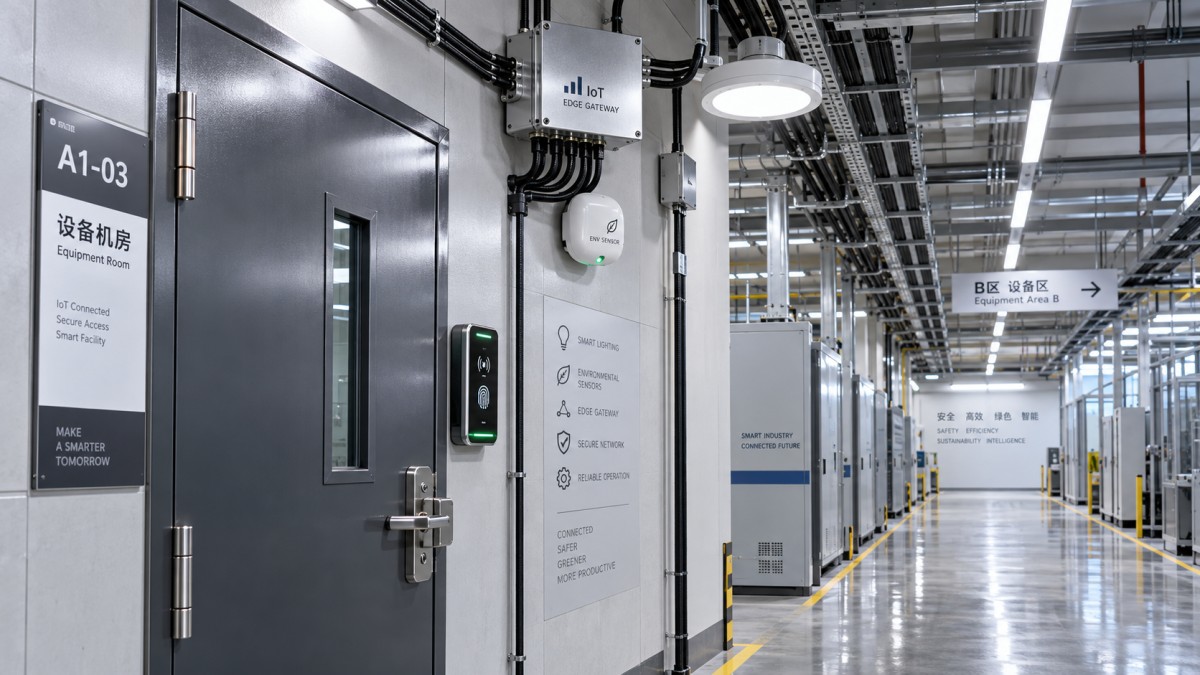
IoT security gaps often emerge because devices are purchased for individual projects. A lighting controller, access reader, camera, sensor, and gateway may each use different security models.
This fragmentation makes inventory management difficult. Security teams may know enterprise laptops and servers, but lack a verified record of installed controllers, firmware versions, communication paths, and device owners.
An unmanaged endpoint can become an entry point. Default credentials, exposed services, unsupported operating systems, and unencrypted traffic can allow attackers to reach larger operational networks.
Physical systems create a particularly serious risk because compromise can affect both safety and security. A manipulated access controller may unlock a restricted room or prevent authorized personnel from entering.
Industrial sites face additional exposure when connected devices operate near machinery, energy systems, logistics assets, or hazardous materials. Availability failures can become safety incidents rather than simple technical outages.
Many organizations also separate physical security from IT security. That separation can delay detection when a suspicious network event corresponds to an attempted entry, equipment malfunction, or credential misuse.
A smart hardware network reduces these blind spots by applying shared rules for identity, connectivity, segmentation, telemetry, and lifecycle control across relevant physical devices.
The objective is not absolute uniformity. Different devices have different functions, but they should participate in a common security architecture with clear accountability and enforceable minimum controls.
Start With a Trusted Device Identity Layer
Every connected device should have a verifiable identity before it receives network access. Technical evaluators should treat device identity as the first control point, not an implementation detail.
A strong identity model uses unique credentials installed during manufacturing or secure commissioning. Shared passwords and manually copied credentials make attribution, rotation, and revocation unnecessarily difficult.
Hardware-backed identities are especially valuable for high-risk devices. Secure elements, trusted execution environments, or equivalent protected storage can reduce the chance that credentials are extracted from firmware.
Mutual authentication should be considered wherever devices exchange sensitive commands or telemetry. The device verifies the service, while the service also verifies the device before accepting a connection.
This prevents a common failure mode: a legitimate device connecting to an impersonated gateway, cloud service, or maintenance workstation that captures credentials or transmits malicious instructions.
Identity must also support the complete asset lifecycle. A device should be enrolled, assigned to an owner and location, monitored during service, revoked at retirement, and removed from access policies.
Technical teams should verify whether identity records are linked to serial numbers, certificates, firmware attestations, asset tags, and installation information rather than relying on a simple network address.
A MAC address alone is not a trustworthy identity. It can be changed, copied, or misunderstood, particularly in environments where installers replace hardware during maintenance activities.
Use Segmented Connectivity Instead of a Flat Network
A smart hardware network should not place every endpoint on the same network segment. Flat networks allow compromise of a low-value device to become lateral movement toward higher-value systems.
Segmentation groups devices according to function, risk level, location, and communication need. Access readers, lighting controllers, building gateways, and administrative workstations should not receive broad default reachability.
Network policies should follow the principle of least privilege. Devices require only the protocols, destinations, ports, and services necessary to perform their defined operational tasks.
For example, a smart luminaire controller may need to communicate with an approved gateway and management platform. It should not initiate unrestricted traffic to enterprise databases or internet destinations.
Industrial networks may require stronger separation between operational technology and business IT. Gateways can broker approved data exchanges without exposing control networks to general office traffic.
Encryption protects data in transit, but encryption alone is insufficient. A malicious authenticated device can still cause harm if the network permits it to contact systems beyond its legitimate role.
Evaluators should examine how the architecture handles remote maintenance. Vendor support connections require explicit approval, time limits, logging, multifactor authentication, and immediate revocation after the task ends.
Zero-trust principles are practical here: verify every connection, authorize each session, restrict communication paths, and continuously reassess access when identity or device health changes.
Connect Physical Access Decisions to Cybersecurity Controls
Biometric access systems can strengthen a smart hardware network when their accuracy, privacy protections, and availability design are evaluated as carefully as their convenience.
Modern biometric readers can support strong identity assurance, especially when they use liveness detection to resist photographs, replay attempts, masks, and other presentation attacks.
However, biometric data is sensitive. Technical evaluators should confirm whether templates are encrypted, whether raw images are retained, where data is stored, and how deletion requests are handled.
Privacy requirements may vary by jurisdiction, but the engineering question remains consistent: collect the minimum data required and maintain documented controls over processing, retention, and access.
Biometric systems should also integrate with role-based access policy. An identity decision must be combined with authorization rules such as location permissions, schedule restrictions, escort requirements, and emergency status.
Physical access events should feed security monitoring systems. A denied entry attempt, repeated verification failure, or reader tamper alert may be meaningful when correlated with network activity.
Fail-safe and fail-secure behavior must be explicitly defined. During power loss, communications failure, or fire alarm conditions, each protected opening needs an approved operational response.
Local decision capability is essential for important facilities. Door controllers should retain necessary credentials and policies securely enough to continue safe operations when cloud connectivity is interrupted.
Make Edge Intelligence Useful Without Creating New Exposure
Edge computing reduces latency and can keep critical functions operating during connectivity disruptions. It is valuable when local decisions must be made quickly and consistently.
In a smart hardware network, edge intelligence can analyze access anomalies, equipment status, occupancy patterns, lighting conditions, and environmental sensor readings near their source.
Local processing can also reduce unnecessary data transfer. Instead of continuously sending raw biometric or video-related data, an edge device may transmit only verified events or alerts.
That privacy advantage depends on implementation quality. Edge systems still require hardened operating systems, authenticated updates, secure boot, logging, and restrictions on administrative access.
Technical evaluators should ask how edge models are deployed and changed. An undocumented machine-learning update can alter detection behavior, introduce bias, or disrupt operational workflows.
Edge decisions need clear escalation rules. A local controller may unlock a route during an emergency, but it should also send evidence and status information to central management.
Resilience should include degraded modes. If a cloud analytics platform is unavailable, local systems should maintain essential functions without making uncontrolled or unsafe decisions.
The goal is not to decentralize every security decision. It is to place time-sensitive decisions locally while preserving centralized visibility, policy governance, and auditability.
Manage Firmware, Vulnerabilities, and End-of-Life Risk
Many IoT security programs fail after deployment because lifecycle management receives less attention than procurement, installation, and initial integration.
A device that cannot receive authenticated updates becomes a long-term risk. Vulnerabilities in operating systems, wireless stacks, web interfaces, and third-party components continue to emerge after installation.
Secure update mechanisms should validate software signatures before installation. They should also provide rollback protection or recovery procedures when a failed update threatens device availability.
Technical evaluators should request a documented vulnerability disclosure process. Suppliers need a defined method for receiving reports, assessing impact, issuing advisories, and delivering fixes.
Patch timing matters, especially for high-risk vulnerabilities. A vendor statement that updates may be provided is weaker than published support periods, severity-based response commitments, and release records.
Inventory data should identify the exact hardware model, firmware version, installed components, support status, and operational owner. Without this information, vulnerability response becomes slow and uncertain.
End-of-life planning is equally important. Organizations need a decision process for isolating, replacing, or compensating for devices that no longer receive security updates.
Procurement teams should treat long-term support as a measurable requirement. The lowest purchase price can become expensive when unsupported hardware creates replacement costs, downtime, and compliance exposure.
Design for Resilience, Safety, and Manual Recovery
Security controls should not make critical environments brittle. A smart hardware network must remain operational through network outages, power events, hardware failures, and attempted cyberattacks.
Resilience begins with understanding operational dependencies. Technical teams should map which doors, lighting zones, alarms, sensors, and control functions depend on each gateway or service.
Redundant power, protected network paths, local policy caching, and supervised communications can reduce the impact of individual component failures.
Physical hardware quality also matters. Enclosures, fasteners, mounting points, cabling routes, and tamper switches determine whether a secure digital design survives real-world installation conditions.
High-strength fastening and correct installation torque may appear outside cybersecurity scope. Yet loose hardware can expose wiring, disable sensors, or allow attackers to remove a device entirely.
Connected lighting can contribute to resilience as well. Emergency lighting behavior, occupancy sensing, and fault reporting should remain dependable even when central automation platforms are unavailable.
Manual override procedures must be documented and tested. Personnel need authorized methods to maintain safety and access during emergencies without creating uncontrolled bypasses that remain active afterward.
Regular exercises should test cyber and physical scenarios together. A realistic exercise may combine a gateway outage, denied access event, equipment alert, and emergency maintenance response.
Evaluate the Network With Evidence, Not Vendor Claims
Technical evaluators should turn broad security promises into testable requirements. A smart hardware network should be assessed through architecture evidence, demonstrations, documentation, and controlled operational testing.
Begin with an asset and data-flow review. Identify every connected endpoint, the information it collects, where it communicates, what commands it accepts, and which teams administer it.
Then evaluate identity controls. Confirm unique device credentials, certificate lifecycle management, credential rotation, revocation procedures, and protections against unauthorized configuration changes.
Review network design through actual firewall rules and communication matrices. Diagrams are useful, but policy exports and observed traffic provide stronger confirmation of segmentation claims.
Ask suppliers to demonstrate a secure update. The demonstration should show signature validation, audit records, failure handling, version reporting, and the process for responding to critical vulnerabilities.
Assess integration quality across physical and cybersecurity systems. Access events, device health alerts, tamper signals, and management actions should produce usable records for investigation and compliance reporting.
Operational acceptance testing should include loss of connectivity, failed authentication, revoked credentials, power interruption, controller replacement, and emergency access conditions.
Finally, calculate value through risk reduction and operational efficiency. Faster investigation, lower maintenance travel, reduced energy consumption, and fewer security incidents can justify disciplined network investment.
Build a Phased Smart Hardware Network Roadmap
Organizations rarely need to replace every existing device at once. A phased roadmap can improve security while protecting continuity, budgets, and established operational processes.
The first phase should establish visibility. Build an accurate device inventory, classify risks, identify unsupported hardware, map data flows, and assign accountable owners for every device category.
The second phase should address the highest-risk gaps. Typical priorities include exposed remote access, default credentials, unsegmented networks, unsupported gateways, and systems protecting critical locations.
The third phase should standardize procurement requirements. New devices should meet defined expectations for identity, encryption, firmware support, logging, interoperability, resilience, and documentation.
Integration should be guided by operational use cases rather than connectivity alone. Connect systems when shared information improves access decisions, maintenance response, safety, or incident investigation.
Governance must involve security, facilities, operations, privacy, procurement, and maintenance teams. Each group holds part of the information required to manage physical IoT risk effectively.
Metrics should measure both security posture and operational outcomes. Useful indicators include managed-device coverage, patch compliance, unauthorized connection attempts, outage recovery time, and access event investigation time.
A mature program treats the smart hardware network as an evolving capability. Policies, device configurations, threat models, and supplier requirements should improve as deployment experience grows.
Conclusion: Security Improves When Hardware Works as One System
IoT device security gaps are rarely solved by adding a single product or protocol. They are reduced when connected hardware participates in a coherent identity, network, lifecycle, and resilience strategy.
For technical evaluators, the practical standard is clear: every device should be known, authenticated, segmented, maintainable, observable, and capable of safe behavior during disruption.
A well-designed smart hardware network links cyber controls with doors, lighting, sensors, edge systems, and physical infrastructure. That connection improves both protection and operational decision-making.
The most defensible investment is one supported by evidence: secure device identity, controlled communications, tested updates, documented fail-safe behavior, and measurable lifecycle accountability across the entire deployment.
Recommended News