
Search News
Industry Portal
Hot Articles
How custom door security hardware can meet access control requirements
Time
Click Count
How Custom Door Security Hardware Can Meet Access Control Requirements
Custom door security hardware is no longer limited to locks and hinges. It is a physical enforcement layer that determines whether an access control policy actually works at the opening.
For technical evaluators, the central question is not whether a lock supports credentials. It is whether the entire door assembly reliably enforces authorized access under normal, emergency, and attack conditions.
That requires evaluating readers, locks, hinges, door closers, exit devices, frames, wiring paths, power supplies, software interfaces, and applicable building regulations as one coordinated system.
Well-designed custom door security hardware aligns physical resistance, identity verification, monitoring, and life-safety requirements. Poorly matched components can create bypass opportunities, nuisance alarms, maintenance burdens, or fire-code conflicts.
Start With the Access Control Requirement, Not the Hardware Catalog
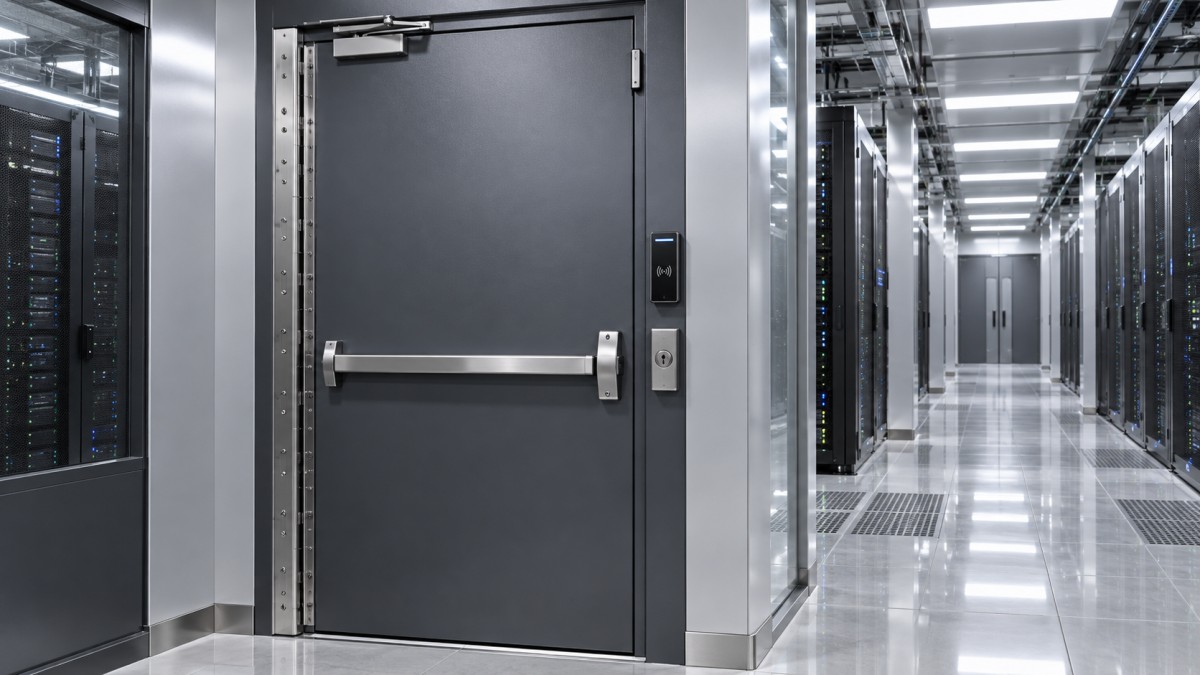
Technical evaluation should begin with a documented access control model. Define who may enter, when they may enter, which credentials they use, and what evidence must be retained.
A data center may require multifactor authentication, continuous door monitoring, anti-tailgating controls, and detailed audit trails. A warehouse may prioritize durable credentials, rapid throughput, and emergency egress.
Custom door security hardware becomes valuable when standard off-the-shelf products cannot satisfy the opening’s combined security, environmental, operational, and compliance requirements without unacceptable compromises.
Evaluators should classify each opening by risk rather than applying one hardware package everywhere. Main entrances, server rooms, laboratories, loading docks, electrical rooms, and emergency exits require different protection levels.
A practical opening profile includes door material, thickness, frame construction, swing direction, traffic volume, exterior exposure, occupancy type, fire rating, expected attack methods, and available electrical pathways.
This profile prevents a common project failure: specifying a sophisticated biometric reader on a door whose frame, latch engagement, hinges, or closer can still be defeated easily.
Match Locking Hardware to the Door’s Security and Life-Safety Role
The locking device is the component that physically holds the door closed. Selecting it requires more than comparing holding-force figures or choosing the highest-rated electromagnetic lock.
Electric strikes work well when the mechanical latch and frame preparation are suitable. They can support controlled entry while preserving familiar mechanical exit behavior for many commercial applications.
Electrified mortise locks combine locking, latching, and monitoring functions within the door edge. They are often appropriate where appearance, controlled access, and integration with existing architectural hardware matter.
Electrified panic hardware is commonly required on high-occupancy exit doors. It supports secure exterior access while allowing occupants to leave quickly through a familiar, code-compliant releasing action.
Electromagnetic locks can offer strong holding force, but their use demands careful life-safety design. Egress release methods, fire alarm interfaces, power-loss behavior, and local code acceptance must be verified.
Custom configurations may include monitored latch bolts, request-to-exit switches, door-position contacts, concealed wiring, weather-resistant housings, or special finishes that suit both security and architectural requirements.
Do not assume fail-safe and fail-secure behavior are interchangeable. Fail-safe hardware unlocks when power is removed, while fail-secure hardware remains locked and usually needs another egress strategy.
The correct choice depends on the opening’s purpose. Life safety, emergency evacuation, asset protection, and continuity of operations should be evaluated together rather than treated as competing specifications.
Design Credential and Biometric Integration Around Real Operating Conditions
Access control requirements increasingly combine mobile credentials, cards, PINs, fingerprints, facial recognition, iris recognition, and visitor identities. Hardware must support these methods without creating usability failures.
Credential selection should reflect threat level and workflow. A proximity card may be sufficient for low-risk staff circulation, while a sensitive enclosure may require card-plus-biometric or card-plus-PIN verification.
Biometric readers should be assessed beyond recognition speed. Technical evaluators need to examine false acceptance rates, false rejection rates, liveness detection, enrollment quality, environmental tolerance, and privacy controls.
For example, facial recognition can be affected by changing light, protective eyewear, masks, camera placement, and approach angle. Iris systems may provide high assurance but require intentional user positioning.
Custom door security hardware can improve biometric performance by positioning readers at the correct height, providing suitable illumination, shielding devices from glare, and coordinating door release timing with authentication results.
Reader-to-controller communication also matters. Secure protocols, encrypted credential data, supervised connections, and protected cable routes reduce opportunities for spoofing, relay attacks, or tampering at the opening.
Where mobile credentials are used, define behavior for depleted phone batteries, lost devices, shared phones, visitor access, and network interruptions. Physical access systems need clear fallback procedures.
Biometric data introduces additional obligations. Organizations should minimize collected data, protect templates, define retention periods, restrict administrative access, and confirm compliance with relevant privacy regulations.
Close Physical Bypass Paths Beyond the Lock
A sophisticated lock cannot compensate for weak surrounding hardware. Attackers frequently target hinges, exposed fasteners, glazing, door gaps, frames, closers, cylinders, and poorly reinforced strike areas.
Custom solutions should treat the door opening as a load path. Forced-entry resistance depends on how impact, prying, pulling, and repeated cycling loads transfer through every connected component.
For outward-swinging doors, security hinges or non-removable hinge pins may be necessary. On high-risk openings, reinforced hinges and continuous hinges can distribute load across the frame more effectively.
Strike reinforcement is especially important for electrically controlled latch systems. The strike, frame reinforcement, latch projection, and fastener anchoring must resist expected prying and impact forces together.
Door gaps deserve attention because excessive clearance can permit shimming, tool insertion, or latch manipulation. Astragals, latch guards, edge protection, and proper installation tolerances reduce these vulnerabilities.
Glazed openings require equivalent thinking. Security glass, protected mullions, sensor placement, and hardware location should prevent an intruder from breaking a pane and reaching a release device.
Technical evaluators should request test evidence applicable to the proposed configuration. Component certifications are useful, but assembly-level performance is more meaningful when the opening faces elevated threats.
High-strength fasteners must also be specified deliberately. Fastener grade, corrosion resistance, installation torque, embedment depth, and access from the attack side influence real-world resistance.
Integrate Monitoring So the System Can Detect Abnormal Door States
Access control is incomplete when it records unlock commands but cannot confirm the door state. Monitoring turns hardware from a release mechanism into an accountable security control.
At minimum, many controlled openings need a door-position switch and lock-status monitoring. These signals help distinguish a valid opening cycle from a held-open, forced-open, or failed-lock condition.
Door-position contacts indicate whether the leaf is physically closed. Lock-status monitoring indicates whether the latch, bolt, or locking mechanism has reached the intended secured state.
Those signals should be interpreted together. A controller that reports “locked” while the door remains ajar can create a dangerous false sense of security unless alarm logic identifies the mismatch.
Request-to-exit devices should be selected to match the intended egress method. Motion sensors, touch bars, mechanical switches, and delayed-egress controls have different reliability and code implications.
Custom hardware may incorporate tamper switches, cable supervision, latch-bolt monitoring, hinge-side contacts, or concealed sensors. These additions are useful when exposed devices would be vulnerable or visually unacceptable.
Alarm priorities need operational definitions. A forced-door event, held-open event, reader tamper, controller offline state, and fire-release event should not all create identical notifications or response expectations.
Integrating door events with video systems can improve incident investigation. Camera placement should capture the person, credential interaction, door movement, and surrounding approach path without compromising privacy requirements.
Plan for Fire Ratings, Emergency Egress, and Local Code Compliance
Security hardware must never defeat emergency egress. This principle should shape the design early because retrofitting compliance after installation is expensive and can delay occupancy approvals.
Fire-rated door assemblies are tested as systems. Replacing a listed component, drilling new holes, adding wiring, or changing hardware preparation can affect the opening’s fire-rating status.
Technical evaluators should verify that electrified locks, hinges, power transfers, door closers, exit devices, and accessories are listed or approved for the relevant fire-rated assembly.
Fire alarm integration must be unambiguous. Depending on the design and local requirements, alarm activation may unlock selected doors, release magnetic locks, remove delayed egress, or change access rules.
Emergency responders may need rapid access to certain areas, while occupants need immediate exit. Hardware selection should document how both requirements are met during power loss and emergency conditions.
Accessibility also matters. Opening force, operating height, usable hardware shape, timing, and clear width can affect whether an access-controlled opening remains practical for all authorized users.
Local authorities, building codes, fire codes, and insurance requirements can differ by jurisdiction. A technical evaluation should include early consultation with code officials and qualified door hardware specialists.
Specify Power, Wiring, and Network Resilience as Security Requirements
Many access failures originate in infrastructure rather than in locks or readers. Custom door security hardware must be supported by reliable power, protected wiring, appropriate controllers, and resilient network design.
Calculate power demand for every device, including peak current, inrush, standby load, battery charging, reader heating, electric locking actions, and future expansion capacity for additional sensors.
Power supplies should provide supervision and battery backup where continuity is required. The selected backup duration should reflect operational needs, not merely the minimum time available from a standard battery cabinet.
Concealed electrified hinges, power transfers, or door loops should be chosen based on cycle volume, door weight, swing geometry, and maintenance accessibility. Cable fatigue is a predictable failure point.
Networked controllers need cybersecurity controls as well as physical protection. Segmentation, authenticated communication, secure firmware updates, logging, and restricted management access reduce exposure to cyber-enabled entry attempts.
Offline behavior must be defined explicitly. Determine whether doors should continue validating cached credentials, remain locked, unlock, or move into a restricted operating mode during controller or network loss.
For critical sites, consider local decision-making at the edge. Controllers that retain rules and credentials can preserve essential access operations when cloud services or central management platforms are unavailable.
Evaluate Lifecycle Reliability, Serviceability, and Total Cost
Technical evaluators should avoid selecting custom hardware only on initial purchase price. Door openings experience frequent mechanical cycles, environmental stress, user error, maintenance variation, and changing security policies.
Cycle ratings should match actual traffic assumptions. A busy employee entrance, cleanroom, transit facility, or hospital corridor can impose far more operating cycles than a typical office-side door.
Environmental conditions affect component life. Outdoor doors may require corrosion-resistant materials, sealed electronics, drainage considerations, temperature tolerance, UV resistance, and protection against wind-driven rain or dust.
Serviceability is a major factor in lifecycle performance. Technicians need access to adjustment points, replacement parts, diagnostic indicators, wiring pathways, firmware procedures, and clear documentation for each opening type.
Standardizing selected components can reduce spare-parts inventory and training costs. However, standardization should not force high-risk openings into inadequate hardware classes merely for procurement convenience.
A useful total-cost assessment includes installation labor, commissioning time, software licensing, battery replacement, preventive maintenance, downtime risk, credential administration, replacement parts, and compliance recertification where applicable.
Manufacturers should provide test reports, wiring diagrams, compatibility matrices, maintenance schedules, and documented warranty terms. Vague compatibility claims should be treated as a technical risk until proven.
Use a Structured Evaluation Process Before Approving a Custom Design
A disciplined review process makes custom door security hardware easier to compare and defend. It also prevents late changes when construction, commissioning, and occupancy schedules are already constrained.
First, create an opening-by-opening risk register. Record the protected asset, likely threat, user group, operating hours, emergency function, security level, environmental exposure, and compliance obligations.
Next, map each requirement to a hardware function. Identify which component provides locking, identity verification, door monitoring, egress release, forced-entry resistance, emergency release, and audit evidence.
Then review interfaces between components. Confirm physical preparation, electrical compatibility, controller capacity, reader protocol, lock power, fire alarm connection, software event handling, and maintenance responsibilities.
Request a representative mock-up or pilot installation for complex openings. Field testing can reveal reader placement issues, user confusion, closing problems, alarm nuisance, and installation constraints before rollout.
Acceptance testing should include normal access, invalid credentials, forced opening, held opening, tailgating scenarios where relevant, power loss, network loss, fire alarm activation, and emergency egress.
Finally, require complete handover records. As-built drawings, device addresses, door schedules, configuration backups, certifications, test results, and maintenance instructions are essential for long-term control.
Conclusion: Customization Should Create a Verifiable Security Outcome
Custom door security hardware meets access control requirements when it translates policy into dependable physical behavior at every opening, including during emergencies, faults, attacks, and routine high-volume use.
For technical evaluators, the strongest solution is rarely the most feature-rich individual device. It is the coordinated assembly with verified compatibility, code compliance, monitored states, and maintainable performance.
Prioritize opening-specific risk analysis, assembly-level testing, credential usability, resilient infrastructure, and lifecycle evidence. This approach produces access control systems that are both harder to bypass and easier to operate.
- Last One:No more articles
- Next Article:How a smart hardware network can reduce IoT device security gapsSep 26, 2026
Recommended News