
Search News
Industry Portal
Hot Articles
Brazil Tightens Smart Street Lighting Compliance from Sept. 2026
Time
Click Count
On June 26, 2026, Brazil's INMETRO released Resolution No. 178/2026, introducing a stricter compliance threshold for smart street lighting IoT products. The change links market access not only to energy labeling, but also to laboratory verification and cybersecurity-related documentation, making it directly relevant to exporters, manufacturers, buyers, certification teams, and supply chain planners working with LED street lighting for the Brazilian market. For the industry, the issue is not simply that a new rule has been announced, but that product qualification, delivery scheduling, and bid readiness may now be affected within a short implementation window.
What the Resolution Now Requires
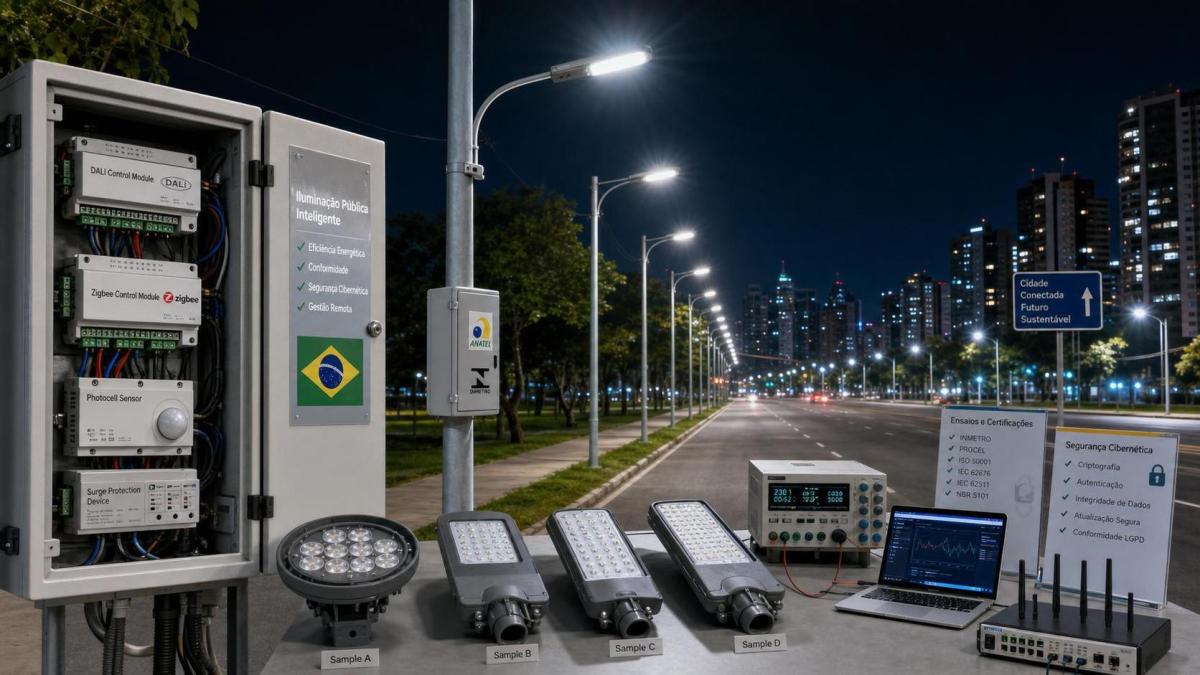
According to the provided information, INMETRO announced Resolution No. 178/2026 on 2026-06-26. The rule applies to both imported and locally manufactured smart street lighting products, including units involving DALI or Zigbee protocol controllers and light-sensing linked modules.
From September 1, 2026, these products must carry a Procel energy efficiency label, with a minimum rating of Grade B. They must also be supported by dual certification reports issued by a Brazilian local laboratory, covering LM-79 luminous flux testing and IEC 62443-4-2 cybersecurity requirements.
The provided summary further states that the new requirement is expected to extend delivery lead times for Chinese LED street light exports by 6 to 8 weeks and increase costs by 12% to 15%.
Where the Pressure Is Likely to Appear First
Export transactions may face a tighter pre-shipment checklist
From an industry perspective, exporters serving Brazil are likely to be affected first because the rule directly changes the conditions for market entry. The practical impact is likely to concentrate in product qualification, document preparation, testing coordination, and shipment timing. What deserves closer attention is whether product files, label readiness, and Brazilian local laboratory reports are aligned before goods move into final delivery arrangements.
Manufacturing schedules may need to absorb compliance lead time
For manufacturers, the change matters because the covered products are not limited to basic luminaires; the scope includes smart control and light-sensing related modules. Analysis shows that production planning may be influenced by the need to sequence testing, labeling, and certification documentation earlier in the order cycle. This is especially relevant where delivery commitments were previously built around standard electrical or optical qualification alone.
Procurement teams may need to revisit supplier qualification
Buyers and sourcing teams may also feel the impact because the new rule changes what counts as a compliant deliverable for Brazil-bound projects. The issue is not only price adjustment, but whether suppliers can provide the required Procel labeling level and the two specified reports from a Brazilian local laboratory. In practical terms, procurement reviews may need to pay closer attention to technical files, certification status, and realistic delivery promises.
Testing and certification service links become more time-sensitive
For certification-related companies and testing service providers, the rule points to a more time-sensitive workflow. Observably, the combination of LM-79 luminous flux verification and IEC 62443-4-2 cybersecurity reporting creates a dual-document requirement that may shape order sequencing, submission timing, and client expectations. Even where the exact operational pace is not yet detailed in the provided information, the compliance path itself has clearly become more document-driven.
What Companies Should Track in the Near Term
Check whether product scope has been interpreted consistently
Analysis shows that companies dealing in smart street lighting should first confirm how their product configurations match the scope described in the resolution, especially where DALI or Zigbee controllers and light-sensing linked modules are involved. The immediate issue is not broad policy interpretation, but whether specific models destined for Brazil fall within the mandatory labeling and report requirements.
Review technical files and report readiness before order confirmation
What deserves closer attention is the completeness of compliance documents at the quotation and contract stage. Where projects depend on Brazil delivery after September 1, 2026, companies may need to verify in advance whether the required Procel label target, LM-79 report, and IEC 62443-4-2 report can be assembled in time. In the absence of further execution detail in the input, this should be treated as a compliance checkpoint rather than as proof of a settled market practice.
Reassess delivery promises and procurement timing
The provided summary states that lead times for Chinese LED street light exports may extend by 6 to 8 weeks and costs may rise by 12% to 15%. From a business operations perspective, that means order scheduling, tender commitments, and procurement windows may need to be reviewed with more caution. Companies should pay attention to whether current supply agreements and promised shipping dates still match the new compliance timeline.
Watch for changes in bid documents and after-sales obligations
Observably, once a rule begins to tie market entry to both energy labeling and cybersecurity-related reporting, tender specifications, supplier qualification documents, and post-delivery traceability expectations may begin to shift as well. Since the input does not provide detailed implementation mechanics, this remains an area to monitor rather than a confirmed outcome.
Why This Looks Like an Execution Signal, Not Just a Headline
Analysis shows that this development is better understood as a concrete compliance signal than as a distant policy discussion. The resolution includes a defined implementation date, a minimum Procel label threshold, and named report requirements tied to a Brazilian local laboratory. That combination usually matters to the market because it affects whether products can move from technical acceptance to actual delivery.
At the same time, it is also more appropriate to understand this as a rule change that still requires close observation in practice. The provided information confirms the core obligations, but it does not spell out every execution detail, review pathway, or procurement response. For that reason, industry participants still need to watch how certification interpretation, buyer documentation requirements, and market feedback develop after the rule takes effect.
How the Market May Need to Read This Change
In practical terms, this update signals that smart street lighting for Brazil is moving toward a more layered compliance model that combines energy performance, local testing, and cybersecurity-related certification evidence. The immediate significance lies in qualification readiness, delivery timing, and cost treatment rather than in abstract policy language.
From an industry perspective, the most reasonable reading at this stage is that the resolution represents an implemented regulatory direction with near-term operational consequences, while some aspects of market execution still need continued verification. Companies exposed to Brazil-bound smart street lighting projects should treat it as a live compliance development and keep watching how supporting documents, tender language, and enforcement practice evolve.
Basis of This Article and What Still Needs Verification
This article is based on the user-provided news title, event date, and event summary. For developments of this kind, commonly relevant source types may include official regulatory notices, publications from supervisory authorities, customs or trade administration information, industry association updates, standards organization documents, and reporting by authoritative trade media.
No specific official source link was provided in the input, so the exact official publication path still needs to be verified on an ongoing basis. It also remains necessary to monitor follow-up details such as implementation guidance, certification interpretation, tender document changes, market feedback, and how affected companies carry the rule into actual execution.
Recommended News