
Search News
Industry Portal
Hot Articles
Industrial IoT Solutions Cost Breakdown for Multi-Site Operations
Time
Click Count
Why does industrial IoT solutions cost look so different across multi-site operations?
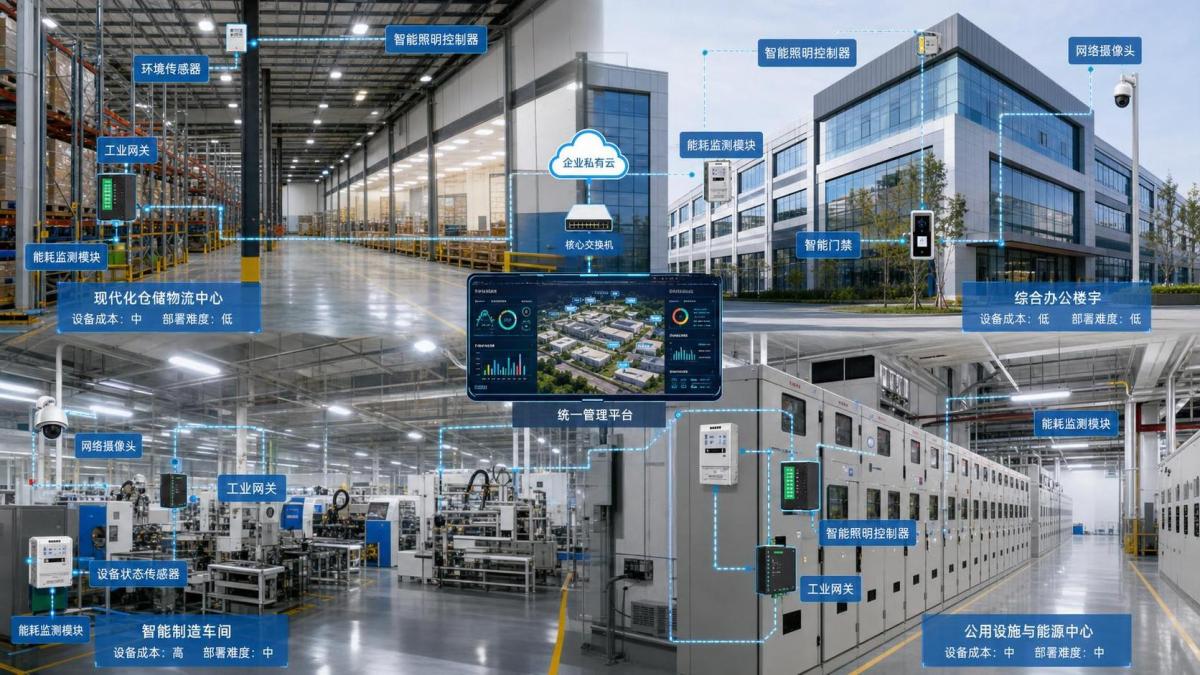
Industrial IoT solutions rarely fail because the hardware is too expensive.
They usually become difficult when cost assumptions ignore site variation, compliance exposure, and integration depth.
That matters even more when several facilities share one investment case.
A warehouse, fabrication plant, office tower, and utility yard may all use the same platform, yet carry very different cost drivers.
In practical terms, industrial IoT solutions cost includes devices, gateways, networks, software licenses, integration work, cybersecurity controls, rollout labor, and support.
The visible invoice is only one part of the total number.
The less visible part comes from connecting physical infrastructure to digital rules.
That is where SHSS industry intelligence is useful.
Its coverage of biometric access, smart lighting, high-strength hardware, brushless tools, and protective systems reflects how real facilities operate.
A cost model should therefore ask one basic question.
Are you funding isolated devices, or a scalable operational control layer across sites?
That distinction shapes budget timing, payback logic, and risk tolerance.
What exactly should be included in an industrial IoT solutions cost breakdown?
A credible breakdown separates one-time setup from recurring commitments.
Without that split, multi-site comparisons become misleading very quickly.
The most common cost layers are listed below.
In distributed environments, the integration line often becomes the swing factor.
For example, connecting smart LED lighting to occupancy analytics may be simple in one building.
Connecting it across mixed DALI, Zigbee, and older building systems is not.
The same pattern appears in biometric access projects.
Readers who follow SHSS coverage will recognize that device quality, metal durability, and algorithm speed matter.
But for budgeting, interoperability matters just as much.
Which cost drivers change most when one pilot grows into several sites?
The first expansion usually changes the economics more than the initial pilot.
That is because hidden variation starts to surface.
A small test can look efficient while the broader estate remains expensive to standardize.
The biggest moving parts are usually these:
- Site readiness: power quality, cabinet space, conduit access, network segmentation, and environmental protection.
- Asset diversity: different machine generations, lighting protocols, lock hardware, and building layouts.
- Regional rules: biometric data handling, retention periods, labor safety reporting, and cyber documentation.
- Deployment logistics: travel, subcontractors, permit windows, and downtime coordination.
- Operating model: centralized support is cheaper only if local teams can handle first-line issues.
More mature industrial IoT solutions reduce some of that friction through reusable templates.
Still, templates do not erase local conditions.
A smart access rollout in a data center campus is costed differently from a streetlighting upgrade or a connected tool management system.
In actual review cycles, a useful test is simple.
Ask whether the quoted cost assumes identical sites.
If the answer is yes, the estimate is probably too optimistic.
How can implementation risk quietly inflate industrial IoT solutions cost?
The expensive mistakes are rarely dramatic at the start.
They appear later as change orders, delays, or weak adoption.
Three risk areas deserve extra attention.
Data and security design
Biometric security, occupancy analytics, and remote access logs create sensitive records.
If data ownership, residency, and retention rules are unclear, remediation becomes expensive.
SHSS regularly emphasizes this overlap between physical security and regulatory exposure.
That warning is financially relevant, not just technical.
Mechanical and environmental fit
Industrial IoT solutions are still physical systems.
High vibration, dust, heat, moisture, and heavy traffic shorten device life when enclosures or fasteners are under-specified.
That is why hardware durability cannot be treated as a commodity line item.
Workflow mismatch
A solution that saves energy but adds manual exceptions will struggle.
A tool-tracking platform that cannot align with maintenance routines will also underperform.
When that happens, software remains active but business value stalls.
That is one of the costliest outcomes in any multi-site program.
What is a sensible way to compare vendors without chasing the lowest quote?
A low initial quote can still produce a high three-year cost.
The better comparison is structured around commercial clarity and operational realism.
A short evaluation matrix helps keep that discipline.
In many cases, the strongest offer is not the cheapest one.
It is the one that exposes assumptions early and prices complexity honestly.
That is especially true for industrial IoT solutions tied to smart security, lighting control, or mixed hardware estates.
How should ROI be judged when savings arrive from several operational channels?
The cleanest ROI models combine direct savings with risk-adjusted value.
That sounds abstract, but the method is straightforward.
Track gains in separate buckets instead of blending everything into one estimate.
- Energy savings from adaptive lighting and better load visibility.
- Lower incident cost through stronger access control and faster alerts.
- Reduced maintenance hours from predictive scheduling and remote diagnostics.
- Lower asset loss or misuse in connected tool and equipment fleets.
- Avoided disruption from better compliance evidence and audit traceability.
The final bucket often receives too little attention.
Yet in regulated or high-risk operations, avoided loss can justify the program.
SHSS often frames this as the meeting point between physical resilience and intelligent control.
That framing is useful because it keeps ROI grounded in operational consequences.
If a proposal claims a short payback, check whether the savings depend on perfect user behavior or full data accuracy from day one.
More credible models include a ramp period and site-by-site variation.
Before approving a rollout, what should be confirmed next?
The best next step is not another generic demo.
It is a structured validation pack built around actual facilities.
That pack should include a site segmentation list, a five-year cost model, integration map, cybersecurity responsibility split, and measurable success criteria.
It should also separate mandatory spending from optional expansion features.
Industrial IoT solutions create the most value when physical hardware, software logic, and operating routines are priced together.
That is why surface-level comparisons often miss the real decision.
For multi-site operations, the stronger approval case usually comes from disciplined scoping, not aggressive savings claims.
A careful review of industrial IoT solutions cost should therefore answer three things clearly.
What must be standardized, what can remain local, and where risk becomes more expensive than delay.
Once those answers are documented, comparing options becomes faster, cleaner, and far more defensible.
Recommended News