
Search News
Industry Portal
Hot Articles
Iris Scanners vs Facial Recognition for High-Access Security
Time
Click Count
High-access security is no longer only about locking doors. In data centers, research sites, transport hubs, and premium commercial buildings, every entry point now sits inside a wider risk model.
That is why the comparison between iris scanners and facial recognition matters. Both promise fast, touchless authentication, yet they behave very differently when the requirement is high assurance rather than general convenience.
For organizations balancing uptime, compliance, and physical security, the real question is not which biometric looks more advanced. The real question is which system matches the threat profile, traffic pattern, and operating environment.
Why this decision has become more strategic
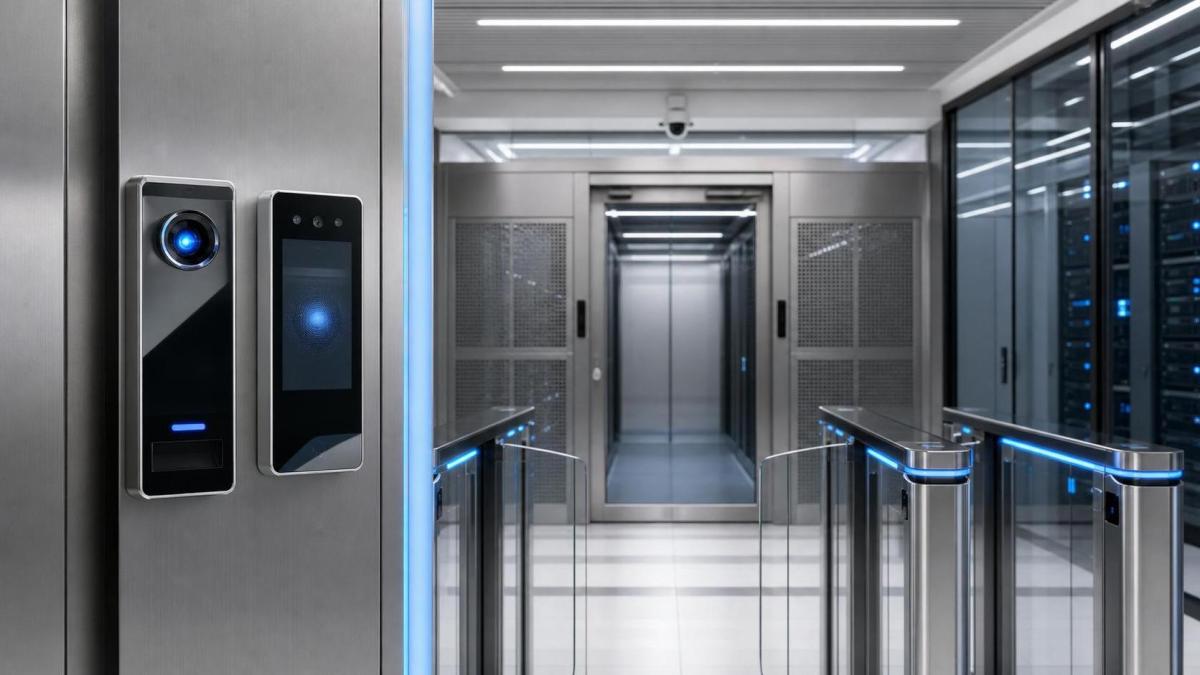
Across AIoT infrastructure, access control now connects with video surveillance, building automation, visitor management, and audit systems. A weak biometric choice can create friction in all of them.
SHSS follows this shift closely because smart access has become one of the practical anchors of modern facilities. The same attention once reserved for hardware strength now applies to identity certainty.
This is especially relevant in environments where a single unauthorized entry may expose sensitive data, interrupt production, or trigger regulatory scrutiny. In those settings, a biometric reader is not a gadget. It is a control point.
The core difference between iris scanners and facial recognition
Iris scanners authenticate a person by analyzing the complex texture of the colored ring around the pupil. The pattern is highly distinctive and remains stable over time.
Facial recognition identifies a person through facial geometry, texture mapping, and depth cues, depending on the device. Modern systems often combine visible light and infrared data.
In simple terms, iris scanners usually prioritize identity precision. Facial recognition usually prioritizes speed, stand-off distance, and easier flow through busy entry points.
That difference shapes nearly every deployment decision, from user acceptance to anti-spoofing design.
Accuracy and spoof resistance in high-access zones
When the threat model includes credential sharing, presentation attacks, or targeted intrusion, iris scanners usually hold an advantage. The iris contains more fine-grained biometric detail than a face image.
That makes high-quality spoofing harder, especially when the reader uses near-infrared illumination and liveness detection. Photos, printed eyes, and basic display attacks are easier to reject.
Facial recognition has improved sharply, especially with 3D structured light, depth sensing, and infrared pattern checks. Still, its real-world performance depends heavily on camera quality, angle, lighting, and algorithm maturity.
For perimeter convenience, that may be acceptable. For server rooms, executive vaults, restricted labs, or control centers, the margin for error is far smaller.
Operational flow matters as much as security strength
A system can be highly secure and still be a poor business fit if it slows traffic, frustrates staff, or raises exception handling costs.
Facial recognition usually feels more effortless. Users approach naturally, and many systems work without a deliberate pause. That can improve throughput at lobbies, gates, and mixed-use entrances.
Iris scanners often require more cooperative positioning. The user may need to align eyes within a specific range, even though the process itself is fast once the device locks on.
In low-volume high-security areas, this extra step is often acceptable. In heavy-shift operations, even small delays can accumulate into staffing and queue management issues.
Common operational friction points
- Protective eyewear or face shields can affect iris capture quality.
- Masks, glare, and sharp backlighting can reduce facial recognition consistency.
- Fast-moving personnel flows may favor facial systems at outer checkpoints.
- Very strict identity verification often favors iris scanners deeper inside the facility.
Compliance, privacy, and data handling are part of the comparison
Biometric access decisions now sit under legal, contractual, and reputational pressure. The collection method matters, but the surrounding governance matters more.
Templates should be encrypted, retention periods should be defined, and cloud transfer should be justified. In jurisdictions shaped by GDPR-style thinking, biometric processing needs a clear lawful basis.
Facial recognition sometimes draws stronger sensitivity because faces are visible in public life and are closely associated with surveillance concerns. That can complicate policy approval even when the system is technically robust.
Iris scanners may appear more specialized and less ambient, which can help narrow their use case to secure authentication. Still, they remain biometric systems and require disciplined consent, storage, and access controls.
Where each technology tends to fit best
The best deployments are rarely ideological. They are layered. Facilities often benefit from matching each biometric method to the zone it protects.
Settings that often favor iris scanners
- Data halls and server cages
- Research labs with restricted intellectual property
- Command rooms and emergency infrastructure nodes
- High-value archive or evidence storage
Settings that often favor facial recognition
- Main building entrances
- Corporate campuses with regular user flow
- Visitor screening points with staffed oversight
- Commercial buildings seeking low-friction tenant access
In practice, a hybrid architecture is often the most defensible. Facial recognition can support frictionless ingress, while iris scanners protect the most sensitive inner zones.
Cost should be measured over the life of the system
Purchase price alone can distort the business case. What matters is total deployment value over several years.
That includes enrollment time, false rejection handling, integration effort, maintenance, cybersecurity updates, and the financial impact of a security failure.
Iris scanners may carry a higher initial hardware cost in some projects. Yet they can be economical where the cost of one unauthorized entry is extremely high.
Facial recognition may reduce staffing friction and improve user throughput, which can produce stronger returns in high-volume facilities. The better investment depends on where loss exposure actually sits.
What to examine before making a final choice
A sound evaluation starts with the site, not the brochure. Vendor claims are useful only when tested against operating conditions.
- Map zones by consequence of unauthorized access.
- Check performance with masks, eyewear, glare, and low light.
- Review liveness detection, template encryption, and audit logging.
- Measure throughput during realistic peak traffic periods.
- Validate integration with VMS, access panels, and identity platforms.
- Define fallback procedures for failed reads and emergency access.
This is also where the broader SHSS perspective becomes useful. In modern security infrastructure, hardware reliability, biometric accuracy, lighting conditions, and physical protection all influence the final result.
A reader mounted in a poorly lit vestibule, exposed to dust, vibration, or unmanaged visitor flow, will underperform regardless of algorithm quality.
A practical way to move forward
When comparing iris scanners with facial recognition, the strongest answer is usually specific rather than universal. High-assurance inner zones often justify iris-based authentication. High-flow outer zones often reward facial systems.
The next step is to build a short decision matrix around risk level, throughput, environment, privacy obligations, and integration depth. That will usually narrow the field faster than feature lists alone.
If the site carries both strict security and continuous traffic, evaluate a layered design instead of forcing one biometric method everywhere. In high-access security, fit is what turns technology into a reliable control.
Recommended News