
Search News
Industry Portal
Hot Articles
Cut-Resistant Clothing vs Gloves: When Full Coverage Matters
Time
Click Count
When sharp edges, flying fragments, and high-contact tasks turn routine work into a serious hazard, choosing the right protection becomes critical. While gloves protect the hands, cut-resistant clothing provides broader defense for the arms, torso, and legs—areas often exposed in real-world operations. Understanding when full coverage matters can help operators reduce injury risks, improve compliance, and work with greater confidence.
For operators in metal fabrication, glass handling, demolition, construction, recycling, logistics, and equipment maintenance, the question is rarely gloves or garments in isolation. The real decision is how much body coverage a task demands, how long exposure lasts, and whether the work environment includes repeated contact, sudden slips, or moving sharp materials.
In many workplaces, hand injuries are easier to imagine than forearm, abdomen, thigh, or shin cuts. Yet incidents often occur during lifting, carrying, bracing, kneeling, or reaching into tight spaces. That is where cut-resistant clothing becomes more than an upgrade. It becomes part of a complete PPE strategy built around realistic exposure, worker mobility, and operational discipline.
Why Gloves Alone Are Not Always Enough
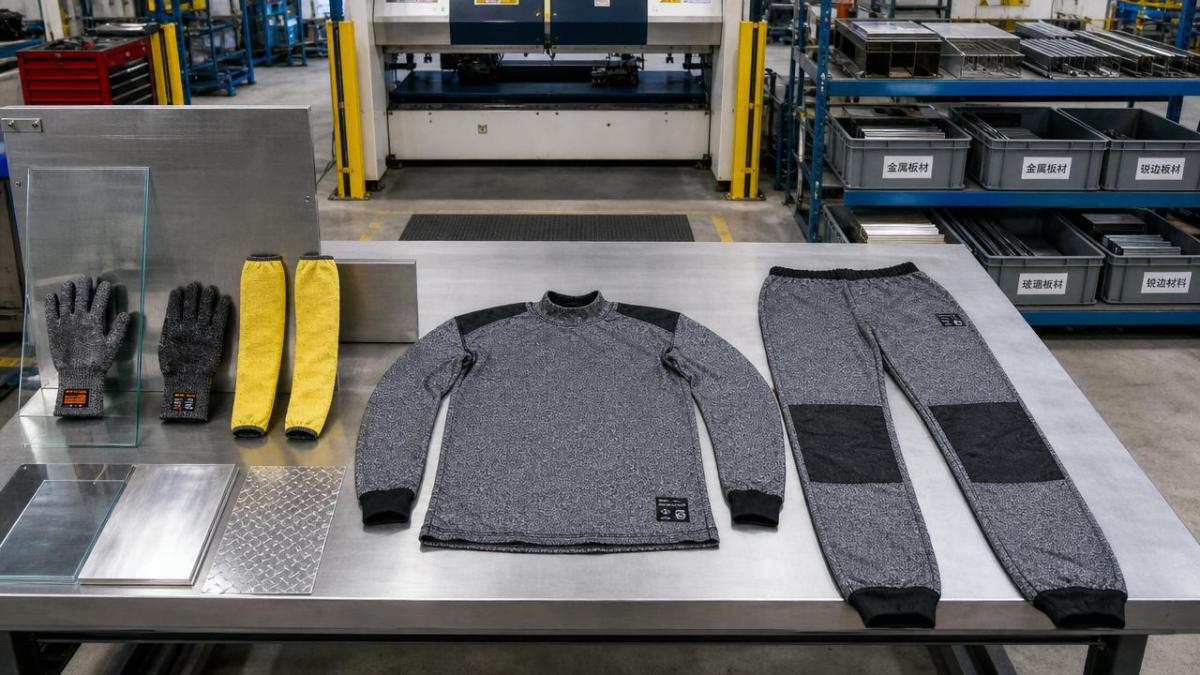
Cut-resistant gloves remain the first layer of defense in high-contact tasks, and for good reason. Operators use their hands at nearly every stage of material handling, assembly, trimming, blade change, and maintenance. However, the hazard path does not stop at the wrist. In real operations, the forearm, upper arm, chest, and legs often enter the contact zone within 1 to 3 seconds of a slip or rebound.
A worker carrying sheet metal, for example, may stabilize a load against the torso. A maintenance technician reaching inside machinery may drag the sleeve across a burr. A recycling operator sorting scrap may brush the thigh or hip against sharp offcuts. In each case, gloves protect the hands, but unprotected body areas remain exposed to secondary contact.
Typical Exposure Points Beyond the Hands
The most overlooked cut zones are the forearm, elbow crease, ribs, upper leg, and lower shin. These areas become vulnerable during repetitive handling, awkward lifting angles, and confined workspaces. In facilities with high throughput, even a 5-second task repeated 200 times per shift can create meaningful cumulative risk.
- Forearms exposed during reaching, sorting, or machine clearing
- Torso exposed when carrying sheet goods, glass, or sharp-edged panels
- Thighs and knees exposed during kneeling, loading, or low-level retrieval
- Shins exposed around stacked scrap, pallets, and construction debris
When Full Coverage Has Clear Operational Value
Full-body or extended-area protection matters most when tasks involve broad material contact, unstable loads, or unpredictable motion. The need rises further in mixed-use industrial sites, where operators switch between 3 to 5 task types in one shift and may not stop to change PPE between every step.
This is especially relevant in sectors followed closely by SHSS, where power tools, high-strength hardware, metal structures, and installation work intersect. A brushless cutting or fastening tool may improve speed, but faster cycle times can also increase the consequences of poor body coverage if sharp edges remain in the workflow.
The comparison below helps operators and site supervisors decide when gloves are enough and when cut-resistant clothing should be added to the PPE program.
The main takeaway is simple: gloves protect the point of grip, while cut-resistant clothing protects the path of movement. If the task creates contact beyond the hand, full coverage should be evaluated as a control measure rather than treated as optional apparel.
How to Choose Cut-Resistant Clothing for Real Workflows
Selecting cut-resistant clothing is not only about picking the highest protection level available. Operators need a balance of cut performance, comfort, heat management, range of motion, and compatibility with gloves, harnesses, knee pads, or hi-vis outerwear. Overbuilt garments can reduce compliance if they feel heavy after 2 to 4 hours of continuous work.
Start with Hazard Mapping
Before procurement, map the task by contact area, frequency, edge severity, and movement pattern. A practical review often takes 20 to 30 minutes per workstation. Look at where cuts are most likely to occur, how often loads shift, and whether workers twist, kneel, climb, or brace material against the body.
Four Questions to Ask
- Which body zones touch sharp surfaces during normal work?
- Is contact occasional, repeated, or continuous through the shift?
- Does the material move unpredictably or create snag points?
- Will workers keep the garment on for 6 to 10 hours without removing it?
Match Coverage to Task Type
Not every job needs a full suit. In many applications, targeted coverage delivers better acceptance and lower cost. Sleeves may be enough for bench work. Aprons or torso panels may suit fabrication lines. Full jackets and pants make more sense when operators lift, carry, sort, or move through debris-heavy environments.
The following framework helps connect garment type to workplace exposure and purchasing logic.
For most buyers, the right choice is the lowest coverage level that still protects all credible exposure zones. This approach helps control spend, reduce heat stress, and improve operator compliance across a 5-day or 6-day work schedule.
Evaluate Practical Performance, Not Just Lab Ratings
Lab-tested cut resistance matters, but field usability often determines whether protection is worn consistently. A garment that shifts during overhead work, traps heat at 30°C, or snags on hardware can create a new problem. Operators and safety managers should check seam placement, cuff retention, breathability, and flexibility at the shoulder, waist, and knee.
It is also wise to run a 7 to 14 day wear trial before broader rollout. Even a small pilot with 5 to 10 operators can reveal whether sizing is accurate, laundering affects performance, or workers remove the garment mid-shift because of discomfort.
Applications Where Full Coverage Delivers the Strongest Benefit
Some environments create such frequent or broad contact that cut-resistant clothing moves from recommended to highly practical. These are usually operations where sharp surfaces are not isolated hazards but part of the normal process flow. In those settings, the cost of broader PPE is often easier to justify than repeated injury downtime, retraining, and incident review.
Metal Fabrication and Sharp-Edge Transfer
In metal shops, workers may carry, rotate, align, or stage panels dozens of times per shift. Edge contact can occur during loading, deburring support, or tool repositioning. Sleeves, torso guards, and leg coverage become important when material sizes exceed easy one-hand control or when parts are transferred between stations every 2 to 5 minutes.
Glass, Panels, and Architectural Installation
Gloves are essential in glass work, but large panes often touch the forearm, chest, and thigh during movement and positioning. Installation teams working on construction sites also face mixed hazards such as frame edges, brackets, anchors, and broken fragments. Cut-resistant clothing can add a controlled layer without disrupting harness use or mobility when specified correctly.
Recycling, Waste Sorting, and Demolition Support
These sectors involve irregular shapes, hidden edges, and inconsistent loads. Contact is rarely limited to the hands. Workers bend, sort, drag, and step around metal, glass, plastic shards, and fastener waste. Because the hazard profile changes hour by hour, broader protection is often easier to standardize than task-by-task glove-only decisions.
Operational Signals That Indicate an Upgrade Is Needed
- Near-miss reports involving sleeves, thighs, or torso contact
- Frequent regripping of unstable materials above knee height
- Visible garment damage on standard workwear within 30 to 60 days
- Tasks that combine lifting, turning, and bracing in one motion
- Injury patterns that occur outside the glove coverage zone
Implementation, Procurement, and Long-Term Use
For B2B buyers and site leaders, the best PPE decision is the one workers will actually use. Implementation should combine product selection, wear testing, training, and replacement planning. In most facilities, a 4-step rollout is enough: hazard review, sample fitting, pilot use, and formal issue by task category.
What Procurement Teams Should Verify
Buyers should look beyond price per unit and ask how the garment performs over 20, 30, or 50 wash cycles, how many sizes are available, and whether supply can remain stable during repeat orders. For multi-site operations, consistency matters. If one site uses sleeves and another uses jackets for the same hazard, training quality and compliance may drift.
- Coverage map by task and body zone
- Comfort in hot or layered environments
- Sizing range for mixed operator teams
- Cleaning and inspection requirements
- Replacement interval based on wear, not only calendar age
Common Mistakes to Avoid
One common mistake is assuming higher cut protection automatically means better safety. If the garment is too stiff, workers may roll sleeves, leave jackets open, or remove the item during high-heat periods. Another mistake is ignoring compatibility. Gloves, sleeves, jackets, and outerwear should overlap cleanly so no 3 to 5 cm skin gap appears at the wrist or waist during movement.
A third mistake is failing to retrain after process changes. New tool stations, changed pallet heights, faster throughput, or different hardware packaging can all alter contact patterns. PPE reviews should be revisited every 6 to 12 months or sooner after a line redesign.
Maintenance and Serviceability
Cut-resistant clothing should be inspected for fraying, seam stress, surface glazing, and fit degradation. Garments exposed to oils, metal fines, or abrasive dust may need more frequent replacement than garments used in cleaner assembly environments. A basic check at shift end and a documented weekly inspection can significantly improve service life control.
Cut-resistant gloves are indispensable, but they protect only one part of the hazard path. When tasks expose the arms, torso, or legs to sharp edges, unstable materials, or repeated contact, cut-resistant clothing provides the full coverage needed to reduce risk and support safer, more consistent work. For operators, supervisors, and procurement teams, the right decision comes from matching coverage to real movement, real exposure, and real shift conditions.
If your operation is evaluating PPE upgrades across fabrication, installation, maintenance, recycling, or construction workflows, SHSS can help you assess task exposure, compare protective options, and align product selection with practical site demands. Contact us to discuss application-specific needs, request a tailored recommendation, or learn more about full-coverage protective solutions.
Recommended News