
Search News
Industry Portal
Hot Articles
Cut Resistant Apparel Price: What Drives Cost in 2026?
Time
Click Count
Cut Resistant Apparel Price: What Drives Cost in 2026?
Cut resistant apparel price in 2026 is no longer shaped by fabric alone.
For budget holders, the bigger question is cost stability across safety, compliance, and replacement cycles.
That shift matters because PPE decisions now carry more financial and operational weight than before.
In practice, cut resistant apparel price depends on fiber technology, certification level, garment construction, order volume, and sourcing risk.
This guide breaks down the real cost drivers behind cut resistant apparel price in 2026.
It also shows how to compare suppliers without underestimating total cost of ownership.
Why Cut Resistant Apparel Price Is Changing Faster in 2026
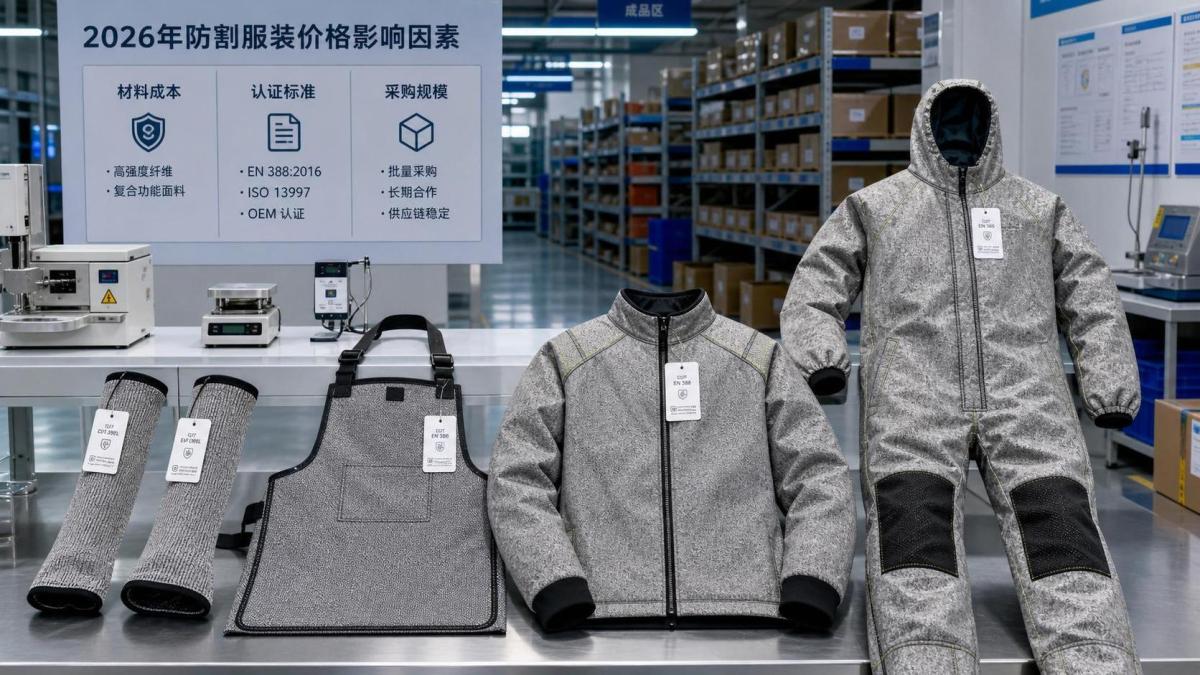
From recent market shifts, the clearest signal is that buyers are paying for performance consistency, not just material labels.
A garment that tests well once is less valuable than one that performs across repeated industrial use.
That changes how cut resistant apparel price is evaluated during procurement reviews.
Raw material costs remain important.
Yet labor availability, regional compliance rules, and freight volatility now push prices just as hard.
More visibly, industrial buyers are moving from single-item purchasing toward program-level PPE planning.
That means unit price alone is no longer a reliable decision metric.
What sits behind the price increase
- Higher use of engineered fibers such as HPPE, aramid blends, and steel-core yarns.
- More demand for multi-risk protection, including abrasion, flame, and puncture resistance.
- Expanded certification and audit requirements across North America, Europe, and large contractor networks.
- Shorter acceptable delivery windows, which increase rush production and buffer inventory costs.
The Biggest Cost Drivers Behind Cut Resistant Apparel Price
If you need a cleaner budget model, start with the variables that move cut resistant apparel price the most.
These factors usually matter more than brand name alone.
1. Fiber technology and yarn composition
This is still the foundation of cut resistant apparel price.
Basic cut-resistant fabrics may use lower-cost synthetic blends with moderate protection.
Premium garments often use HPPE, para-aramid, glass fiber, or steel reinforcement.
Those inputs increase cost, but they can improve durability and lower replacement frequency.
2. Protection level and test standard
A higher ANSI or EN 388 rating usually means a higher cut resistant apparel price.
That is not just about material weight.
It reflects test consistency, engineering design, and documentation costs.
For procurement teams, overbuying the rating can quietly inflate annual PPE spend.
3. Garment design and coverage area
Sleeves, jackets, aprons, and full-body garments carry very different pricing logic.
More panels, shaped seams, reinforced zones, and adjustable closures all add labor cost.
The same protection material can produce very different cut resistant apparel price outcomes by design type.
4. Production volume and customization
Large runs usually reduce unit cost.
Custom colors, branding, sizing programs, and private labeling push it back up.
So cut resistant apparel price often reflects operational complexity as much as protection value.
How Certification and Compliance Affect Procurement Cost
Certification is where many budgets drift.
A lower quoted cut resistant apparel price can look attractive until missing documentation delays site approval.
In real buying cycles, paperwork failures create hidden expense through reorders, audits, and downtime.
Compliance costs that often get missed
- Third-party lab testing and annual retesting.
- Technical files, declarations, and traceability records.
- Factory social compliance audits required by major buyers.
- Country-specific labeling, packaging, and user instruction requirements.
These costs are usually built into cut resistant apparel price, even when suppliers do not separate them clearly.
That is why quote comparison needs a compliance checklist, not just a spreadsheet of unit rates.
A Practical Price Range Framework for 2026
Exact prices vary by region and order structure.
Still, a range-based view helps assess whether cut resistant apparel price is realistic or misleading.
A very low cut resistant apparel price often signals compromised durability, unclear testing, or inconsistent sizing.
A very high price is not automatically better either, especially when the protection level exceeds the real task risk.
How to Evaluate Total Cost Instead of Unit Price
This is where stronger approval decisions usually happen.
A better cut resistant apparel price decision comes from total cost, not initial invoice value.
Use these five checks
- Map the garment to the real cut hazard, not the worst-case imagined hazard.
- Estimate wear life by shift intensity, laundering, and exposure to oils or metal edges.
- Check replacement rate by site, team, and season.
- Include freight, duties, stockholding, and emergency replenishment.
- Test worker acceptance, because poor comfort drives non-use and waste.
In many facilities, a slightly higher cut resistant apparel price produces lower annual spend because garments last longer and are actually worn.
That is a more useful procurement outcome than chasing the cheapest line item.
Common Buying Mistakes That Distort Cut Resistant Apparel Price
Several purchasing mistakes make cut resistant apparel price look lower than it really is.
The problems usually appear after rollout, when corrective action costs more.
- Buying to a sample instead of a locked technical specification.
- Assuming all certified products perform equally in field conditions.
- Ignoring lead time risk during contract negotiation.
- Combining unrelated PPE categories in one quote review.
- Treating cut resistant apparel price as separate from incident prevention value.
A cleaner sourcing process reduces both purchase error and long-tail operating cost.
What Smart Procurement Teams Should Do Next
The most effective teams are tightening approval criteria before requesting final quotes.
That makes cut resistant apparel price easier to compare on equal terms.
Start by defining the required cut level, garment type, expected wear life, and document package.
Then request landed cost, replenishment terms, and evidence from similar industrial applications.
This approach turns cut resistant apparel price from a reactive expense into a controlled safety investment.
In 2026, the strongest buying decisions will come from balancing protection performance, compliance certainty, and replacement economics.
When those three stay aligned, cut resistant apparel price becomes far easier to defend internally.
That is the point where approval moves faster, risk drops, and PPE spending starts working harder.
Recommended News