
Search News
Industry Portal
Hot Articles
Kevlar Cut-Resistant Suits: Protection Levels and Fit Guide
Time
Click Count
Kevlar cut-resistant suits sit at the intersection of worker safety, process control, and asset reliability. In sectors where metal edges, broken glass, sharp composites, and high-speed tooling are routine, the right suit is not a generic garment. It is a task-matched barrier that helps reduce laceration risk without creating new problems in mobility, heat stress, or inspection workflow.
That is why protection levels and fit matter as much as material claims. A suit that resists cuts well on paper can still underperform if sleeves ride up, seams strain, or bulk limits safe movement near machines, ladders, or confined work zones.
Why Kevlar cut-resistant suits draw attention now
Across construction, fabrication, utilities, logistics, and smart infrastructure projects, work is becoming faster and more integrated. Brushless power tools deliver higher torque in lighter formats. High-strength fasteners demand precise handling. Advanced lighting systems and security hardware add more installation points and more edge-contact tasks.
In that environment, special PPE is no longer a background purchase. It becomes part of risk engineering. SHSS often frames PPE as the last physical armor in modern operations, and Kevlar cut-resistant suits fit that idea well. They are especially relevant where contact hazards are frequent, short-duration, and difficult to predict.
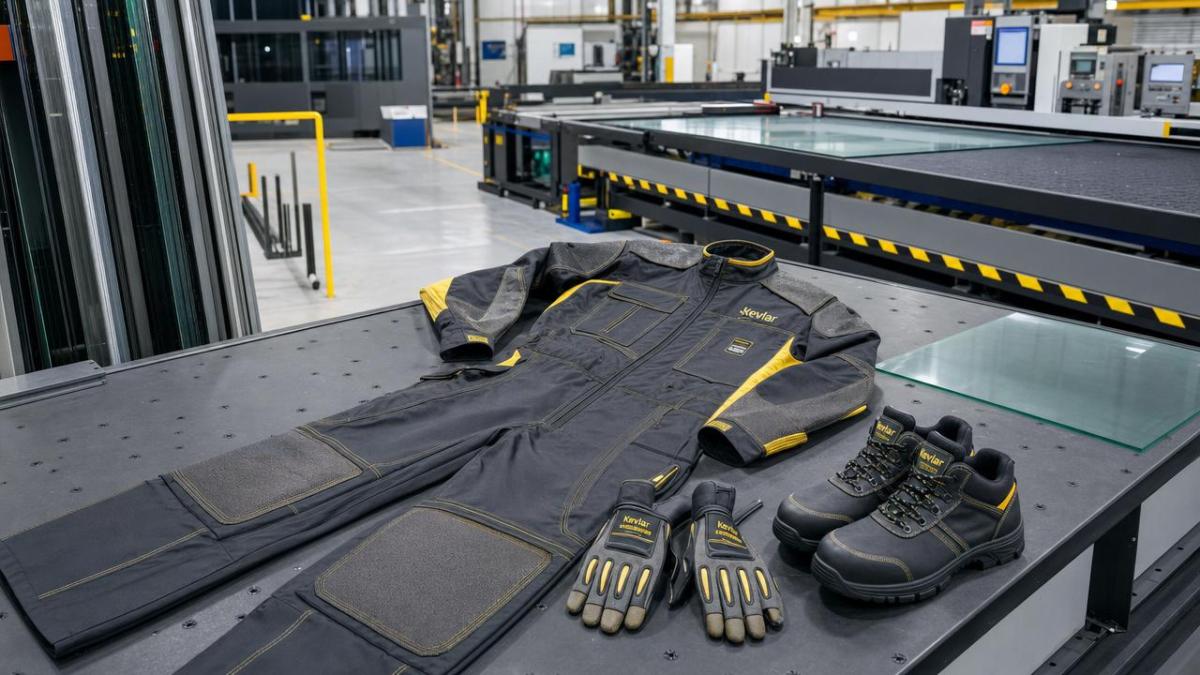
The practical driver is simple. Many serious injuries do not come from dramatic accidents. They come from repeated handling of sharp materials, awkward reaches into unfinished assemblies, and quick maintenance actions performed under time pressure.
What Kevlar cut-resistant suits actually do
Kevlar is an aramid fiber known for high tensile strength, heat tolerance, and durability. In protective garments, it is used to slow or resist cutting forces by dispersing energy across tightly engineered fibers and fabric structures.
Still, not all Kevlar cut-resistant suits are built the same. Fabric weight, knit density, blended fibers, reinforcement panels, seam construction, and garment design all influence real-world performance.
It also helps to keep expectations realistic. These suits are cut-resistant, not cut-proof. They can reduce injury severity and frequency, but they cannot replace machine guarding, process redesign, lockout practices, or safe handling methods.
Understanding protection levels without oversimplifying them
Protection levels are useful, but only when read in context. The most common reference points include ANSI/ISEA 105 and EN 388. Both help compare cut resistance, yet each uses specific test methods that do not mirror every workplace hazard.
A higher rating usually indicates stronger resistance to blade-driven cutting forces. That sounds straightforward, but selection should also consider puncture risk, abrasion, tear strength, and contact heat.
For example, a sheet-metal line may prioritize high cut resistance and forearm coverage. A glass handling area may need balanced protection across torso, shoulders, and sleeves. A maintenance team may need moderate cut protection with better flexibility for climbing and tool access.
The best reading of protection data is comparative rather than absolute. It helps sort garments into suitable task bands, not declare one universal winner.
Fit is a safety variable, not a comfort extra
Fit problems often explain why good PPE fails in use. Oversized Kevlar cut-resistant suits can snag on fixtures, interfere with harnesses, and reduce dexterity during handling. Undersized garments can pull at shoulders, expose wrists, and overstress seams.
A proper fit should allow full range of motion without loose fabric floating near rotating tools. Sleeves should stay in position during overhead work. Knee and elbow zones should align with actual body movement rather than bunching behind the joints.
In actual use, fit also affects inspection quality. If a garment feels heavy or restrictive, wear compliance drops. Workers start unzipping early, rolling sleeves, or switching to lighter alternatives that no longer match the hazard profile.
What to check during fit trials
- Reach across the body and above shoulder height.
- Squat, climb, and step over low obstacles.
- Handle actual tools, samples, or fasteners.
- Check cuff position with gloves and wrist movement.
- Confirm closures stay secure during repeated motion.
These checks reveal more than a static size chart ever will. They show whether the garment works inside the real motion pattern of the job.
Where different suit configurations make sense
Kevlar cut-resistant suits are not limited to one industry. Their value appears wherever sharp-contact exposure sits between standard clothing and full specialty armor.
In metal fabrication, they help during cutting, deburring, part transfer, and scrap handling. In glass processing, they support safe movement around edges and breakage zones. In infrastructure maintenance, they are relevant during cable routing, panel access, and damaged hardware removal.
They also matter in installation work linked to the wider SHSS ecosystem. Smart access systems, structural hardware, industrial tools, and smart lighting all create moments where technicians contact unfinished brackets, housings, anchors, channels, and broken packaging materials.
Typical matching logic
- Lightweight suit builds suit inspection, assembly, and mixed-mobility tasks.
- Reinforced arm and torso zones suit repeated edge contact.
- Full-coverage designs suit high-exposure handling or cleanup periods.
- Layer-compatible designs suit variable outdoor and indoor environments.
Common selection mistakes in purchasing and compliance
One common mistake is buying by headline cut level alone. This often produces garments that score well in procurement sheets yet fail in wear acceptance or task compatibility.
Another mistake is ignoring the interaction between the suit and the rest of the PPE system. Gloves, sleeves, hi-vis layers, harnesses, respirators, and knee protection can change how the garment sits and performs.
A third issue is weak lifecycle control. Kevlar cut-resistant suits need clear rules for laundering, contamination checks, retirement thresholds, and replacement timing. Damage is not always dramatic. Gradual abrasion, seam fatigue, or chemical exposure can quietly reduce performance.
Documentation matters as well. Traceable model data, test references, and inspection records help align safety practice with audit readiness and internal quality systems.
A practical framework for evaluating Kevlar cut-resistant suits
A useful evaluation starts with the hazard map, not the catalog. Identify where cutting contact happens, how often it happens, what body zones are exposed, and whether incidents involve sliding edges, pointed fragments, or forceful blade contact.
Then compare candidate garments against the work environment.
- Review test standards and requested protection level.
- Inspect seam quality, reinforcement, and closure durability.
- Run wear trials during normal shifts, not showroom demos.
- Capture feedback on heat, motion, and task interference.
- Set measurable replacement and cleaning criteria.
This approach usually produces better decisions than selecting the heaviest or most expensive option. The right suit is the one that workers will wear correctly, maintain consistently, and trust during high-risk contact tasks.
What to review before the next specification update
If Kevlar cut-resistant suits are already in use, the next step is not always replacement. It may be a sharper review of injury logs, near-miss locations, fit exceptions, laundering outcomes, and mismatch between nominal rating and field performance.
If a new program is being built, start with a short pilot across representative tasks. Compare at least two garment profiles, document movement constraints, and verify compatibility with gloves, tools, and site procedures.
That kind of disciplined assessment reflects the broader SHSS view of industrial safety: absolute protection is never a single product claim. It comes from well-matched equipment, tested assumptions, and consistent operational judgment. Kevlar cut-resistant suits earn their value when they are specified as part of that full system, not as an isolated line item.
Recommended News