
Search News
Industry Portal
Hot Articles
How Kevlar Cut-Resistant Suits Reduce Injury Risk on Site
Time
Click Count
Why cut hazards demand more than basic PPE
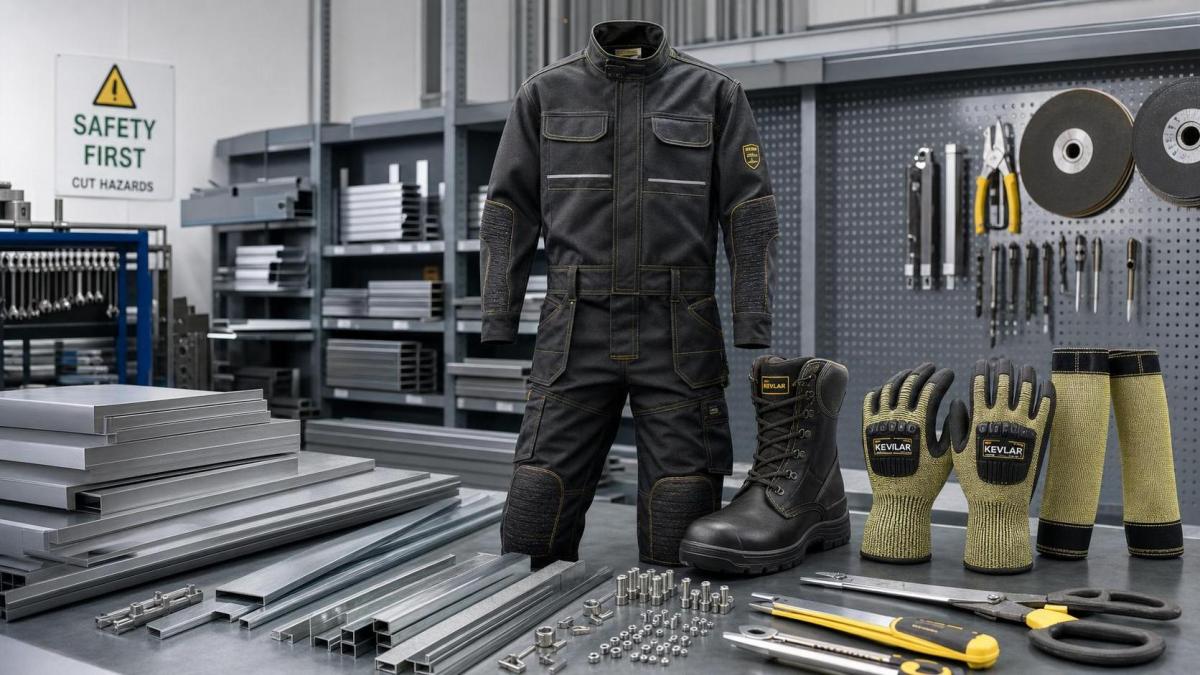
Sharp-edge injuries rarely look dramatic at first contact, yet they often trigger the most expensive chain of on-site disruption.
A torn forearm, an interrupted shift, an incident review, and sudden workflow changes can all begin within seconds.
That is why Kevlar cut-resistant suits matter in real operations, not just in safety catalogs.
They help reduce laceration exposure where sheet metal, fractured glass, sharp fasteners, broken concrete, and cutting tools share the same workspace.
In the wider SHSS view of industrial safety, PPE is the last physical armor after tools, hardware, lighting, and access control have already shaped site conditions.
That perspective matters because injury risk is rarely caused by fabric choice alone.
It is usually created by a mix of task speed, edge geometry, body movement, visibility, and maintenance discipline.
Kevlar cut-resistant suits work best when they are selected against those real conditions, not against a single headline rating.
Different job sites create different cut-risk patterns
In actual use, the same suit may perform very differently across construction, fabrication, utility repair, and urban maintenance.
The reason is simple: not every site produces the same type of contact.
Some tasks involve repeated brushing against rough edges.
Others involve sudden snagging, kneeling on debris, or torso contact during confined work.
A bridge retrofit around high-strength hardware creates different body exposure than a smart-building fit-out under bright LED systems and tight access zones.
Where powered brushless tools increase cutting speed and fastening pace, accidental edge contact can also happen faster.
So the better judgment method is to map how the body meets the hazard.
- Is the contact light, repeated, and spread across sleeves or thighs?
- Is the contact forceful, localized, and likely at elbows, abdomen, or lower legs?
- Does the task require climbing, crouching, or twisting that changes fabric tension?
- Will dust, oil, heat, or moisture affect comfort and compliance during a full shift?
Those questions usually reveal whether Kevlar cut-resistant suits are a practical risk control or just a box-ticking choice.
Where fabrication and metal handling raise the strongest demand
Fabrication floors and installation zones are among the clearest use cases for Kevlar cut-resistant suits.
Here, risk comes from raw sheet edges, trimmed panels, cable trays, stamped parts, and unfinished brackets.
The hazard is not only direct slicing.
It is also cumulative abrasion that weakens standard garments and leaves exposed areas vulnerable later in the shift.
In these settings, coverage consistency matters as much as cut resistance.
Loose gaps near cuffs, waistlines, or knee bends can turn a technically strong suit into an incomplete barrier.
More effective setups usually pair Kevlar cut-resistant suits with gloves, sleeves, and work sequencing that limits awkward handling angles.
What changes on mixed construction sites
Mixed construction environments are less predictable.
Workers may move from rebar zones to glazing areas, then to mechanical rooms in the same day.
That means the best Kevlar cut-resistant suits are often not the heaviest ones.
They are the ones people can keep wearing without overheating, binding, or catching on surrounding equipment.
Mobility becomes a safety factor of its own.
When movement is restricted, climbing behavior changes, line-of-sight is affected, and workers may bypass PPE during shorter tasks.
That is where SHSS-style system thinking is useful: lighting quality, tool control, and garment design all influence the real injury outcome.
The decision points are not the same in utility, demolition, and maintenance work
Another common mistake is treating all outdoor or heavy-duty work as one category.
Utility crews, demolition teams, and municipal maintenance units face different contact patterns and wear cycles.
This is why Kevlar cut-resistant suits should be matched to task movement and exposure duration, not only hazard severity.
What to verify before calling a suit site-ready
A good field decision usually comes down to five checks.
- Coverage map: confirm which body zones face edges during real movement, not only during standing inspection.
- Layer interaction: check how the suit performs with harnesses, vests, respirators, and weather gear.
- Heat burden: verify whether workers can finish full tasks without rolling sleeves or opening closures.
- Wear pattern: inspect knees, forearms, and side seams where cut events often start after abrasion.
- Cleaning cycle: make sure laundering does not quietly degrade fit, seams, or protective consistency.
These checks sound basic, yet they often separate durable protection from short-term compliance theater.
In practice, a suit that stays wearable through long shifts usually reduces injury risk better than one with stronger paper specifications but weak daily acceptance.
Common misjudgments that weaken protection
Several repeat mistakes appear across industrial and urban job sites.
One is assuming gloves alone solve cut exposure.
On many tasks, injuries happen on the forearm, rib area, thigh, or lower leg during repositioning rather than direct hand contact.
Another is buying Kevlar cut-resistant suits for a peak hazard event, then ignoring daily comfort during lower-intensity tasks.
That usually leads to inconsistent wear.
A third mistake is evaluating initial cost without tracking replacement frequency, incident reduction, and lost-time avoidance.
The more mature approach is lifecycle thinking.
SHSS often frames safety hardware this way across tools, fasteners, lighting, and PPE: a stronger system is built through interaction, not isolated purchasing.
Poor visibility, cluttered material flow, and uncontrolled sharp waste can overwhelm even good Kevlar cut-resistant suits.
How to build a better site fit for Kevlar cut-resistant suits
The best results usually come from a short on-site evaluation instead of a desk-only comparison.
Observe one high-frequency task, one awkward-access task, and one cleanup task.
Those three moments often reveal most hidden cut exposures.
Then compare suit options against movement, heat, seam durability, and compatibility with other protective layers.
If the site uses brushless cutting tools, fastener-intensive assembly, smart access-controlled zones, or low-light service corridors, reflect those conditions in the evaluation.
The goal is not simply to choose Kevlar cut-resistant suits with the highest promise.
It is to identify which configuration remains protective, wearable, and maintainable across actual site variation.
A practical next step is to build a site-specific checklist covering hazard zones, wear duration, cleaning cycles, and replacement triggers.
That creates a clearer basis for comparing options, controlling injury risk, and keeping frontline performance steady over time.
Recommended News