
Search News
Industry Portal
Hot Articles
HPPE Cut Resistant Clothing: What Ratings Matter for Daily Industrial Use
Time
Click Count
Why do HPPE cut resistance ratings matter so much in daily industrial use?
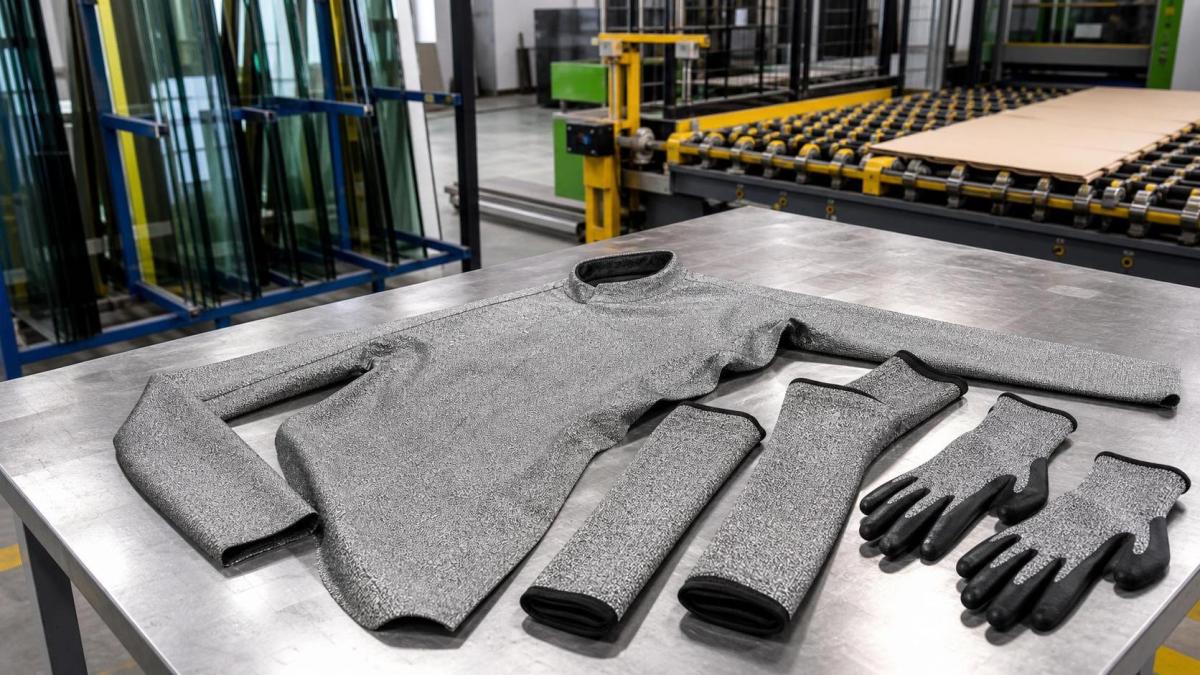
HPPE cut resistant clothing is often chosen under pressure. Audits, incident reports, and budget limits usually collide at the same time.
That is why ratings matter. They turn a vague claim of protection into a measurable basis for matching garments to real work.
In daily operations, the question is rarely whether protection is needed. The practical question is how much protection is enough without slowing movement or increasing heat stress.
HPPE, or high-performance polyethylene, is widely used because it combines cut resistance with relatively low weight and good wearer comfort.
That balance matters in metal fabrication, glass handling, logistics, automotive assembly, maintenance, and construction support tasks.
SHSS often tracks PPE the same way it studies fasteners, brushless tools, and access control systems: protection only works when performance data matches the real operating environment.
So the best reading of HPPE cut resistant clothing is not as a comfort item. It is a control measure inside a broader safety system.
When people ask for a “good rating,” which standards are they really talking about?
Most discussions come back to two systems: ANSI/ISEA 105 and EN 388. Both are useful, but they do not express cut resistance in exactly the same way.
ANSI cut levels run from A1 to A9. Higher numbers indicate higher cut resistance under the test method.
EN 388 often shows letters from A to F for the ISO 13997 cut test. Again, a higher level means greater resistance.
What creates confusion is that buyers sometimes compare A4 with level D as if they were direct equivalents. They are not exact translations.
A better approach is to check which market standard applies, then review the manufacturer’s full test data, not only the headline label.
For clothing, not just sleeves or gloves, also confirm whether the test covers the actual garment zones exposed to blades, burrs, or sheet edges.
In short, the right rating is the one tied to the right test, the right body area, and the right task profile.
Is a higher cut level always the safer choice for HPPE cut resistant clothing?
Not automatically. A higher level gives more resistance, but daily safety performance depends on wearability as much as lab results.
If the clothing is stiff, hot, or bulky, workers may avoid it, modify it, or wear it incorrectly. That undermines protection quickly.
More common problems come from mismatch. Light assembly may not need the same HPPE cut resistant clothing used for heavy plate handling.
At the same time, operations with repeated contact against sharp scrap, punched edges, or broken glass should not be protected by entry-level garments.
A practical selection method is to rank tasks by blade sharpness, contact force, frequency, and body exposure time.
- Low to moderate risk: carton trimming, light metal handling, maintenance support.
- Moderate to high risk: sheet metal movement, stamping support, glazing work.
- High and repeated risk: scrap sorting, slitting lines, recycling streams with hidden sharp edges.
Once tasks are grouped this way, the target rating becomes easier to justify during audits and internal reviews.
How can you tell whether the garment rating fits the actual job, not just the tender sheet?
Start with exposure mapping. Look at where cuts happen, how they happen, and what workers are doing seconds before contact occurs.
That sounds basic, but many clothing failures come from buying around a specification instead of around the workflow.
For example, a torso-rated garment may still leave forearms vulnerable during repetitive handling of sharp components.
In facilities supported by brushless cutting tools, fastening stations, and sharp-edge packaging lines, hazard zones can shift within one shift.
This is where layered judgment helps. The garment rating is one line of defense, but task layout, lighting, handling tools, and training still matter.
The SHSS view is useful here: hardware performance, tool control, and PPE should be assessed as one connected safety chain.
A quick fit-for-task check
That last point is easy to miss. Daily industrial use is not a one-week trial. Durability affects real protection and total cost.
What mistakes lead to poor protection even when HPPE cut resistant clothing is certified?
One mistake is treating certification as the end of evaluation. Certification confirms a tested result, but it does not replace workplace validation.
Another mistake is ignoring abrasion, puncture, and tear exposure. Some jobs involve more than one mechanical hazard at the same time.
It is also common to overlook seam construction. Sharp contact often finds weak points around joins, cuffs, or high-motion areas.
Laundry and contamination matter too. Oils, metal fines, and aggressive wash routines can shorten service life or affect comfort.
Then there is false equivalence. HPPE cut resistant clothing may share the same fiber family, yet garment architecture can differ significantly.
- Do not compare by fiber name alone.
- Do not approve without checking test scope.
- Do not ignore post-wash and post-wear changes.
- Do not assume gloves solve all clothing exposure gaps.
The better habit is to connect trial wear, incident history, and technical documentation before standardizing one garment across multiple lines.
How should cost, replacement cycle, and audit value be judged together?
The cheapest unit price rarely tells the full story. Daily-use PPE should be judged on injury reduction, life span, and consistency of wear.
A slightly higher-priced HPPE cut resistant clothing program may lower replacement frequency, reduce exceptions, and simplify audit evidence.
This is especially relevant in advanced manufacturing and smart city supply chains, where documentation quality now affects commercial trust.
Good records should show test ratings, approved task mapping, washing limits, inspection rules, and replacement triggers.
That creates a cleaner link between compliance and operations. It also supports incident investigation when cut events still occur.
A practical next step is to build a small rating matrix by task, then validate it with wear trials over several wash cycles.
If the goal is reliable daily protection, choose HPPE cut resistant clothing by tested rating, coverage design, and life-cycle evidence together.
That gives a firmer basis for standardization, better alignment with real hazards, and stronger long-term control over cut-risk exposure.
Recommended News