
Search News
Industry Portal
Hot Articles
IEC Revises LED Safety Testing for AI Dimming
Time
Click Count
On July 6, 2026, the IEC issued an amendment to IEC 62471-3:2026 that changes how photobiological safety certification must be handled for commercial flicker-free LED products. The update matters because certification can no longer rely only on static operating conditions when products use AI-driven real-time dimming, and that directly affects manufacturers, exporters, testing bodies, procurement teams, and project delivery for market access across 32 countries including the EU, South Korea, and Australia.
What the amendment now requires
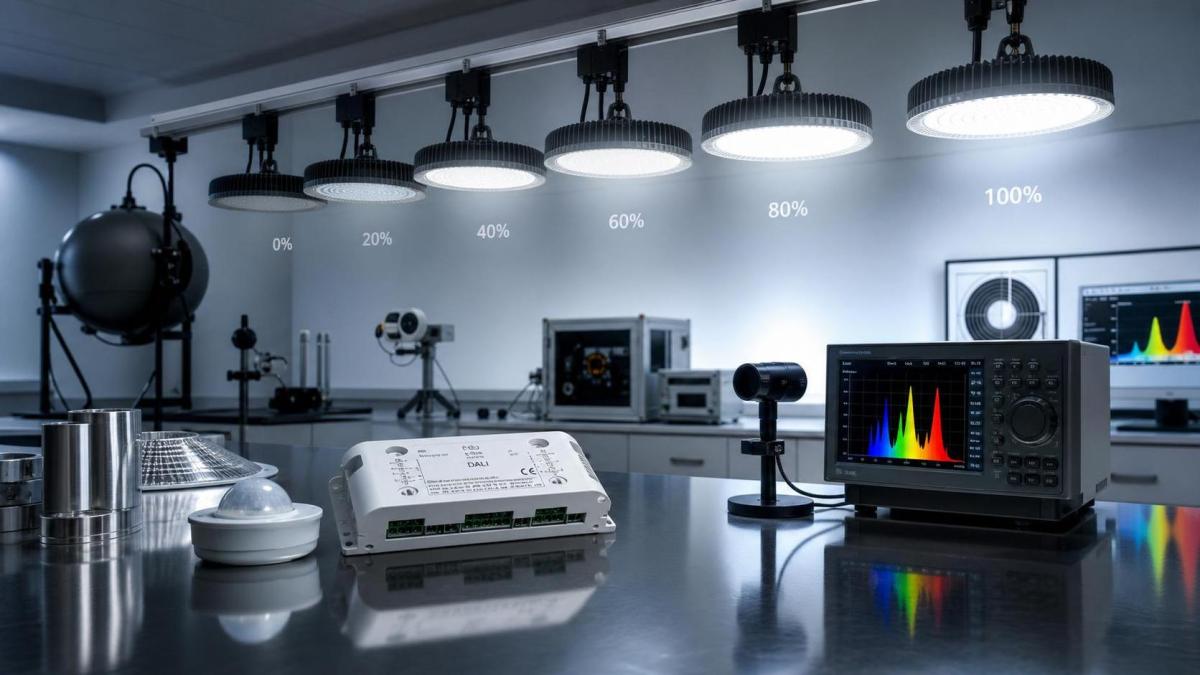
According to the information provided, the amendment was released by the IEC on July 6, 2026. It requires all commercial flicker-free LED luminaires, including DALI-2 adaptive lighting systems, to complete full-spectrum radiant intensity testing under AI-driven real-time dimming scenarios during photobiological safety certification.
The cited operating scenario includes millisecond-level brightness shifts from 0 to 100% triggered by human presence detection. The same information also states that certification based only on static operating conditions will become invalid from January 2027. The revision affects market access in 32 countries, including the EU, South Korea, and Australia.
Where the pressure is likely to appear first
Product makers face a wider certification boundary
From an industry perspective, manufacturers of commercial flicker-free LED luminaires are likely to be affected first because the certification scope now reaches beyond stable output states and into dynamic dimming behavior. The practical impact is likely to fall on product validation, technical documentation, model configuration control, and certification planning for products that use AI-based lighting adjustments or adaptive control logic.
What deserves closer attention is whether existing product files, lab test arrangements, and technical claims were prepared around static testing only. Where that is the case, firms may need to review whether current certification materials still match the amended requirement.
Export and market-access teams may face document and timing changes
For exporters and market-access teams, the main issue is not only technical compliance but also whether the certification basis remains acceptable for shipments and project entry in the affected markets. Analysis shows that teams handling cross-border sales should pay close attention to the transition away from static-condition certification ahead of January 2027.
The likely pressure points are product approval files, customer compliance submissions, tender support documents, and delivery scheduling where acceptance depends on valid certification status. Companies active in the 32 affected markets may need to track how buyers and local compliance channels begin referencing the amended testing requirement.
Testing and certification service providers may see new workload patterns
Testing laboratories, certification-related service providers, and compliance consultants may also be affected because the amendment changes the operating conditions that need to be assessed. Observably, the requirement to test under AI-driven real-time dimming scenarios may alter how samples are prepared, how test scenarios are defined, and how reports are framed for certification use.
At this stage, the confirmed fact is the amended testing requirement itself. Any assumptions about exact lab procedures, queue times, or documentation formats still need to be verified against subsequent execution practice.
Procurement and project delivery teams should watch specification alignment
For buyers, distributors, and project delivery teams, the amendment may influence technical specification alignment and supplier qualification review. This is especially relevant where procurement documents refer to flicker-free commercial LED products, adaptive lighting systems, or project-level compliance submissions tied to market entry.
The practical concern is whether quoted products were certified under static conditions only, and whether that status remains usable for future deliveries after the transition date. In commercial terms, this could affect supplier screening, product substitution decisions, and acceptance checks during project execution.
What companies should review now
Check whether current certifications depend on static conditions only
Analysis shows that one immediate task is to identify which products currently rely on static-condition photobiological safety certification. That review is particularly relevant for commercial flicker-free LED luminaires and DALI-2 adaptive lighting systems that use AI-driven dimming behavior in real operation.
Revisit technical files tied to dynamic lighting behavior
What deserves closer attention is whether product dossiers, test reports, and supporting technical descriptions clearly address real-time dimming scenarios such as occupancy-triggered brightness jumps. If the current file set was built around steady-state performance only, firms may need to prepare for additional compliance review.
Track how customers and tenders start using the new requirement
It is more appropriate to understand this as a compliance signal that may move quickly into procurement language, customer questionnaires, and tender specifications. Even where detailed execution wording is not yet provided in the input, companies should monitor whether buyers begin asking for evidence that certification covers AI-driven dynamic operating conditions.
Review delivery exposure before the January 2027 cutoff
Observably, the stated invalidation date for static-only certification creates a timing issue for products already in pipeline, bid, or delivery planning. That does not by itself confirm shipment disruption, but it does mean exporters, suppliers, and project teams should watch for changes in acceptance criteria, approval lead times, and customer-side compliance checks.
Why this looks like more than a technical edit
Analysis shows that this amendment is not just a narrow wording update to a testing standard. It signals that certification expectations are moving closer to real operating behavior, especially where AI control changes light output in fast, dynamic ways. For the industry, the key issue is that compliance is being tied more directly to how the product actually performs in use, not only how it behaves in a fixed test state.
At the same time, it would be premature to treat every downstream consequence as settled. The confirmed change is the amendment itself and the stated invalidation of static-only certification from January 2027. The pace and consistency of implementation across testing, procurement, and market-entry practice still need continued observation.
How this update is best understood for now
From an industry perspective, this development is best read as an executed rule change with direct certification relevance, rather than as a distant policy discussion. The immediate significance lies in certification scope, market-access readiness, and document validity for affected products. The broader commercial effect will depend on how quickly laboratories, buyers, and compliance channels incorporate the amended requirement into daily practice.
A rational reading is that companies should not assume older static-condition certification will remain commercially workable up to the last moment. At the same time, the market still needs to watch how execution language, buyer expectations, and supporting documentation standards develop around the amendment.
Basis of this article and what still needs verification
This article is generated from the user-provided news title, event date, and event summary. Source types commonly relevant to this kind of development include official announcements, regulator releases, trade or customs authority information, industry association notices, standards organization documents, and reporting by authoritative media.
No specific official source link was provided in the input, so the underlying official link still needs to be verified on an ongoing basis. Observably, the next points worth tracking are detailed implementation wording, certification application practice, tender document changes, market feedback, and how affected companies carry the requirement into product compliance and delivery processes.
Recommended News