
Search News
Industry Portal
Hot Articles
Industrial IoT Solutions: Cost Risks Before Scaling
Time
Click Count
Scaling industrial IoT solutions can unlock efficiency, visibility, and stronger operational control, but hidden cost risks often surface before returns do. For enterprise decision-makers in manufacturing, construction, security, and smart infrastructure, understanding integration costs, cybersecurity exposure, device lifecycle expenses, and compliance burdens is essential to avoiding costly missteps and building a scalable, resilient investment strategy.
Why do industrial IoT solutions become expensive before they become scalable?
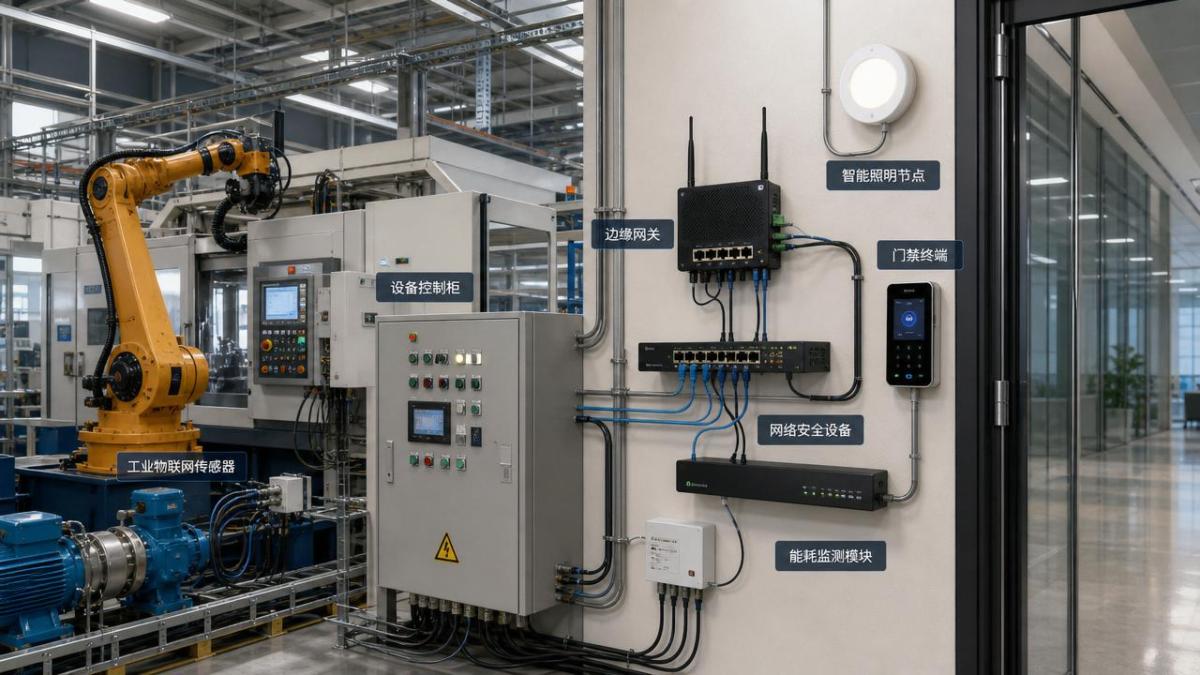
Many enterprise teams first evaluate industrial IoT solutions through the lens of device pricing. That is rarely enough. In practice, the most significant risks emerge from integration, network readiness, data architecture, ongoing maintenance, and compliance controls that were not fully priced during early pilots.
This challenge is especially visible across mixed environments such as factories, construction sites, logistics hubs, smart buildings, and municipal infrastructure. Each site may combine power tools, access control, lighting, fastening systems, and worker protection requirements, creating a layered operational environment that is harder to standardize than many initial business cases assume.
For decision-makers, the question is not whether industrial IoT solutions create value. The real question is whether the organization can control cost leakage before scale multiplies it across hundreds or thousands of endpoints.
- Pilot success often hides full deployment costs because a test environment uses fewer devices, lighter security controls, and limited systems integration.
- Cross-functional ownership is often fragmented between operations, IT, procurement, engineering, compliance, and finance.
- Device fleets in harsh industrial environments face battery degradation, firmware management issues, and replacement cycles that erode expected ROI.
- Security and privacy obligations increase sharply when biometric systems, cloud dashboards, and remote management tools are added.
Where hidden spending usually starts
The first overspend usually appears in connection layers. Legacy PLCs, proprietary lighting controls, disconnected security databases, or non-standard field protocols often require middleware, gateways, custom APIs, or phased retrofits. None of these items are visible in a simple hardware quote, yet all of them shape the cost structure of industrial IoT solutions.
SHSS tracks these risks across smart hardware categories where physical durability and digital intelligence intersect. That perspective matters because a biometric access device, a BLDC tool battery platform, and a Zigbee or DALI lighting node may all sit within one enterprise program, but each has different lifecycle, uptime, and compliance implications.
Which cost risks matter most before scaling industrial IoT solutions?
Before expanding industrial IoT solutions across multiple sites, leadership teams should isolate cost drivers that materially affect budget certainty. The table below highlights the most common risk categories and their operational impact.
These categories are not theoretical. They affect procurement sequencing, board-level capital planning, insurance discussions, and deployment credibility. The earlier they are quantified, the more realistic the business case becomes.
Cybersecurity is a cost center and a value protector
Industrial IoT solutions connect physical assets to networks, which means the cost of weak security is not limited to data loss. It can include unauthorized entry, lighting disruption, tool fleet misuse, or interruptions to safety-critical processes. In sectors using smart access and biometric security, security design must begin before scale, not after installation.
SHSS pays close attention to this convergence of physical and digital risk. When biometric access systems interact with cloud platforms, edge processing, and building management tools, procurement must consider encryption, template storage, access logging, and regional privacy obligations at the same time.
Lifecycle costs are often underestimated
A connected device is not a one-time purchase. In industrial brushless tools, fleet managers must consider charging infrastructure, battery aging, firmware support, ruggedness, and service intervals. In smart lighting, the issue may involve control module compatibility, driver replacement, and protocol migration over time. Industrial IoT solutions only scale economically when lifecycle assumptions are tested against real site conditions.
How should enterprise buyers compare industrial IoT solutions across mixed-use environments?
Enterprise buyers often face a difficult reality: one procurement framework must serve multiple use cases. A manufacturing plant, a commercial campus, and a public infrastructure project may all need industrial IoT solutions, but not with the same performance priorities. A side-by-side evaluation helps control scope creep.
This comparison shows why industrial IoT solutions should not be evaluated as a single generic category. Enterprises need scenario-specific criteria tied to operating conditions, compliance exposure, and service model requirements.
A practical selection framework for procurement teams
- Define the operational outcome first, such as reducing unauthorized access incidents, improving tool utilization, lowering lighting energy spend, or digitizing maintenance data.
- Separate core hardware cost from enablement cost, including software licenses, gateways, commissioning, cybersecurity controls, and training.
- Ask whether the solution can scale across sites with different environmental stress, power conditions, and data policies.
- Review support obligations over three to five years, not just the procurement year.
This disciplined approach reduces the chance of approving a low-entry project that becomes a high-friction rollout six months later.
What should be in the pre-scale cost model for industrial IoT solutions?
A serious pre-scale cost model should capture not only purchase cost but also technical debt, site readiness, and governance effort. This is where enterprise buyers can distinguish between an attractive pilot and a scalable operational investment.
Minimum cost items to quantify
- Device and accessory cost, including gateways, mounts, batteries, readers, and control nodes.
- Integration cost with ERP, MES, BMS, access control databases, or maintenance systems.
- Network cost for wired backhaul, wireless redesign, VLAN segmentation, and remote management.
- Compliance cost covering data mapping, retention policy setup, privacy review, and audit documentation.
- Service and replacement cost for batteries, drivers, sensors, calibration, and field support labor.
- Training cost for operators, administrators, security teams, and maintenance staff.
Why mixed hardware portfolios need more careful modeling
SHSS operates at the intersection of tools, security, fasteners, lighting, and PPE because real-world industrial transformation does not happen in isolated categories. A facility may use connected lighting controls, biometric access, digitally tracked power tools, and compliance-driven worker protection in one coordinated environment. Industrial IoT solutions in this context must be evaluated as part of an operational system, not a single product line.
That systems view is important for budget governance. For example, if smart access shortens incident response but compliance review delays launch, or if connected lighting saves energy but gateway upgrades are needed site-wide, leadership needs a unified capital narrative rather than siloed approvals.
How do compliance and standards affect scaling decisions?
Compliance costs can reshape the economics of industrial IoT solutions, especially when personal data, security logs, remote access, or critical infrastructure are involved. The issue is not only regulation itself, but the process change required to meet it consistently across regions and business units.
For biometric deployments, buyers should assess lawful data handling, storage location, consent or notice frameworks where applicable, access permissions, retention schedules, and breach response procedures. For connected lighting and building systems, they should examine protocol security, firmware governance, and electrical or installation requirements relevant to the market.
- Review whether the solution stores sensitive data at the edge, on-premises, or in the cloud, and what that means for policy approval.
- Confirm who owns update management and vulnerability response after deployment.
- Identify whether multiple jurisdictions impose different rules on security records or biometric identifiers.
SHSS brings value here through cross-disciplinary intelligence. In practical procurement terms, that means translating technical architecture into compliance questions early enough to avoid rework after commercial negotiations are already underway.
Common misconceptions that inflate industrial IoT solutions budgets
Several assumptions repeatedly distort enterprise planning. Recognizing them early can prevent underbudgeting and internal friction.
“If the pilot worked, the rollout cost will be linear.”
This is rarely true. Pilots often run in better-controlled environments with stronger technical oversight and fewer integration points. Scale introduces variability in infrastructure quality, installers, user behavior, and local policy constraints.
“Open protocols always mean low long-term cost.”
Open standards such as DALI or Zigbee can support flexibility, but only when device interoperability, gateway strategy, firmware support, and maintenance ownership are clearly defined. Without governance, openness can still produce fragmentation.
“Cybersecurity can be added after procurement.”
Retrofitting security into industrial IoT solutions is typically more expensive than embedding it at design stage. It may require new hardware, revised architecture, or operational downtime to correct access and network weaknesses.
FAQ: what do buyers ask before scaling industrial IoT solutions?
How do we know whether a pilot is ready for scale?
Check whether the pilot included real integration, realistic cybersecurity controls, documented maintenance workflows, and cross-site deployment assumptions. If the test excluded these factors, it measured technical feasibility, not deployment readiness.
Which industrial IoT solutions create the fastest budget risk?
The highest early budget risk usually appears in systems that combine hardware, software, access control, cloud management, and compliance obligations. Biometric security and multi-site smart infrastructure programs often fit this profile because they require coordination across legal, IT, facilities, and operations.
What should procurement ask suppliers before approval?
Ask for architecture scope, integration boundaries, firmware support policy, spare and service expectations, environmental limitations, protocol compatibility, data handling design, and rollout assumptions. A low hardware quote without these details is not a full commercial picture.
Are industrial IoT solutions suitable for both brownfield and new-build sites?
Yes, but the cost logic differs. Brownfield sites often carry higher integration and retrofit cost. New-build sites may require more planning upfront, but they usually allow cleaner network design, standardized infrastructure, and better lifecycle economics.
Why choose us when evaluating industrial IoT solutions at scale?
SHSS supports enterprise decision-makers who need more than product descriptions. We connect smart hardware categories with procurement logic, compliance awareness, and operational risk analysis. That matters when your industrial IoT solutions strategy spans tool fleets, biometric access, high-strength hardware environments, intelligent lighting, and worker protection priorities.
You can consult us on practical questions that influence capital decisions: parameter confirmation for mixed-site deployments, product selection logic, protocol and integration considerations, expected delivery cycle constraints, customization direction, compliance checkpoints, sample evaluation planning, and quotation communication structure.
If your organization is preparing to scale industrial IoT solutions, a disciplined pre-scale review can protect budget, timeline, and long-term reliability. SHSS helps turn fragmented technical inputs into a clearer investment path grounded in physical resilience, digital security, and commercially realistic deployment planning.
Recommended News