
Search News
Industry Portal
Hot Articles
Saudi SASO Mandates SIGMA Chip for Smart Lighting IoT
Time
Click Count
On July 7, 2026, the Saudi Standards, Metrology and Quality Organization (SASO) issued a technical notice that changes the compliance path for smart street lighting exports to Saudi Arabia. From an industry perspective, this is not just a product-specification update for lighting systems; it directly affects IoT module integration, gateway configuration, certification scheduling, and delivery planning for manufacturers, exporters, and supply-chain teams serving the Saudi market.
What the New SASO Notice Requires
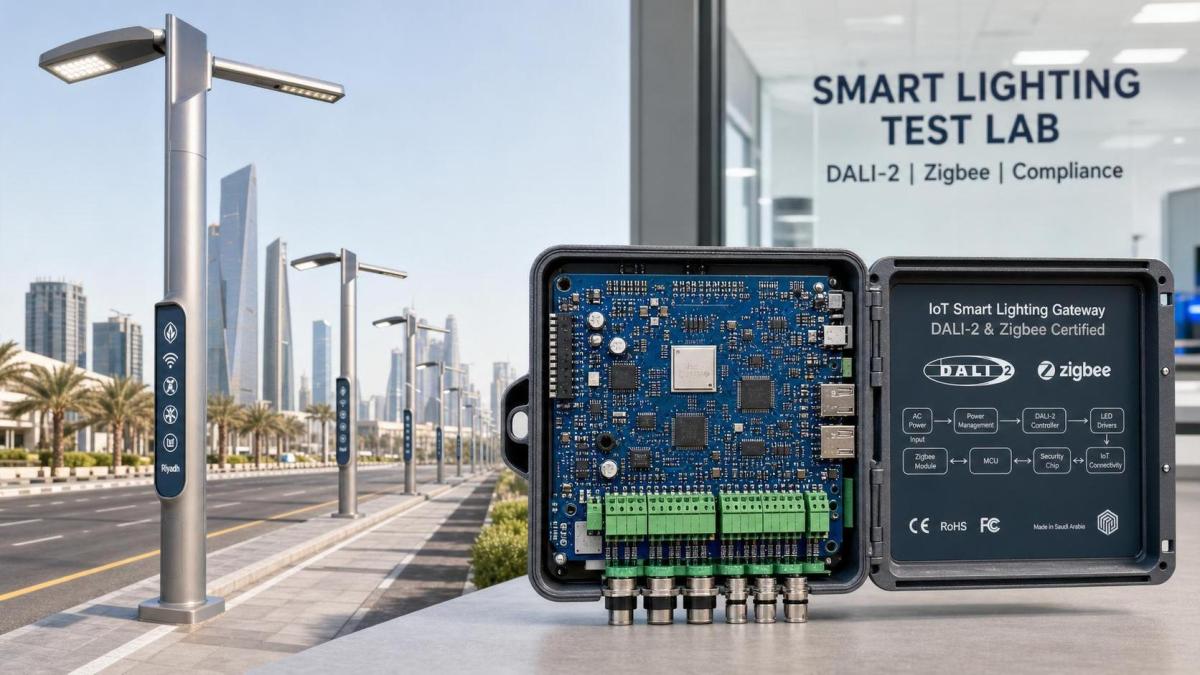
According to technical notice SASO/TN-LED-2026/07, all smart street lighting systems sold into Saudi Arabia must meet a new requirement starting September 1, 2026. The rule covers smart street lighting systems, including DALI-2 and Zigbee 3.0 gateways, and requires their IoT communication modules to be pre-integrated with a SASO-authorized SIGMA security chip, model SASO-SIGMA-LT26.
The notice states that the chip must support key generation, signature verification for OTA upgrades, and encryption for local data caching. It also specifies that programming and issuance for this chip can only be completed at a designated laboratory in Riyadh. For Chinese manufacturers, advance booking for certification scheduling is required.
Where the Operational Impact Is Likely to Appear
Pressure shifts upstream into module and gateway design
Analysis shows that manufacturers of smart street lighting systems and related gateways may be affected first because the requirement is tied directly to the IoT communication module. The practical impact is likely to appear in product configuration, hardware integration, and compliance preparation for systems that include DALI-2 or Zigbee 3.0 gateway functions.
Export and delivery teams face a tighter certification window
Direct trade companies and export operations may see the main impact in shipment planning and order execution. Because the authorized chip must be programmed and issued only at a designated Riyadh laboratory, scheduling capacity and timing become relevant operational factors. What deserves closer attention is whether certification booking lead time begins to influence delivery commitments for Saudi-bound projects.
Supply-chain coordination becomes more sensitive
From an industry perspective, supply-chain service providers and procurement teams may need closer coordination across module sourcing, product assembly, compliance paperwork, and outbound delivery. The requirement does not only concern chip inclusion; it also links product readiness to a specific certification and issuance path, which may affect handoff timing between manufacturing and export stages.
Buyers and project operators may ask for clearer compliance proof
For procurement-side stakeholders and service providers involved in smart lighting deployment, the likely impact is in supplier qualification and acceptance review. Observably, buyers may focus more closely on whether the IoT communication module has completed the required local authorization process before shipment or installation planning proceeds.
What Companies Should Watch Now
Track the enforcement date against active orders
Companies serving Saudi projects should map the September 1, 2026 effective date against current production and shipment schedules. The immediate practical question is whether products already in planning, assembly, or pre-shipment stages fall within the implementation window.
Confirm affected product scope in existing portfolios
Manufacturers should review which smart street lighting systems in their portfolio include the covered IoT communication modules, especially products involving DALI-2 or Zigbee 3.0 gateways. This is important because the compliance issue is tied to system architecture, not only to a final product label.
Prepare early for Riyadh laboratory scheduling
What deserves closer attention is the operational bottleneck implied by the notice: programming and issuance are limited to a designated laboratory in Riyadh, and Chinese manufacturers are specifically noted as needing advance reservations. In practice, companies may need earlier internal cutoffs for documentation, sample readiness, and customer communication.
Separate the policy text from execution detail
Analysis shows that companies should distinguish between the confirmed rule and the still-evolving execution process around scheduling, workflow, and documentation. The formal requirement is already clear in the notice, but the day-to-day impact on lead time and coordination will depend on how certification appointments and product handovers function in practice.
Why This Looks Like More Than a Routine Specification Update
Observably, this development is better understood as a compliance and market-access signal rather than a narrow component change. The requirement places security functions such as key generation, OTA signature verification, and local data cache encryption inside a SASO-authorized hardware path, while also tying final authorization to a designated local laboratory.
Analysis shows that the market should not treat this solely as a short-term paperwork issue. At the same time, it is too early to frame it as a fully settled long-term industry outcome beyond the confirmed scope of the notice. It is more appropriate to understand this as a concrete regulatory change with immediate operational consequences and with wider implications that still need continued observation.
How the Market May Best Read This Notice
The clearest immediate meaning of this notice is that smart street lighting exports to Saudi Arabia now face a more localized and security-focused compliance path at the IoT module level. For industry participants, the practical significance lies in product readiness, certification timing, and cross-border delivery coordination. A neutral reading at this stage is that the rule already creates actionable compliance obligations, while its broader supply-chain effect still needs to be monitored through implementation.
Basis of This Article
This article is based on the user-provided news title, event date, and event summary concerning SASO technical notice SASO/TN-LED-2026/07. For developments of this type, relevant source categories typically include official notices, standardization documents, company disclosures, industry association updates, and reporting by authoritative media. A specific official source link was not provided in the input, so the exact publication record should continue to be verified. Follow-up attention should focus on any additional official wording, implementation detail, or procedural clarification related to certification scheduling and execution.
Recommended News