
Search News
Industry Portal
Hot Articles
Lazada Thailand Cuts Tariffs on 528 Smart Hardware & PPE Items
Time
Click Count
Effective midnight on May 24, 2026, Lazada Thailand implemented revised import tariff rates across 2,819 product categories — with duty reductions applied to 528 specific items, including smart hardware and personal protective equipment (PPE). The move directly affects cross-border exporters, regional distributors, and supply chain stakeholders operating between China and Thailand, driven by updated customs valuation protocols and enhanced platform-based tax collection mechanisms.
Event Overview
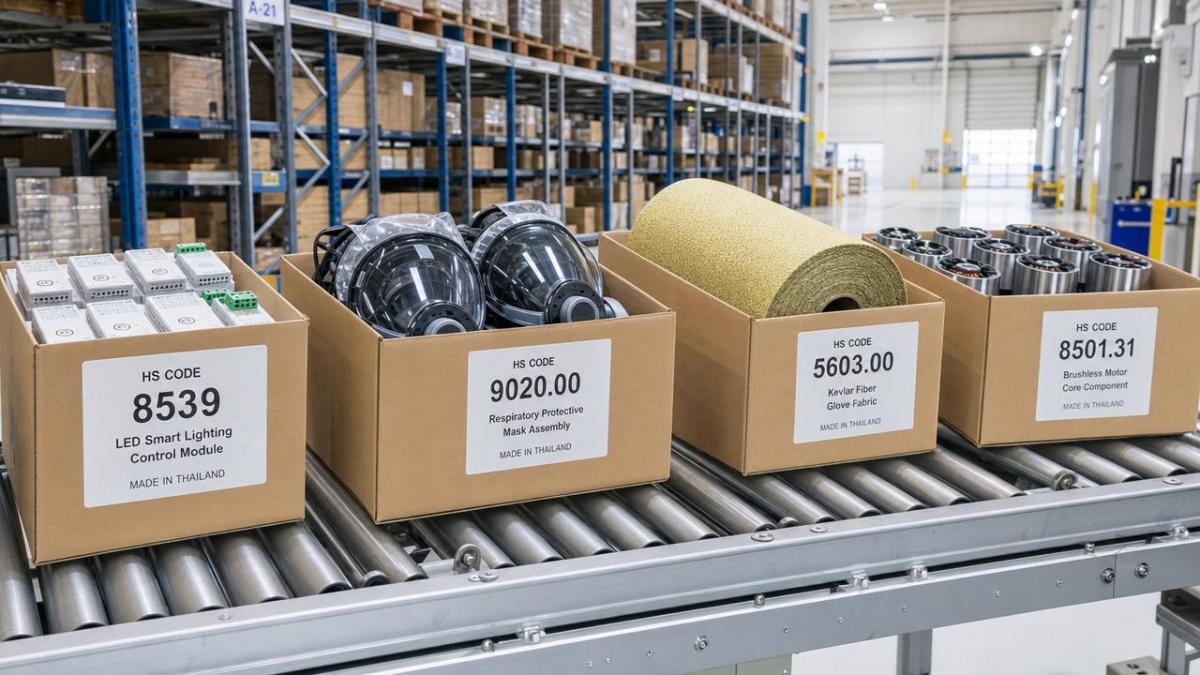
Starting at 00:00 on May 24, 2026, Lazada Thailand adjusted import tariffs for 2,819 HS-coded product categories. Among them, 528 categories saw reduced rates — specifically covering LED smart lighting components (HS 8539), respiratory mask subassemblies (HS 9020.00), Kevlar-based glove base fabrics (HS 5603.00), and brush motor cores (HS 8501.31). Thai Customs confirmed that Lazada will act as a designated withholding agent for import duties, making accurate, real-time declaration and payment a mandatory condition for customs clearance and delivery fulfillment.
Impact on Specific Industry Segments
Direct Trading Enterprises: Exporters shipping these 528 items from China to Thailand via Lazada face lower landed costs due to reduced tariff outlays. This improves margin flexibility and strengthens competitiveness against non-platform or offline channels. However, compliance pressure rises — misclassified or under-declared shipments may trigger automatic hold or penalty assessments under the new platform-led enforcement model.
Raw Material Procurement Enterprises: Buyers sourcing components such as Kevlar base fabric (HS 5603.00) or motor cores (HS 8501.31) for downstream assembly in Thailand benefit from lower input cost pass-throughs. Yet, procurement planning must now account for tighter HS-code alignment requirements — minor deviations in material specs or finishing may shift classification and forfeit tariff benefits.
Contract Manufacturing & Assembly Firms: Local Thai manufacturers integrating imported subassemblies (e.g., respiratory mask modules under HS 9020.00) into finished medical devices see improved cost predictability and shorter customs dwell times. Still, they remain exposed to upstream compliance risks: if suppliers misdeclare origin or technical parameters, delays cascade across production schedules.
Supply Chain Service Providers: Logistics intermediaries, customs brokers, and e-commerce fulfillment operators must upgrade their HS-code validation tools and integrate real-time tariff lookup APIs aligned with Lazada’s updated classification database. Manual entry or legacy classification references are no longer sufficient for audit readiness.
Key Considerations and Recommended Actions
Verify HS-code alignment before shipment
Confirm exact tariff treatment using Thailand’s latest Customs Tariff Schedule (2026 edition), cross-referenced against Lazada Thailand’s published category mapping — especially for borderline items like hybrid lighting controllers or multi-layered PPE substrates.
Update platform-level declaration templates
Ensure all product listings on Lazada Thailand include precise technical descriptors (e.g., “non-powered respiratory mask component, without valves”) to support correct automated tariff assignment — vague terms like “accessory” or “part” increase manual review risk.
Assess duty-savings versus compliance overhead
Quantify net cost reduction per SKU after factoring in increased documentation rigor, potential third-party verification fees, and internal training needs — for low-margin items, savings may be marginal relative to operational uplift.
Editorial Insight / Industry Observation
Analysis shows this is not merely a tariff cut but a structural recalibration of Thailand’s digital trade infrastructure. By mandating platform-led collection, Thai Customs is accelerating the convergence of e-commerce platforms and fiscal authorities — a trend previously observed in Vietnam and Indonesia, but now institutionalized with stricter enforcement teeth. Observably, the focus on smart hardware and PPE reflects dual national priorities: supporting local Industry 4.0 adoption while reinforcing pandemic-resilient health supply chains. From an industry perspective, this policy shift signals growing expectation that exporters treat digital marketplaces not just as sales channels, but as regulatory interfaces requiring equal diligence as physical border crossings.
Conclusion
This tariff adjustment marks a meaningful step toward lowering trade friction for high-potential tech-PPE hybrids entering Thailand — yet its long-term impact hinges less on headline rate cuts and more on how consistently and transparently the platform-tax authority integration functions in practice. A rational observation is that early adopters who invest in classification literacy and platform-compliant data governance will capture disproportionate advantage — while others risk being priced out not by tariffs, but by compliance latency.
Source Attribution
Official announcement issued by the Royal Thai Customs Department (May 2026); Lazada Thailand Seller Policy Update v3.2 (effective May 24, 2026); HS Code Classification Guidelines, Thai Customs Tariff Schedule 2026 Edition. Note: Ongoing monitoring is advised for updates to the list of eligible categories, implementation of post-clearance audits, and potential extension to other Lazada ASEAN markets.
Recommended News