
Search News
Industry Portal
Hot Articles
Shenzhen Compute Network Cuts Smart Lighting Lead Times
Time
Click Count
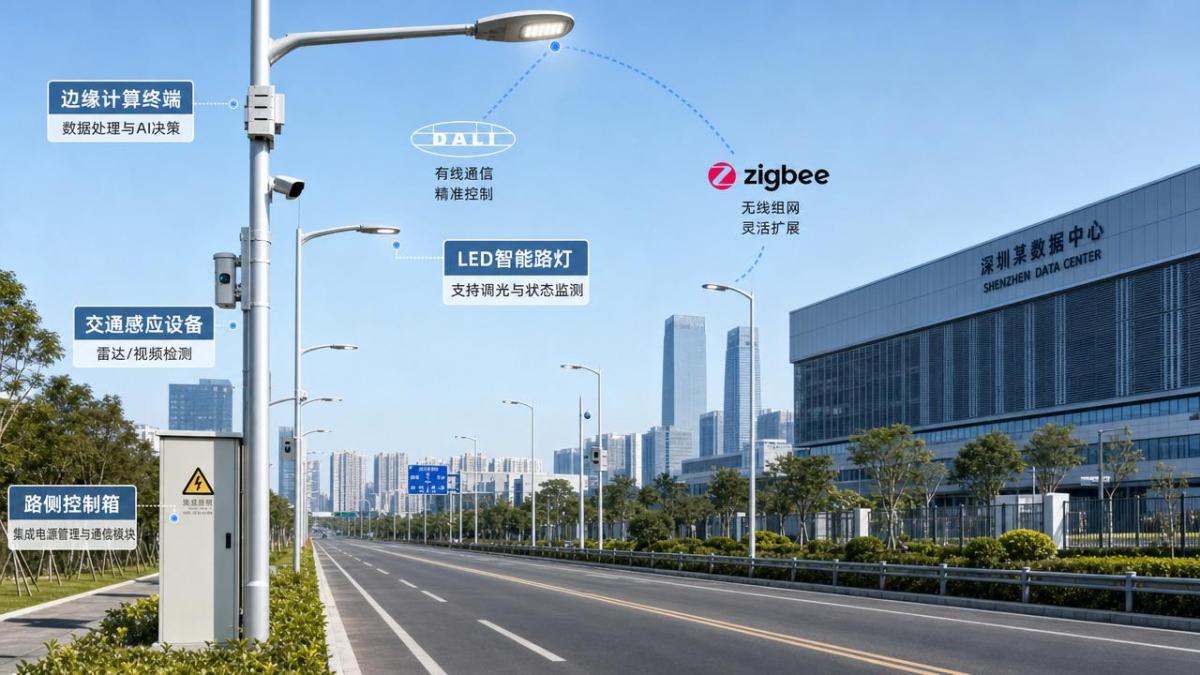
On June 10, 2026, Shenzhen’s completion of a three-tier city compute network signaled more than a local infrastructure milestone: it showed how public compute capacity, domestic AI clusters, and a subsidy mechanism can start reshaping delivery expectations for AI-enabled Smart Street Lighting IoT projects. For suppliers, integrators, exporters, procurement teams, and after-sales operators serving municipal buyers, the main point of attention is not only faster model training and edge inference, but also a shift in how delivery schedules, bid commitments, technical documentation, and compliance review may be assessed in projects that rely on DALI/Zigbee adaptive dimming and traffic-sensing decision modules.
A deployment change now visible in project timing
As of June 10, 2026, Shenzhen had completed a three-level compute network structured as hub, regional, and edge layers. Pengcheng Cloud Brain III and multiple domestic 10E-class intelligent compute clusters had entered operation, and a training-voucher subsidy was introduced to reduce compute costs for small and medium-sized enterprises. Based on the information provided, these changes improved cloud-side model training and edge inference efficiency for AI-driven Smart Street Lighting IoT systems, including DALI/Zigbee adaptive dimming and traffic-flow sensing decision modules. The reported result is that the average turnkey project delivery cycle was reduced from 14 weeks to 8.5 weeks, helping support municipal buyers in the Middle East and Southeast Asia that require faster smart street lighting deployment.
Why procurement and delivery roles may need to adjust
Municipal buyers and project procurement teams may reset delivery benchmarks
From an industry perspective, buyers may be the first group to feel the practical effect of this change, because shorter delivery windows can alter how implementation schedules are written into tender documents and supplier evaluations. What deserves closer attention is whether procurement teams begin treating AI training capacity and edge deployment readiness as part of technical bid alignment rather than as a backend engineering detail.
System integrators and exporters may face tighter bid-to-delivery alignment
Analysis shows that companies delivering complete smart lighting packages may be affected in proposal preparation, milestone planning, and export execution. If project timing becomes a more visible competitive factor, integrators serving overseas municipal demand may need to ensure that promised delivery periods, technical solution descriptions, and deployment sequencing remain consistent across quotations, bid files, and contract documents.
Component and module suppliers may see pressure move upstream
For suppliers involved in adaptive dimming, control modules, and traffic-sensing functions, the effect may appear in earlier design freeze points and shorter system integration windows. Observably, a faster compute-supported development cycle can compress the time available for specification matching, interface verification, and delivery coordination, even when the underlying hardware categories do not change.
Service and support providers may need clearer traceability records
After-sales and support teams may also be affected because projects delivered on accelerated schedules still need consistent technical records. Where AI-enabled lighting systems include edge inference and decision modules, the practical issue is whether maintenance files, configuration records, and version-related documents are complete enough to support later troubleshooting, acceptance review, or service disputes.
What companies should monitor next
Watch how technical requirements appear in bid documents
It is more appropriate to understand the current development as an execution signal rather than a fully defined new rule set. Companies should therefore watch whether future tender documents place more emphasis on compute-backed deployment speed, edge inference capability, or integrated software-hardware response time in project qualification and delivery commitments.
Keep compliance and certification files ready for faster reviews
Analysis shows that a shorter project cycle can increase pressure on document readiness. Enterprises involved in export or municipal supply should pay closer attention to whether product files, test reports, technical descriptions, and model-related system documents can be submitted without delaying review, especially where DALI/Zigbee functions and AI decision modules must be described consistently across commercial and technical paperwork.
Recheck supplier qualification and scheduling assumptions
What deserves closer attention is the link between shorter compute-driven development cycles and actual supply execution. Companies may need to review whether supplier qualification files, subcontract coordination, and delivery assumptions still match the compressed project timeline now referenced in the market narrative.
Track post-delivery obligations in overseas projects
For exporters and overseas project teams, the key issue is not only winning faster-deployment orders but also managing service continuity after installation. Observably, if deployment speed becomes a stronger purchasing factor in the Middle East and Southeast Asia, companies should keep a close watch on how service scope, quality traceability, and technical handover materials are handled in cross-border contracts.
How this should be read at this stage
Analysis shows that this development is best read as a concrete execution signal tied to compute infrastructure availability, cost support, and project delivery capability. It does not by itself confirm a broad new regulatory framework for smart lighting procurement, nor does it automatically establish uniform compliance requirements across all markets. What deserves closer attention is whether the shorter cycle highlighted here begins to influence procurement language, qualification expectations, and market feedback in actual project execution.
A practical reading for the market
For the industry, the significance of this update lies in the fact that compute infrastructure is no longer only a background resource; it may start affecting how delivery capacity is judged in AI-enabled smart lighting business. A neutral reading is that the event points to implemented change with possible downstream effects on procurement, export execution, and documentation discipline, while the exact rule translation into tenders, compliance review, and buyer requirements still needs continued observation.
Basis of this article
This article is based on the user-provided news title, event date, and event summary. For developments of this type, relevant source categories commonly include official announcements, regulatory releases, trade or customs authority information, industry association updates, standards documentation, and reporting by established business or industry media. No specific official source link was provided in the input, so the precise official reference still requires further verification. Continued attention should be paid to any later policy detail, implementation wording, certification practice, tender document changes, industry feedback, and company-level execution outcomes.
Recommended News