
Search News
Industry Portal
Hot Articles
How to Evaluate a Smart Streetlights Platform Before Citywide Deployment
Time
Click Count
How to Evaluate a Smart Streetlights Platform Before Citywide Deployment
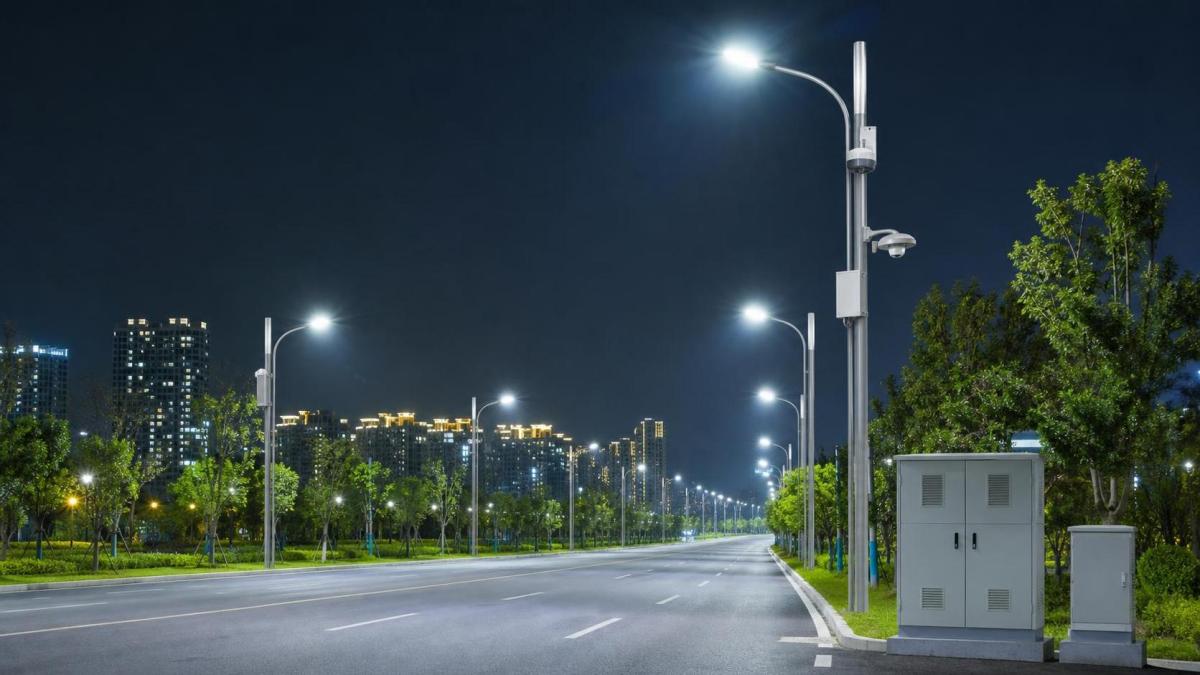
Before a full rollout, a smart streetlights platform needs more than a strong demo. It must prove operational value, data security, integration readiness, and cost discipline under real city conditions.
That matters because street lighting now sits at the intersection of energy, mobility, public safety, and urban data. A poor platform choice can lock a city into years of hidden cost.
A better choice starts with a structured evaluation. Instead of comparing features line by line, test whether the platform can support daily operations at scale.
In practice, the best smart streetlights platform is the one that stays stable, integrates cleanly, reduces field workload, and protects long-term flexibility.
Start With the Deployment Reality
Evaluation should begin with local operating conditions. A platform that performs well in a pilot district may struggle across mixed road classes, older cabinets, or unstable network coverage.
Map the actual deployment environment first. Include arterial roads, residential streets, industrial zones, parks, tunnels, and public spaces with different lighting profiles.
Then define non-negotiable goals. These often include energy savings, outage visibility, dimming precision, maintenance response time, and support for future smart city applications.
This step keeps the smart streetlights platform evaluation tied to outcomes. It also prevents a feature-rich system from winning purely because it looks impressive in a presentation.
Check Core Platform Architecture Early
Architecture decides whether the platform can scale smoothly. It affects reliability, cybersecurity posture, upgrade paths, and the effort required to support thousands of connected nodes.
Review the control model first. Understand whether the system uses centralized control, edge intelligence, or a hybrid model for dimming, scheduling, fault alerts, and asset diagnostics.
Ask how communications work across gateways, controllers, luminaires, and cloud services. Common options include cellular, RF mesh, LoRaWAN, NB-IoT, Zigbee, or wired backhaul.
A strong smart streetlights platform should also support fail-safe behavior. If connectivity drops, local schedules and safe default lighting levels should continue without manual intervention.
That sounds basic, but it becomes critical during storms, network outages, or software incidents. Public lighting cannot pause because a dashboard becomes unreachable.
Evaluate Interoperability, Not Just Compatibility
Many vendors claim compatibility. Fewer can prove broad interoperability across devices, protocols, and software layers over a ten-year asset lifecycle.
This is where standards matter. Check support for DALI, Zhaga, NEMA, TALQ, MQTT, REST APIs, and common GIS or asset management interfaces.
The question is simple. Can the smart streetlights platform work with luminaires, sensors, controllers, and software from different suppliers without expensive customization?
Interoperability also reduces procurement risk. Cities can upgrade devices in phases, avoid single-vendor dependence, and keep leverage when negotiating support and expansion.
- Confirm documented API access and data export rights.
- Test mixed-vendor device onboarding in the pilot stage.
- Verify firmware updates across different controller models.
- Check whether historical data remains portable.
Measure Operational Control and Maintenance Efficiency
A smart streetlights platform should simplify operations, not add layers of technical overhead. This becomes obvious when reviewing the daily workflow for maintenance teams.
Look at the dashboard from an operator’s perspective. Are alarms clear, actionable, and prioritized? Can teams isolate faults by feeder, zone, asset type, or severity?
The platform should support remote switching, adaptive dimming, group scheduling, commissioning tools, and mass configuration changes with audit trails.
Maintenance value comes from precision. Good systems identify driver failure, communication loss, abnormal power draw, or repeated lamp cycling before residents report an issue.
That shift from reactive maintenance to condition-based maintenance is often where the business case becomes tangible. Truck rolls drop, field diagnosis improves, and uptime becomes more predictable.
Scrutinize Cybersecurity and Data Governance
Street lighting may look like an energy project, but the platform is still critical digital infrastructure. That means cybersecurity review should sit near the top of the selection process.
Assess encryption in transit and at rest, identity management, access control, secure boot, device authentication, patch management, and incident response procedures.
If the smart streetlights platform connects with cameras, traffic sensors, parking systems, or environmental monitoring, the governance model matters even more.
Review data ownership, retention policies, hosting locations, backup rules, and user privilege separation. Public infrastructure data should never be handled as an afterthought.
Also ask for third-party security testing results. A vendor that cannot provide a credible security process may create long-term operational exposure, regardless of lighting performance.
Test Scalability Through Real Pilot Design
A pilot should not be treated as a marketing proof. It should be designed as a controlled stress test for the smart streetlights platform.
Include diverse sites, not a single easy district. Mix old and new luminaires, different road types, variable traffic patterns, and areas with weak signal quality.
Use measurable criteria from day one. That includes commissioning time, connection success rate, command latency, alarm accuracy, dimming consistency, and maintenance ticket closure time.
More importantly, test scale behavior. A platform may handle 300 nodes comfortably, yet slow down when managing 20,000 assets and simultaneous rule changes.
This is why pilot design should mirror future complexity. A narrow test often hides integration friction, training gaps, and backend performance limits.
Compare Total Cost of Ownership, Not Purchase Price
Upfront hardware cost is only one line in the decision model. The larger financial picture sits in software licensing, communications fees, support contracts, upgrades, and field labor.
A realistic total cost of ownership model for a smart streetlights platform should cover at least seven to ten years.
Use a structured comparison table during procurement:
When this model is done well, it usually reveals whether the platform creates durable savings or simply shifts cost into later years.
Assess Vendor Strength and Delivery Discipline
The platform matters, but vendor execution matters just as much. Citywide deployment introduces logistics, training, commissioning, and support demands that weaker suppliers often underestimate.
Review reference projects with similar scale, climate conditions, and governance complexity. Ask what happened after installation, not only what was delivered at launch.
A dependable smart streetlights platform provider should present clear service levels, escalation paths, spare parts planning, and a realistic software roadmap.
It is also worth checking financial stability and ecosystem depth. Long-lifecycle infrastructure suffers when a vendor cannot sustain updates or partner support.
Strong delivery discipline usually appears in small details: clean documentation, structured onboarding, honest limitation disclosure, and measurable post-deployment commitments.
Build a Practical Evaluation Framework
To keep decisions balanced, score each smart streetlights platform across a weighted framework. That avoids overvaluing either price or interface design.
- Define strategic goals and operational constraints.
- Set mandatory technical and security requirements.
- Run a pilot with mixed infrastructure conditions.
- Measure performance against agreed metrics.
- Model total cost of ownership over time.
- Review vendor capability, support, and roadmap.
- Document risks, mitigation steps, and exit options.
This creates a more defensible procurement process. It also makes internal alignment easier across engineering, finance, operations, IT, and urban planning teams.
A citywide lighting decision should leave room for growth. The platform selected today may later support sensors, adaptive traffic logic, or broader urban service layers.
That is why the smartest evaluation question is not only whether the system works now. It is whether the smart streetlights platform will still make sense years from now.
Use the pilot to expose friction, use the numbers to test claims, and use standards to preserve flexibility. That is how citywide deployment becomes a controlled decision instead of a costly leap.
Recommended News