
Search News
Industry Portal
Hot Articles
Smart LED Lighting Controls for Offices: What Reduces Energy Waste
Time
Click Count
Where smart LED lighting controls cut waste first
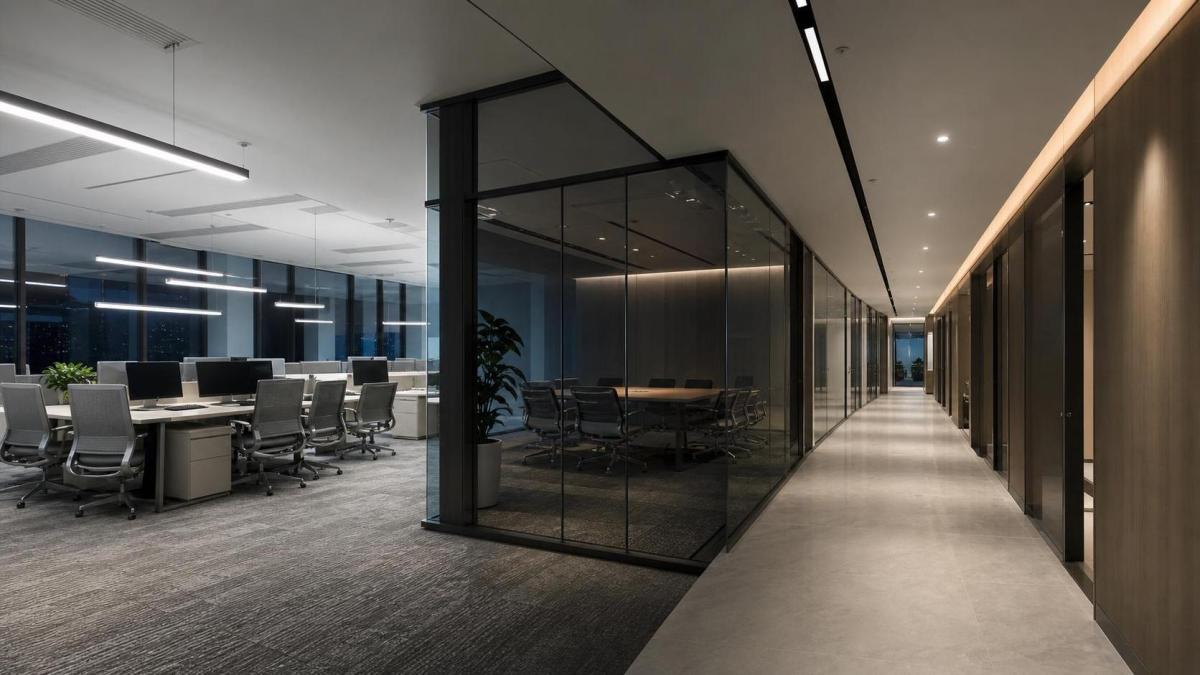
Office energy waste rarely comes from one dramatic failure. It usually builds through empty meeting rooms, overlit open areas, and lighting schedules that ignore how people actually use space.
That is why smart LED lighting controls matter in practical terms. They reduce unnecessary runtime, trim excess brightness, and make lighting respond to occupancy, daylight, and time-based demand.
In real projects, the strongest savings do not come from adding every control feature. They come from matching the control logic to room behavior, work patterns, and building infrastructure.
Within SHSS coverage of smart hardware for modern buildings, commercial lighting is treated as part of a wider operational system. It sits alongside access control, safety, and AIoT-driven facility efficiency.
For offices, smart LED lighting controls become most valuable when they support two goals together: lower energy use and stable visual comfort. One without the other usually creates resistance during daily use.
Actual office conditions change the right control strategy
Different office spaces waste energy for different reasons. A reception zone may stay lit too long for image and security reasons, while private offices waste power because occupancy changes all day.
Open-plan areas behave differently again. Lighting there often remains at full output because teams share large zones, even when daylight or partial occupancy could support lower levels.
This is where smart LED lighting controls should be judged less by headline features and more by control granularity. The key question is how precisely the system can follow real use patterns.
Protocol choice also matters. DALI usually supports finer fixture-level control and feedback, while Zigbee can simplify wireless retrofits where rewiring would disrupt operations.
A common mistake is assuming that one successful lighting strategy can be repeated across every floor. Similar-looking spaces often have very different occupancy curves, daylight exposure, and maintenance constraints.
Open offices, meeting rooms, and circulation zones do not waste energy the same way
Open-plan work areas need balance, not aggressive switching
In open offices, abrupt on-off behavior tends to annoy users. Here, smart LED lighting controls work best with zoning, dimming, and daylight harvesting rather than simple occupancy-triggered shutoff.
The useful judgment point is daylight consistency across the floorplate. Perimeter desks near glazing may need continuous dimming, while core zones need occupancy-based reduction during low attendance periods.
Meeting rooms benefit from fast response and automatic timeout
Meeting rooms often show some of the clearest savings. They are frequently booked, partially used, or left lit after short sessions.
For these spaces, smart LED lighting controls should prioritize vacancy sensing, quick scene recall, and short but sensible timeout settings. Overly long delays quietly erode savings.
Corridors and support zones often justify simpler logic
Circulation paths, copy rooms, storage spaces, and pantries usually do not require premium control complexity. Bi-level lighting with occupancy sensing often captures most of the available reduction.
In these areas, the main objective is to avoid full-output lighting during long idle periods while keeping navigation and safety clear at all times.
What usually delivers the strongest savings
Not every feature has the same impact. In office retrofits and new fit-outs, the following smart LED lighting controls usually create the most measurable results.
- Occupancy and vacancy sensing: effective in enclosed rooms, support spaces, and low-traffic zones where idle lighting hours are high.
- Daylight harvesting: strongest near facades, atriums, and glazed meeting rooms where natural light changes meaningfully across the day.
- Scheduling: useful for regular office hours, holiday periods, cleaning windows, and after-hours energy control.
- Task tuning and high-end trim: reduces default light levels when fixtures are installed brighter than the actual requirement.
- Centralized monitoring: identifies failed sensors, override abuse, and zones that remain active outside expected operating hours.
High-end trim is often underestimated. Many offices are simply brighter than needed. Smart LED lighting controls can cap output without reducing usability, and that cuts consumption every hour the lights run.
Different spaces call for different control priorities
A simple comparison helps clarify why one control package cannot be copied everywhere.
This kind of mapping improves decisions early. It also fits the SHSS view that smart building hardware should be judged as a system of performance, resilience, and operational discipline.
Retrofit projects and new offices require different decisions
In a new office, smart LED lighting controls can be designed around cable routes, sensor locations, and integrated building systems from the start. That makes deeper control logic easier to justify.
Retrofits are more conditional. Ceiling type, occupancy disruption, existing drivers, and control wiring often determine whether wired DALI or wireless Zigbee is the more realistic path.
The better judgment here is not which technology looks more advanced. It is which option can be commissioned properly and maintained without constant overrides.
A poorly tuned smart system wastes savings potential. A slightly simpler system, correctly commissioned, often performs better over three years than a feature-rich design nobody maintains.
The most common misjudgments happen before commissioning
Several mistakes appear repeatedly when evaluating smart LED lighting controls for offices.
- Focusing only on fixture efficiency while ignoring control strategy and operating hours.
- Using occupancy sensors in open areas where daylight tuning would produce better comfort and similar savings.
- Treating all meeting rooms as identical, even when room size, furniture layout, and usage differ.
- Counting installation cost, but not commissioning time, sensor calibration, or future replacement access.
- Ignoring integration with access control, BMS dashboards, or after-hours cleaning schedules.
That last point matters more than it seems. In AIoT-oriented buildings, lighting data often supports broader operational visibility, much like access and environmental systems do.
A practical way to match controls to office reality
A workable selection process starts with the floor plan, but it should not stop there. The next step is to map occupancy patterns, daylight exposure, cleaning routines, and override expectations.
Then define control layers by space type. Use finer smart LED lighting controls where behavior changes often, and simpler logic where use is predictable or visual sensitivity is low.
It also helps to establish success metrics before installation. Typical measures include runtime reduction, average dimming level, after-hours exceptions, and user override frequency.
Where possible, pilot one floor or one zone first. That reveals whether timeout settings, sensor coverage, and daylight thresholds work in practice instead of only on drawings.
Smart LED lighting controls reduce energy waste most reliably when they are tuned to how offices really operate. The next move is to compare each zone by behavior, constraints, and maintenance effort before locking the final control package.
Recommended News