
Search News
Industry Portal
Hot Articles
Industrial Power Tool Systems: Cordless vs Pneumatic for Heavy Use
Time
Click Count
Industrial Power Tool Systems: Cordless vs Pneumatic for Heavy Use
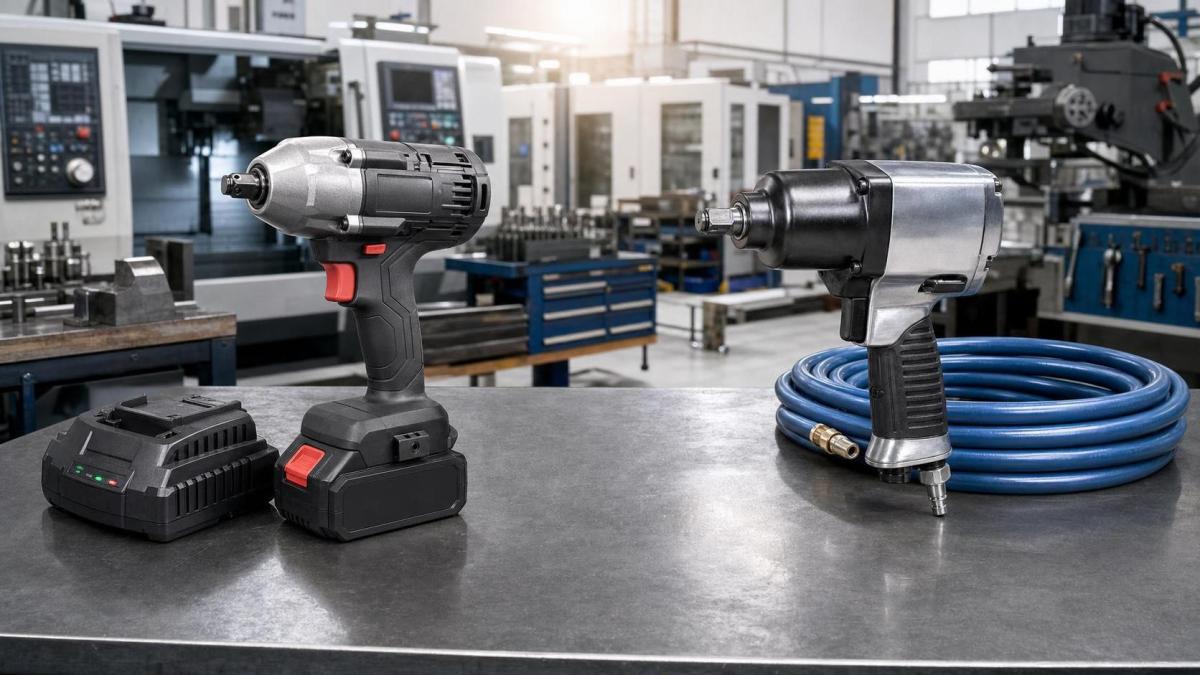
For demanding jobsites, industrial power tool systems shape output, downtime, and labor efficiency more than many teams expect.
The old debate was simple: air tools for raw power, cordless for convenience.
That is no longer enough for heavy-use decisions.
Battery chemistry, brushless motors, smart charging, and fleet tracking have changed the cordless side fast.
At the same time, pneumatic tool lines still dominate many fixed industrial stations and high-cycle fastening cells.
So the real question is not which system is better in general.
The real question is which industrial power tool systems fit your job rhythm, site layout, and uptime targets.
In practical terms, heavy use means long duty cycles, repeated torque demand, dust, weather exposure, and limited tolerance for tool failure.
That also means selection should move beyond catalog specs and focus on real operating conditions.
Why the Choice Matters More on Heavy-Use Projects
Heavy-use projects punish weak assumptions.
A tool platform that looks cost-effective at purchase can become expensive through idle crews, compressor load, battery rotation, or repair delays.
This is where industrial power tool systems need a full lifecycle view.
Cordless systems usually win on mobility, setup speed, and access in scattered work zones.
Pneumatic systems often win on continuous run capability, lighter hand tools, and stable output at fixed stations.
From a project planning angle, the right choice can reduce transition time between tasks and lower hidden productivity loss.
Key pressure points to evaluate
- Daily runtime per tool
- Peak torque and repeatability requirements
- Work area mobility and lift access
- Air infrastructure availability
- Maintenance staffing and spare coverage
- Safety controls around cords, hoses, and pressure systems
Cordless Industrial Power Tool Systems: Where They Now Lead
Modern cordless industrial power tool systems are not light-duty substitutes anymore.
High-output BLDC motors and improved Li-ion packs have pushed cordless tools into heavier drilling, fastening, and cutting applications.
For distributed work, that changes scheduling flexibility.
Crews can move faster between steel framing, MEP installation, maintenance work, and elevated access zones without dragging air lines.
This also shortens setup time at shift start and after relocation.
Main advantages of cordless systems
- Fast deployment in scattered work areas
- No compressor transport or hose routing
- Better access in high, narrow, or remote spaces
- Lower trip risk from long hoses
- Easier fleet standardization across mixed tasks
There is another practical benefit.
Many cordless industrial power tool systems now include battery telemetry, charge-cycle data, and anti-theft features.
For multi-crew sites, that helps control loss, recharge planning, and asset visibility.
Where cordless still needs caution
Battery runtime remains the biggest management issue.
Heavy fastening or drilling in dense material can drain packs quickly, especially in cold weather.
This means selection should include battery count, charger placement, and swap discipline, not just tool pricing.
Tool weight can also rise once high-capacity packs are attached.
In repetitive overhead work, that affects fatigue and output consistency.
Pneumatic Industrial Power Tool Systems: Why They Still Hold Ground
Pneumatic industrial power tool systems still make strong sense where cycle volume is high and workstations stay fixed.
Their core strength is sustained use without battery interruption.
In repetitive fastening, assembly lines, fabrication shops, and service bays, that matters every hour.
Air tools are often lighter in hand than cordless equivalents with large packs.
That reduces operator strain in high-frequency tasks.
Where pneumatic systems perform best
- Fixed production stations
- High-cycle assembly or fastening work
- Shops with existing compressed air infrastructure
- Applications needing long, uninterrupted operation
- Teams prioritizing lighter hand-tool bodies
Still, pneumatic industrial power tool systems carry infrastructure demands that are easy to underestimate.
Compressors consume energy, require maintenance, and create noise.
Leaks in the air network can quietly erode efficiency and raise operating cost over time.
Hoses also introduce movement limits and housekeeping risk in active work zones.
That tradeoff is acceptable in stable layouts, but less attractive on fast-moving project sites.
Decision Factors That Actually Change the Outcome
When comparing industrial power tool systems, purchase price should not lead the decision alone.
A better method is to score the system against workflow, support burden, and jobsite constraints.
1. Duty cycle and peak load
If tools run nearly nonstop, pneumatic options often stay more predictable.
If work is mobile and burst-based, cordless systems usually create less friction.
2. Site mobility
Large campuses, infrastructure sites, and vertical builds generally favor cordless industrial power tool systems.
The farther crews move, the more hose-based systems lose time.
3. Infrastructure cost
A site with installed compressed air may justify pneumatic expansion.
A temporary site usually benefits more from chargers and battery rotation planning.
4. Safety exposure
Hoses can create trip points and snag hazards.
Battery systems reduce some movement hazards, but they add charging discipline and heat management concerns.
5. Maintenance structure
Cordless fleets need battery health tracking and charger control.
Pneumatic fleets need leak testing, lubrication control, and compressor service planning.
Cordless vs Pneumatic: A Practical Comparison Table
How to Choose the Right Industrial Power Tool Systems
For most heavy-use operations, the smartest answer is not purely cordless or purely pneumatic.
It is often a task-based mix.
Use cordless industrial power tool systems for mobile installation, field repairs, elevated work, and changing site zones.
Use pneumatic systems where stations stay fixed and cycle volume stays high.
A simple decision path
- Map tasks by mobility, runtime, and torque demand.
- Calculate hidden support costs, not just purchase cost.
- Test both systems under real material and shift conditions.
- Standardize accessories, spares, and maintenance routines.
- Review safety impact before fleet rollout.
That approach gives a better decision than headline torque numbers alone.
In the current market, industrial power tool systems should be chosen as productivity platforms, not isolated tools.
If your project depends on mobility and fast transitions, cordless is increasingly the stronger default. If your output depends on nonstop repetitive cycles, pneumatic still deserves a serious place in the plan.
Recommended News