
Search News
Industry Portal
Hot Articles
Structural Fasteners: How to Compare Load Ratings and Corrosion Resistance
Time
Click Count
Comparing structural fasteners is rarely about picking the highest published number. Load ratings, corrosion resistance, joint geometry, and service environment interact in ways that can change real performance sharply.
That matters across construction, transport, energy, equipment assembly, and smart infrastructure. In every case, structural fasteners carry force transfer, vibration stability, and long-term reliability where failure margins are often narrow.
For technical evaluation, the useful question is simple: which fastener system remains dependable after installation, weather exposure, preload loss, and repeated loading, not just on a datasheet, but in service.
Why structural fasteners deserve closer comparison
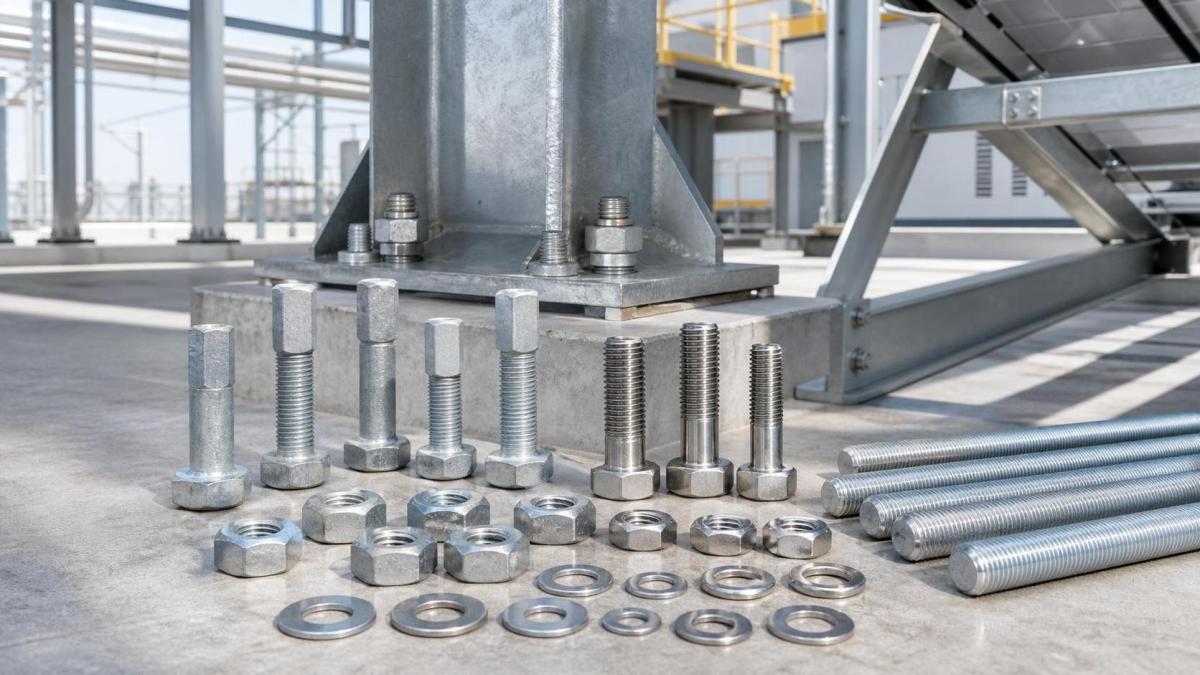
A bolt, nut, washer, or threaded rod may appear secondary beside steel members, motors, access systems, or lighting hardware. In reality, these components often control the integrity of the whole assembly.
SHSS tracks this issue across industrial tools, high-strength hardware, security systems, and smart city infrastructure because physical reliability is cumulative. The last connection point can still determine whether the broader system remains safe.
Structural fasteners sit at that connection point. They hold load paths together, preserve clamp force, and resist loosening under movement, impact, temperature cycling, and moisture.
As projects become more integrated, the evaluation standard rises. A fastener may be strong enough mechanically, yet still fail the application if its coating degrades early or if galvanic conditions were ignored.
What load ratings actually tell you
Load ratings are often treated as direct proof of suitability. They are not. They describe capacity under defined test conditions, with assumptions about material, thread engagement, preload, and loading direction.
For structural fasteners, the main mechanical references usually include tensile strength, yield strength, proof load, shear performance, and fatigue behavior. Each one answers a different risk question.
Key rating terms in practical use
A common mistake is comparing only tensile class. Two structural fasteners with similar tensile values may behave very differently when thread root geometry, heat treatment quality, or clamp load retention are considered.
Joint design also changes interpretation. If the joint is slip-critical, preload consistency may matter more than ultimate bolt fracture strength. If the connection sees reversing loads, fatigue becomes the governing factor.
Corrosion resistance is a system property
Corrosion resistance is often reduced to one question: stainless or coated carbon steel? In practice, the answer depends on the full assembly, the atmosphere, and the maintenance horizon.
Structural fasteners can lose performance through red rust, pitting, crevice corrosion, hydrogen effects, coating damage, or galvanic interaction with adjacent metals. The visible surface condition is only part of the story.
What should be checked beyond the coating label
- Base material chemistry and hardness level
- Coating type, thickness, adhesion, and sacrificial behavior
- Compatibility with the mating substrate
- Exposure to chlorides, humidity, industrial fallout, or chemicals
- Risk of coating damage during installation
- Expected inspection and replacement interval
In coastal or de-icing salt environments, some plated fasteners degrade faster than expected once scratches expose the substrate. In enclosed wet zones, crevice behavior may become more important than general atmospheric corrosion.
Stainless grades can improve durability, but not automatically. Chloride-rich settings, high temperatures, or dissimilar-metal contact may still create failure risk. That is why structural fasteners should be judged as part of the assembled joint.
Material grade, process quality, and installation all matter
Published specifications only tell part of the story. Manufacturing route has a direct influence on load reliability and corrosion behavior, especially in high-strength structural fasteners.
Heat treatment consistency affects core strength and ductility. Thread rolling quality affects fatigue initiation. Surface preparation affects coating performance. Traceability affects confidence when compliance needs to be defended later.
Installation can also erase a good design choice. Excess torque, poor lubrication control, reused lock components, or insufficient engagement can reduce preload and accelerate field failure.
Questions that sharpen evaluation
- Is the fastener grade aligned with the required design code?
- Are load values based on recognized standards or internal testing only?
- Does the coating process create hydrogen embrittlement concerns?
- Will the installation method preserve the intended preload range?
- Is batch certification available and auditable?
These points are especially relevant in sectors monitored by SHSS, where fastening performance supports larger systems such as powered equipment housings, secure entry hardware, pole-mounted lighting, and protective infrastructure.
Typical environments where comparisons change
The same structural fasteners can rank differently depending on the site. A dry indoor assembly line, a bridge expansion zone, and a rooftop smart lighting installation do not stress hardware in the same way.
This is why side-by-side comparison should start with service conditions, not catalog sequence. Structural fasteners chosen for one environment may be overbuilt, underprotected, or simply misaligned in another.
A practical way to compare options
A defensible comparison usually combines four layers: mechanical demand, environmental severity, installation reality, and compliance evidence. Removing any one layer weakens the decision.
Start with the joint function. Identify whether the fastener carries direct tension, shear, clamping force, cyclic loading, or mixed demand. Then define the exposure profile over the intended service life.
Next, review the actual installation process. Tooling, torque control, surface condition, and access constraints can shift which structural fasteners perform best after assembly, not before it.
Finally, test documentation should be read critically. Salt spray hours alone are not a universal durability answer. Neither is a single ultimate load result without joint context.
Useful evidence to request
- Mechanical property certificates by batch
- Coating specification and test method details
- Standard references for load data
- Corrosion test conditions, not just outcomes
- Installation instructions linked to warranty or performance claims
What to carry into the next evaluation round
The strongest structural fasteners are not automatically the best choice. The best choice is the one whose strength class, corrosion strategy, and installation path remain coherent in the intended joint.
That makes comparison more disciplined and more useful. It also reduces the chance of late redesign, premature maintenance, and difficult compliance discussions after deployment.
A sensible next step is to build a comparison sheet around load case, environment, coating system, substrate pairing, and required service life. Once those factors are visible together, structural fasteners become much easier to judge accurately.
For projects tied to broader industrial and smart infrastructure systems, that level of discipline is no longer optional. It is how reliability is preserved from the smallest connection to the largest operating asset.
Recommended News