
Search News
Industry Portal
Hot Articles
Smart Building Trends in 2026: Where Investment Is Shifting
Time
Click Count
Smart building investment is moving toward systems that prove value faster
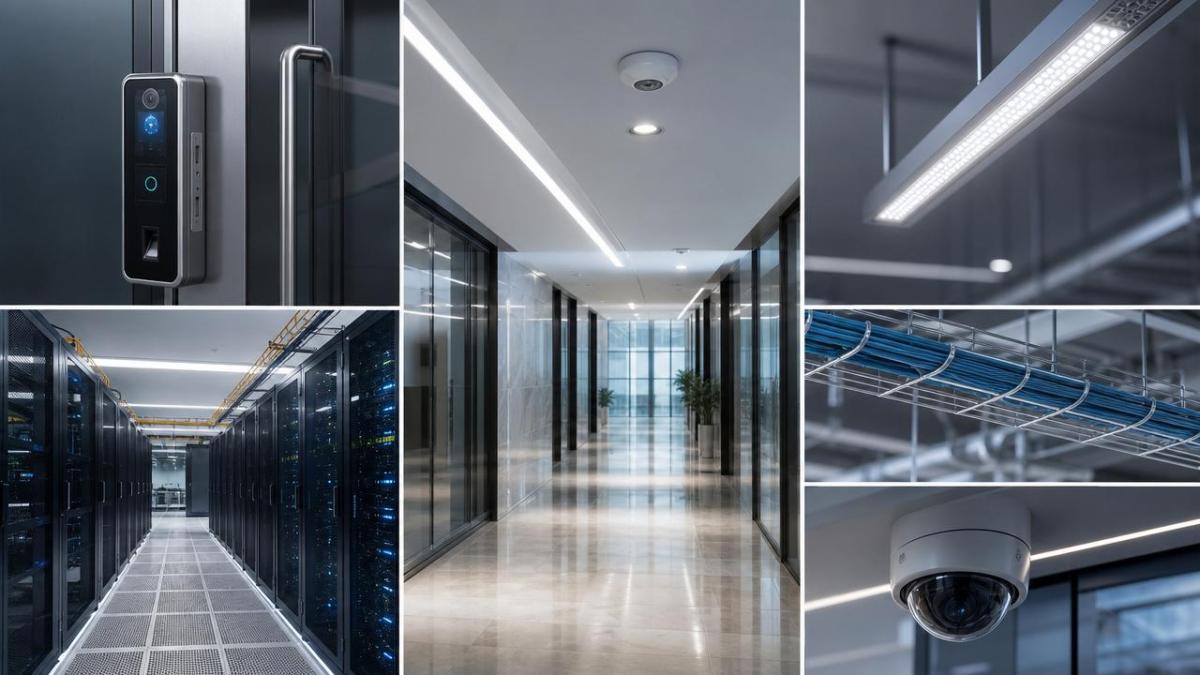
In 2026, the smart building market looks more selective than expansive.
Capital is still flowing, but it is no longer chasing isolated automation for its own sake.
The stronger signal is a shift toward connected building layers that can defend assets, reduce energy waste, and expose maintenance risk earlier.
That changes how smart building decisions are evaluated.
Return now depends less on novelty and more on whether separate systems can share data, support compliance, and stay reliable under real operating pressure.
This is why the conversation around smart building strategy is widening.
Access control, lighting, structural hardware, sensors, and field safety are no longer treated as unrelated budget lines.
They are increasingly viewed as one operational stack.
That broader view also reflects the way SHSS reads the market.
Across biometric security, high-strength hardware, smart lighting, and protective systems, the underlying demand is the same: resilient infrastructure with measurable intelligence.
Why this shift is becoming more visible in 2026
Several forces are pushing smart building investment into a more disciplined phase.
Energy volatility remains one driver, but it is no longer the only one.
Security exposure has grown sharper as more buildings support hybrid work, distributed contractors, and sensitive digital infrastructure.
At the same time, insurers, regulators, and asset owners expect clearer evidence of risk control.
That is pushing the smart building category closer to mission-critical infrastructure.
Another reason is technical maturity.
Edge AI, DALI lighting controls, biometric recognition, and predictive maintenance platforms now work well enough to support broader deployment decisions.
The market is no longer asking whether these tools are possible.
It is asking where they create the cleanest operating advantage.
From recent demand patterns, the most durable projects are those that solve several of these pressures at once.
The center of gravity is shifting from gadgets to operating architecture
A few years ago, many smart building upgrades were approved as standalone improvements.
A smart lock here, a sensor cluster there, a lighting refresh somewhere else.
That fragmented model is losing momentum.
In 2026, investment is moving toward platforms that connect physical security, environmental control, and maintenance analytics.
This matters because a smart building only becomes strategically valuable when information moves across systems.
For example, biometric access data can validate occupancy assumptions.
Lighting controls can then respond to actual use, not fixed schedules.
Maintenance alerts can be prioritized around critical zones rather than generic service cycles.
The result is not only efficiency.
It is better decision quality.
This is also where SHSS-relevant categories intersect most clearly.
A smart building depends on secure entry, reliable hardware anchoring, intelligent illumination, and safer field execution during installation and maintenance.
The intelligence layer performs better when the physical layer is stable.
Where money is actually concentrating
More spending is now clustering around four practical areas.
- Biometric and credential-free access for high-control environments, especially data, healthcare, and mixed-use assets.
- Networked LED lighting that combines efficiency, occupancy sensing, and space-use insight.
- Retrofit hardware and fastening systems that support resilient upgrades without structural compromise.
- AIoT monitoring tools that reduce blind spots in maintenance and incident response.
The common thread is not technology density.
It is operational proof.
Biometric access keeps drawing attention because it addresses both convenience and building risk.
In facilities where tailgating, credential sharing, or after-hours movement matter, traditional cards look increasingly weak.
Lighting is another strong zone because it pays back in several ways.
Energy savings remain important, yet the newer appeal lies in data capture, adaptive control, and occupant comfort.
More building owners now want luminaires to function as sensing nodes, not just fixtures.
The less visible layer is becoming more investable
One underappreciated shift in smart building planning involves physical hardware integrity.
As buildings add sensors, access devices, and connected lighting, mounting quality and vibration resistance matter more than before.
That gives new weight to high-strength fasteners, reliable tool performance, and safe installation procedures.
These are not glamorous line items, but they influence lifecycle cost and failure risk.
In practice, the smart building market is rewarding infrastructure that stays precise long after commissioning.
The impact is spreading across more than one building function
The effects of this investment shift are not limited to facility controls.
Security teams see tighter identity assurance.
Operations teams get cleaner visibility into occupancy, performance, and service timing.
Finance functions get better grounds for phased capital allocation.
Project delivery teams also feel the change.
A smart building installation now demands stronger coordination between digital systems and physical components.
That includes cable routing, hardware durability, worker protection, and compliance handling for sensitive biometric data.
This is where industry observers like SHSS add useful perspective.
The most resilient smart building projects are rarely defined by software alone.
They are built on the alignment of edge intelligence, mechanical reliability, and safety discipline.
That alignment becomes especially important in hospitals, transport hubs, commercial towers, and industrial campuses.
What deserves closer attention before capital is committed
The next question is not whether a smart building proposal sounds modern.
It is whether the system design can survive operational reality.
- Check interoperability early. Closed systems may perform well in demos and fail during expansion.
- Examine compliance exposure. Biometric storage, cloud transfer, and audit trails now shape deployment risk.
- Measure physical durability. Fixings, housings, and installation quality affect uptime more than specification sheets suggest.
- Prioritize maintainability. A smart building platform loses value if field service remains opaque or expensive.
- Model staged returns. The strongest cases often come from phased upgrades, not all-at-once replacement.
More careful evaluation also helps separate short-term fashion from durable market direction.
For instance, many AI claims still sound larger than their field performance.
But edge-based fault detection, adaptive lighting control, and identity verification already have measurable building impact.
The next smart building advantage will come from disciplined integration
The smart building story in 2026 is not about adding the most devices.
It is about choosing systems that strengthen the building as an operating asset.
That means looking at security, lighting, hardware resilience, and maintenance intelligence as connected priorities.
The market is rewarding projects that combine digital control with trustworthy physical execution.
A practical next step is to map where current building systems still work in isolation.
Then compare which upgrades can improve visibility, reduce risk, and produce measurable returns within a realistic timeline.
That approach keeps smart building investment focused on outcomes rather than features.
It also creates a clearer basis for monitoring market signals, technical standards, and future retrofit opportunities.
Recommended News