
Search News
Industry Portal
Hot Articles
Smart City Infrastructure Trends for 2026: ROI, Funding, and Deployment Pace
Time
Click Count
Smart city infrastructure is entering a stricter investment cycle
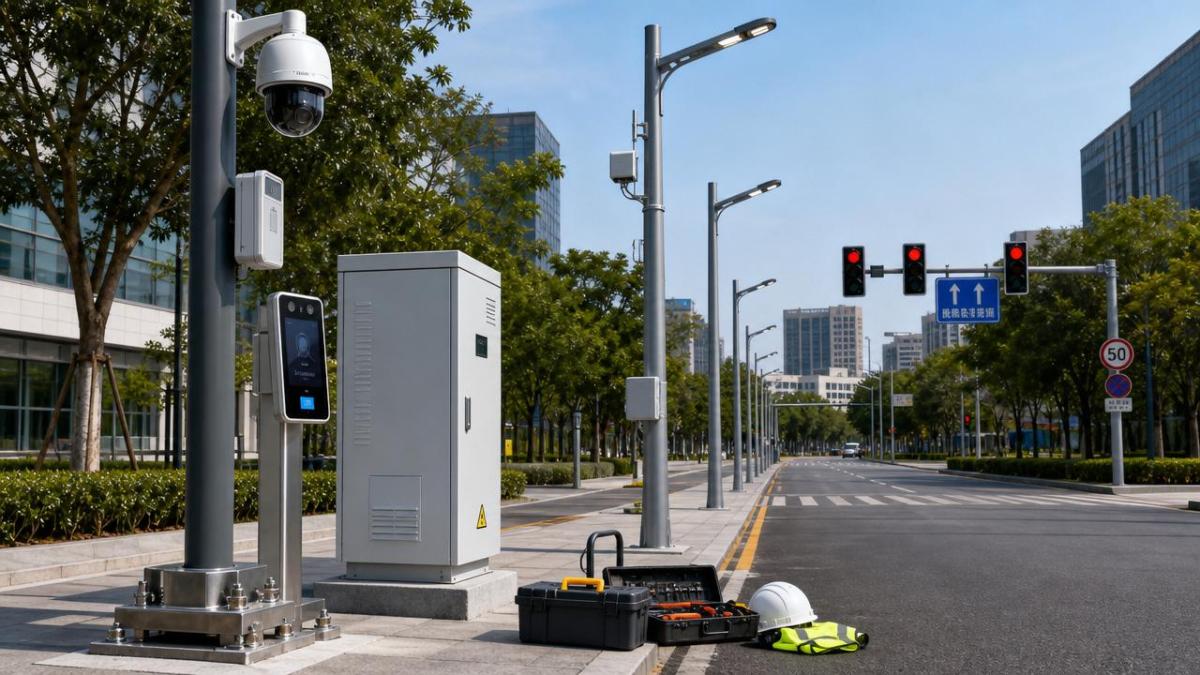
Smart city infrastructure plans for 2026 are no longer judged by vision alone. They are being tested against cash flow, resilience, and deployment speed.
That shift matters because urban modernization is expanding beyond software dashboards. It now depends on physical systems that stay reliable under heavy daily use.
Street lighting, biometric access, structural hardware, field tools, and worker protection are moving into one connected investment discussion. Each affects operating cost, safety exposure, and public trust.
From recent project reviews, the strongest signal is clear. Cities and private operators want smart city infrastructure that can prove value early, then scale without creating fragile dependencies.
This is why ROI, funding design, and deployment pace are now linked. A fast rollout without maintenance discipline looks risky. A technically elegant pilot without budget continuity looks worse.
The broader market context supports that view. AIoT adoption is rising, but so is scrutiny around data governance, supply chain resilience, and lifecycle performance.
For observers like SHSS, the practical center of smart city infrastructure is not abstraction. It is the meeting point between intelligent control and durable physical protection.
Why the momentum looks stronger heading into 2026
Several forces are converging at once, and that is changing the pace of smart city infrastructure investment.
Energy costs remain volatile. Security threats are becoming more physical and more digital. Labor shortages continue to pressure maintenance teams and field operations.
At the same time, technology has matured enough to support larger deployments. Sensors, edge controls, BLDC tools, networked lighting, and biometric systems are no longer experimental categories.
What changed is buyer confidence in measurable outcomes. More projects now begin with maintenance reduction, energy savings, and safety improvement rather than broad transformation language.
- Smart lighting is favored because energy data and service intervals are visible within months.
- Biometric access is gaining ground where key management failures create compliance or intrusion risks.
- High-strength fasteners and resilient hardware are under review because infrastructure uptime depends on overlooked physical points.
- PPE and efficient installation tools matter more as project teams try to accelerate deployment without raising incident rates.
In other words, smart city infrastructure is becoming more grounded. The winning projects are those that connect digital intelligence with hardware that survives weather, vibration, tampering, and constant use.
ROI is moving from headline savings to full lifecycle proof
A notable change in 2026 planning is the way ROI is being calculated. Simple capex versus utility savings is no longer enough.
Evaluations now look at installation time, warranty exposure, cyber-physical risk, replacement cycles, and the cost of operational disruption.
That is especially relevant for smart city infrastructure built around distributed assets. A thousand streetlights or access points create value only if service complexity stays manageable.
This broader model favors durable components. SHSS has long emphasized that physical anchors matter as much as digital interfaces, and current market behavior is validating that view.
A city may celebrate connected lighting software, but weak fastening systems or short-lived fixtures can erase returns through truck rolls and repair delays.
Funding models are becoming more blended and performance-led
Funding is also changing in tone. Budget holders are less willing to approve large, monolithic smart city infrastructure programs with uncertain payback timing.
More deployments are being split into measurable phases. Lighting upgrades may fund later sensor layers. Access control modernization may begin with high-risk sites before broader expansion.
This phased pattern reflects caution, but it also improves execution quality. It allows infrastructure teams to validate contractor performance, maintenance assumptions, and data governance before scaling.
The most workable structures often combine public budgets, energy performance logic, and private operational partnerships. What matters is not novelty in finance. It is alignment between savings visibility and asset life.
- Projects with fast metering visibility attract earlier approval.
- Assets with long service life support stronger funding confidence.
- Security systems need clearer compliance models before expansion capital arrives.
- Mixed portfolios work better when quick-payback assets offset slower-return safety layers.
That last point is becoming important. Smart city infrastructure is increasingly financed as a portfolio, not as isolated equipment categories.
Deployment pace now depends on physical readiness, not only digital readiness
Many rollouts still underestimate a simple fact. Deployment speed is constrained by site conditions, installation quality, and workforce efficiency before software value ever appears.
This is where smart city infrastructure often succeeds or stalls. Reliable field execution needs compact high-torque tools, consistent fastening quality, safer access procedures, and protection for crews working in harsh environments.
The same applies to security systems. A biometric terminal may offer sub-second recognition, but poor mounting stability, network exposure, or environmental mismatch can weaken the result.
More project teams are therefore evaluating deployment pace through a practical sequence:
- Can crews install at scale without rising rework?
- Can hardware tolerate vibration, dust, moisture, and tampering?
- Can maintenance teams diagnose failures without site-by-site confusion?
- Can safety procedures keep pace with tighter installation schedules?
From this perspective, smart city infrastructure is not just a digital roadmap. It is a field operations discipline supported by the right tools, hardware, and protective systems.
The impact is spreading across more than one urban system
A few years ago, smart city infrastructure discussions often centered on mobility or surveillance. That boundary is widening.
Lighting networks are becoming multi-use platforms for sensing and traffic coordination. Secure access is expanding from offices into utility nodes, logistics zones, and semi-public facilities.
Even small component decisions are becoming strategic. Fastener quality affects pole integrity, cabinet stability, and the longevity of roadside assets. PPE standards affect whether accelerated upgrades can proceed without incident disruption.
That broader effect explains why integrated intelligence sources are gaining relevance. SHSS tracks not only smart lighting and biometric security, but also the enabling hardware that keeps those systems dependable in real environments.
The market is rewarding that systems view. Decision frameworks are moving away from device-by-device comparison toward operational stack comparison.
What deserves closer attention before budgets are locked
The next round of smart city infrastructure decisions will likely favor disciplined filters over ambitious narratives.
Several checkpoints stand out in current evaluations.
- Check whether ROI includes maintenance labor, downtime risk, and replacement logistics.
- Review whether biometric and connected systems meet privacy and storage expectations across jurisdictions.
- Compare projected deployment speed against actual crew capability and site complexity.
- Test whether structural hardware and enclosure quality match long-cycle urban exposure.
- Confirm that safety gear and installation methods support faster schedules without hidden incident cost.
These checkpoints sound basic, yet they often decide whether smart city infrastructure performs as a stable asset class or becomes a patchwork of underused nodes.
Looking ahead to 2026, the most credible deployments will be the ones that unite secure intelligence with durable mechanics. That means comparing not only what a system can do, but what it can keep doing.
A practical next step is to map projects by payback speed, physical risk, and deployment complexity, then build phased plans around the assets that can prove value earliest while strengthening long-term urban resilience.
Recommended News