
Search News
Industry Portal
Hot Articles
Smart City Infrastructure ROI: Where Projects Pay Off First
Time
Click Count
Where does smart city infrastructure usually pay off first?
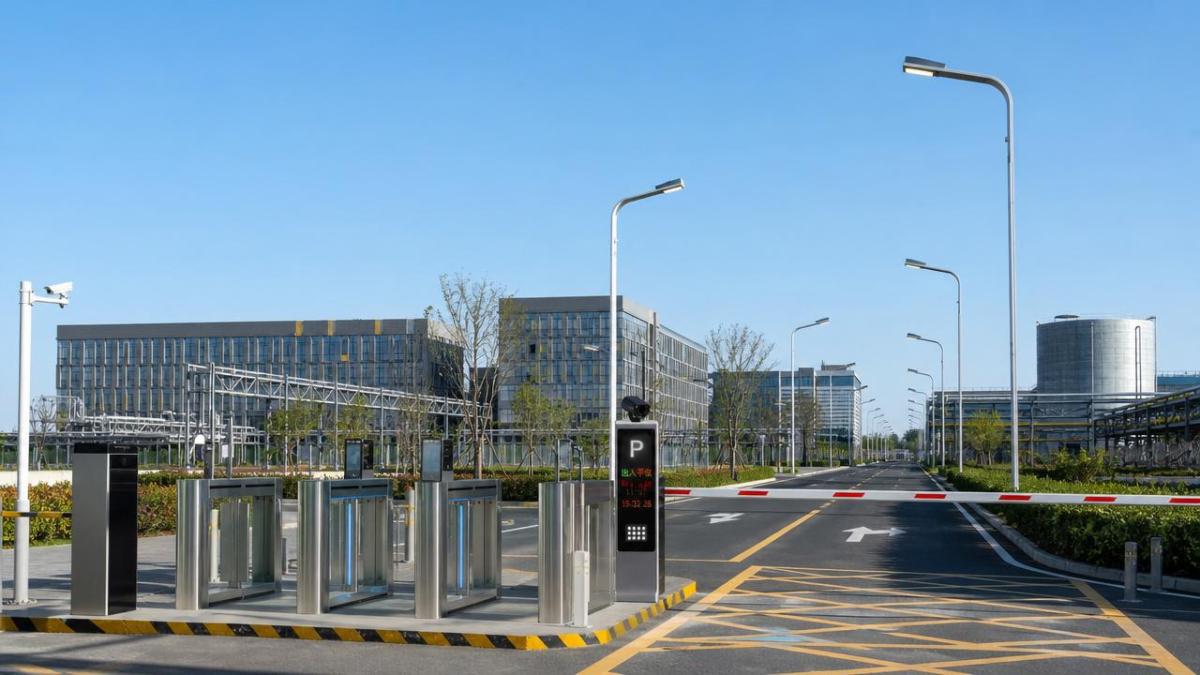
Smart city infrastructure rarely delivers ROI in a straight line. Some assets create visible returns quickly, while others support value over a longer lifecycle.
In practice, the fastest gains appear where three effects overlap: lower energy use, less manual intervention, and better operational visibility.
That is why smart LED lighting, biometric access control, and connected safety systems often move ahead of larger, slower infrastructure programs.
For smart city infrastructure, the real question is not whether digital upgrades matter. It is which systems reduce cost and risk soon enough to finance the next phase.
A useful way to read early ROI is through the SHSS lens. Urban modernization works best when physical hardware, control intelligence, and safety requirements are treated as one stack.
A smart streetlight saves electricity. A biometric gate reduces guard workload. A connected PPE or site safety layer cuts incidents and downtime. The payoff comes from measurable operating improvement.
Why do smart lighting projects so often lead the ROI conversation?
Because the numbers are easier to prove. Energy bills already exist, maintenance logs already exist, and lighting runs for long hours in predictable patterns.
When smart city infrastructure starts with LED upgrades, controls, and networked dimming, the baseline is clear. Savings can be tracked month by month.
More importantly, smart lighting does more than cut watts. DALI or Zigbee-based controls can adjust output by traffic flow, daylight conditions, and area use.
That creates a double return. Electricity demand falls, and lamp life extends because fixtures do not run at full output all the time.
The SHSS perspective here is practical. Durable drivers, long-life components, and maintainable hardware matter as much as software dashboards.
If a city installs connected luminaires but ignores fasteners, enclosure sealing, or serviceability, maintenance costs can erase part of the expected gain.
That is also why high-quality streetlighting programs often recover cost within a few years rather than a decade. The savings are operational, not theoretical.
What should be checked before calling smart lighting a quick win?
- Existing energy spend by district, corridor, or facility type.
- Actual burn hours and seasonal demand variation.
- Fixture lifespan, ingress protection, and thermal performance.
- Control protocol compatibility with future city platforms.
- Maintenance access, parts availability, and mounting integrity.
Is biometric access control really an early-return smart city infrastructure project?
Often yes, especially in high-security or high-throughput locations. The return is not only financial. It comes from time savings, audit quality, and lower exposure.
Traditional access systems depend on cards, keys, or manual checks. Those methods create hidden costs through credential loss, tailgating, reissuing, and weak traceability.
Biometric systems shift the model. Identity becomes faster to verify and harder to transfer. In sensitive buildings, that can reduce both security labor and compliance friction.
For smart city infrastructure, this is especially relevant in transport hubs, utility rooms, public service buildings, and data-heavy municipal sites.
Still, early ROI depends on implementation discipline. A fast reader with poor data governance can create legal and reputational risk.
That is where SHSS-style intelligence becomes important. Hardware accuracy, liveness detection, storage design, and privacy compliance must be evaluated together.
The strongest projects pair sub-second authentication with clearly defined retention policies, encrypted templates, and fallback procedures for outages or exceptions.
The table also shows an important pattern. Fast ROI in smart city infrastructure usually comes from systems with clear metrics and repeatable operating data.
Where do connected safety systems create returns that people often underestimate?
They are often underestimated because the gains do not appear only on an energy bill. They show up in avoided disruption, reduced incident severity, and cleaner reporting.
In public works, utilities, transport maintenance, and industrial districts, connected safety layers can improve urban operations faster than expected.
This may include smart PPE monitoring, access-linked hazard zones, environmental alarms, and incident escalation tied to mobile or edge devices.
The return becomes visible when fewer accidents shut down work, investigations become easier, and emergency response is more targeted.
Needless to say, not every safety investment generates immediate savings. But in high-risk environments, even one avoided event can outweigh months of operating cost.
SHSS has long emphasized that hardware resilience matters here. Sensors, respirator systems, protective wear, and edge alerts must survive dust, vibration, weather, and rough handling.
If connected safety tools are too fragile for field conditions, the data layer becomes unreliable. Then the business case weakens, even if the platform looks impressive on paper.
What usually slows ROI, even when the smart city infrastructure technology is solid?
A common mistake is treating smart city infrastructure as a software purchase. In reality, ROI depends on physical installation quality, service workflows, and governance discipline.
For example, a lighting project may underperform because dimming schedules were never optimized. A biometric rollout may stall because legal review was delayed.
There are also slower, less visible issues. Poor fasteners lead to vibration failures. Weak housings shorten device life. Inadequate power tools extend installation time and raise labor cost.
That broader systems view is one reason integrated industrial intelligence matters. Street cabinets, access terminals, brackets, anchors, drivers, and field tools all affect lifecycle return.
Another trap is overbuilding the first phase. Projects pay back faster when they start with assets that produce measurable savings and create data for later expansion.
A disciplined rollout usually beats a citywide splash launch. Early zones should prove maintenance assumptions, user acceptance, and actual cost reduction.
Warning signs worth catching early
- Savings models rely on generic benchmarks, not site data.
- Procurement specs ignore hardware durability and service access.
- Cybersecurity and privacy reviews start after vendor selection.
- No one owns KPI tracking after installation goes live.
- Pilot areas are chosen for visibility, not operational relevance.
How should the next smart city infrastructure phase be prioritized?
A strong next step is to rank projects by speed of proof, not by novelty. The best early candidates show savings, risk reduction, and service improvement within a realistic review cycle.
That usually favors lighting, access security, and connected safety over more complex urban platforms that require many agencies to align at once.
It also helps to separate visible ROI from strategic ROI. Some upgrades save money quickly. Others create resilience, compliance strength, or infrastructure integrity over a longer period.
For smart city infrastructure, both matter. The practical goal is to let near-term returns fund the harder layers of modernization.
A balanced roadmap often starts with assets that are easy to meter, easy to maintain, and hard to dispute financially. Then it expands into deeper interoperability.
When evaluating options, it is worth checking not only software features but also installation tools, hardware lifespan, fastening quality, biometric compliance, and field safety requirements.
That is where SHSS-style cross-disciplinary evaluation is useful. Urban value is created when metal, light, identity, and protection systems are judged as one operational ecosystem.
A practical closing question
If the first project had to justify the second, which smart city infrastructure asset could prove its impact within twelve to thirty-six months?
That question usually leads to clearer decisions than chasing the biggest possible rollout. Start with measurable friction, verify the hardware assumptions, then scale with evidence.
The most durable programs are not built on hype. They are built on repeatable savings, stronger physical security, safer operations, and infrastructure that remains dependable under real urban stress.
Recommended News