
Search News
Industry Portal
Hot Articles
IoT Lighting Control ROI: Where Smart Upgrades Pay Back Faster
Time
Click Count
IoT lighting control ROI starts with one practical question
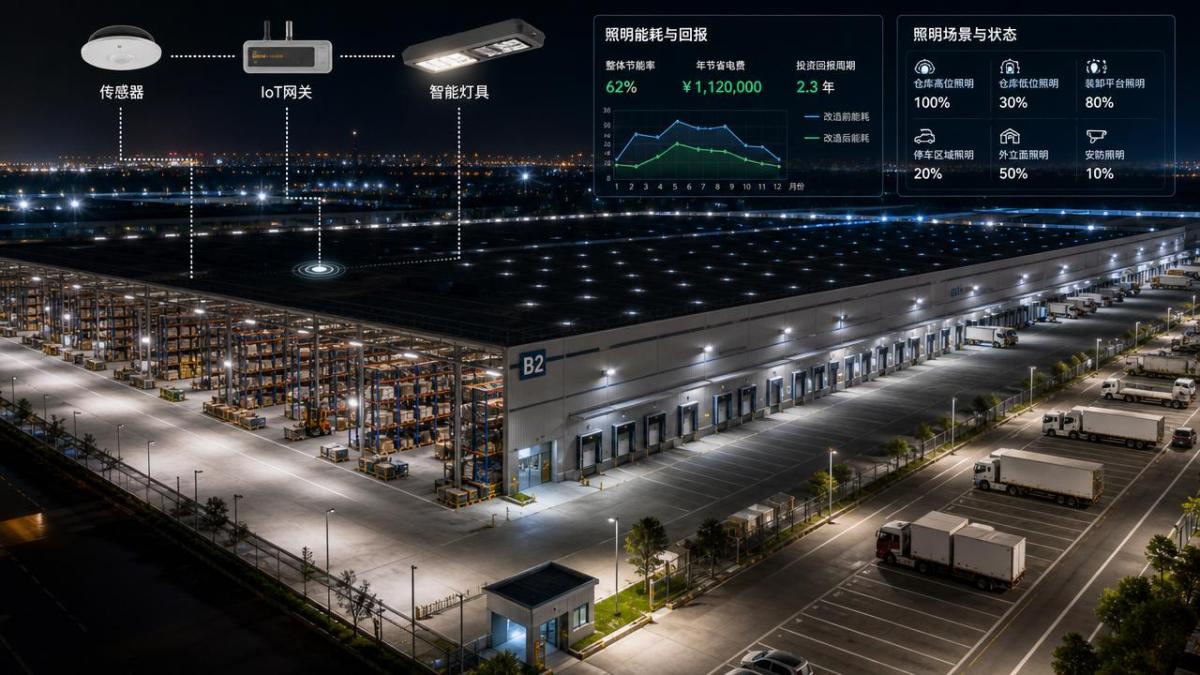
IoT lighting control has moved beyond green positioning. It now sits inside capital planning, operating cost review, and site performance analysis.
That shift matters across offices, warehouses, retail chains, campuses, factories, and public assets.
The financial case is rarely built on energy savings alone. Faster payback usually comes from several small wins stacking together.
Those wins include lower electricity use, fewer lamp replacements, reduced truck rolls, better scheduling, and clearer occupancy data.
In the broader SHSS view of smart hardware, lighting is not isolated. It connects with security, facilities, compliance, and urban operations.
That is why IoT lighting control often pays back faster where buildings already value automation, uptime, and measurable risk reduction.
Where does IoT lighting control usually pay back the fastest?
The quickest returns usually appear in spaces with long operating hours and inconsistent occupancy.
Warehouses are a strong example. Aisles may stay brightly lit even when traffic is limited for long periods.
Adding sensors, zoning, and dimming can cut waste immediately without changing the physical workflow.
Parking structures, logistics hubs, and municipal outdoor sites also tend to produce faster IoT lighting control ROI.
The reason is simple. Lighting hours are long, maintenance access is costly, and failures create safety concerns.
Retail can also perform well, especially when schedule changes, daylight harvesting, and zone control improve both cost and presentation.
By contrast, small offices with short operating windows may still benefit, but the payback period is often longer.
A good early filter is to check three things:
- Annual lighting runtime exceeds standard daytime office schedules.
- Maintenance work requires lifts, shutdowns, or off-hour labor.
- The site already struggles with underused or overlit zones.
When all three are present, IoT lighting control usually moves from “nice to have” to financially credible.
What actually drives the ROI beyond lower electricity bills?
This is where many evaluations become more realistic. Energy reduction is visible, but it is only one part of the equation.
Smart lighting lowers burn hours. That extends fixture life and reduces replacement cycles.
Remote diagnostics can show which nodes fail, where communication drops, and when drivers need attention.
That reduces manual inspections. In dispersed sites, that matters almost as much as energy savings.
There is also an operational value that standard retrofit models often miss.
With IoT lighting control, facility teams can align light levels with occupancy, shift patterns, events, and security schedules.
In practical terms, light becomes a managed asset rather than a fixed utility load.
That fits the SHSS perspective on smart infrastructure. Lighting data can support access control patterns, emergency readiness, and smarter use of physical space.
The table below helps separate fast-payback conditions from slower ones.
How should costs be judged before calling a project “too expensive”?
Initial price can look high when compared with a basic LED retrofit. That comparison is often incomplete.
A better comparison measures total installed value, not just fixture cost.
For IoT lighting control, the main cost layers usually include controls hardware, sensors, gateways, software, commissioning, and integration.
Some projects also require network upgrades or cybersecurity review, especially in public infrastructure or high-security buildings.
That sounds heavier, but a weak cost review creates bigger errors later.
In actual evaluation, three hidden costs deserve attention:
- Commissioning complexity if zoning is poorly defined.
- Software licensing or cloud fees over several years.
- Integration gaps with security systems or building management tools.
At the same time, some buyers undercount incentives, avoided maintenance labor, and reduced after-hours callouts.
So the right question is not whether IoT lighting control costs more upfront. It usually does.
The better question is whether the site has enough controllable waste and service friction to justify that premium.
Which project mistakes slow down payback the most?
The most common problem is overengineering.
Not every site needs advanced scene programming, deep analytics, and full platform integration on day one.
A warehouse may only need occupancy control, daylight harvesting, and remote fault visibility to reach a strong return.
Another mistake is copying an office logic into industrial or municipal environments.
Lighting behavior follows use patterns. A loading bay, tunnel, street corridor, and showroom should not share the same control strategy.
There is also a data discipline issue. If baseline consumption is missing, post-installation savings become harder to verify.
That weakens both internal reporting and future rollout decisions.
More careful teams usually avoid four traps:
- Buying controls without a clear zoning map.
- Ignoring user overrides and actual workflow patterns.
- Treating cybersecurity as an afterthought.
- Assuming every site will deliver identical IoT lighting control ROI.
In mixed-use portfolios, the returns usually vary. That is normal, not a sign of failure.
What does a sensible decision framework look like before rollout?
A sensible framework begins with site ranking, not vendor brochures.
List locations by runtime, energy intensity, maintenance difficulty, safety sensitivity, and integration readiness.
Then estimate payback using conservative assumptions. That protects the project from inflated promises.
In many cases, a phased approach works better than a full portfolio launch.
One pilot in a warehouse, car park, or public corridor can reveal real savings, user response, and commissioning effort.
That learning often sharpens the next specification.
A practical pre-rollout checklist can help:
- Confirm baseline kWh, operating hours, and maintenance history.
- Define required protocols such as DALI, Zigbee, or BMS compatibility.
- Separate must-have controls from optional analytics features.
- Review data access, cybersecurity, and ownership terms.
- Model best-case, expected, and conservative payback scenarios.
This kind of disciplined review fits well with the SHSS approach to smart hardware intelligence.
The strongest projects are not merely connected. They are measurable, resilient, and aligned with site reality.
So, when is IoT lighting control worth moving forward?
IoT lighting control is worth moving forward when lighting is a recurring cost problem rather than a static utility line.
The best candidates usually combine long hours, uneven occupancy, difficult maintenance, and a need for better operational visibility.
Where those conditions exist, payback can arrive faster than expected, sometimes within standard capital approval windows.
Where they do not, a simpler LED upgrade may be the better first step.
The next move is straightforward. Rank sites, gather baseline data, and compare control depth against actual waste patterns.
That process turns IoT lighting control from a broad technology idea into a clear investment decision with defensible numbers.
Recommended News