
Search News
Industry Portal
Hot Articles
Full-Face Respirators: Key Fit and Filter Mistakes to Avoid
Time
Click Count
Where full-face respirators fail first in real operations
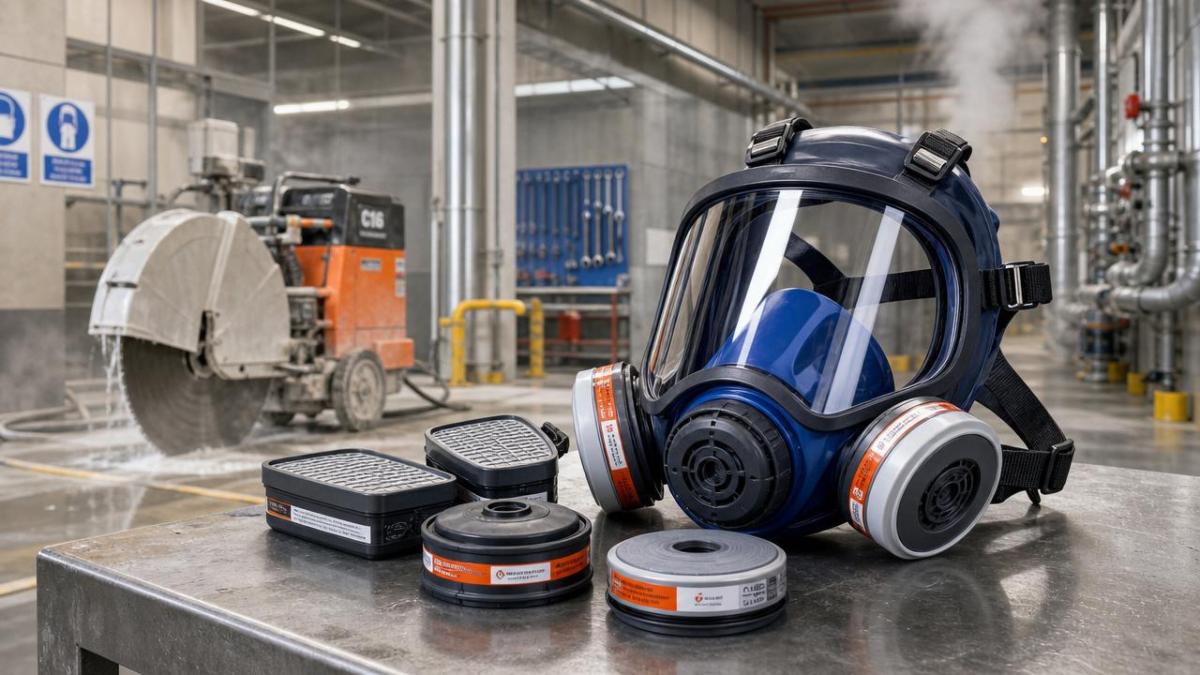
Full-face respirators rarely fail because the shell looks weak. They fail when fit, seal, and filter decisions drift away from the jobsite reality.
That gap matters across construction, plant maintenance, utilities, transport hubs, and smart-city infrastructure projects where airborne hazards change by task, shift, and weather.
In the SHSS view of industrial safety, PPE is the final physical barrier. It has to work with the same precision expected from secure access systems and high-strength hardware.
For that reason, choosing full-face respirators is never only about product specifications. It is about how people move, breathe, communicate, and maintain gear under pressure.
The most common mistakes are not dramatic. A loose strap, an outdated cartridge, or a poor lens-cleaning routine can quietly reduce protection before anyone notices.
Actual job conditions change what “good fit” really means
A good seal in a training room does not guarantee a good seal on a windy scaffold, inside a pump room, or during a long tunnel inspection.
Full-face respirators must match face shape, head movement, temperature, sweating, and task duration. Those factors vary more than many inspection checklists admit.
In abrasive cutting zones, workers often look up, bend forward, and rotate quickly. That motion can shift the facepiece and break the seal at the jawline.
In chemical transfer areas, movement may be slower, but exposure risk can be higher because vapors stay present for longer periods. Comfort then affects compliance and wear time.
One frequent misjudgment is assuming similar jobs need identical respirator settings. Dust-heavy demolition and solvent cleaning may both seem routine, yet the fit pressure and filter logic differ.
Why field fit checks often miss the real problem
Many teams confirm only whether full-face respirators can be worn, not whether they remain sealed during the hardest moments of the task.
A proper assessment should include speech, climbing, kneeling, repeated turning, and expected tool vibration. Without that, the mask passes inspection but fails in use.
This is especially important where brushless power tools increase productivity. Faster cutting or grinding often means heavier particle loading and more body movement at the same time.
Filter mistakes usually begin with hazard oversimplification
The biggest filter error is treating airborne risk as one category. In reality, dust, oil mist, acid gas, organic vapor, and mixed contaminants require different responses.
Full-face respirators protect only when the cartridge or filter media matches the actual hazard profile. A comfortable mask with the wrong cartridge is still a weak control measure.
Confusion often appears during mixed operations. For example, surface preparation may create particulates first, while nearby coating or cleaning adds vapor exposure later in the shift.
Another overlooked issue is breakthrough timing. A filter can still look clean while adsorption capacity is already declining under heat, humidity, or sustained concentration peaks.
The practical lesson is simple. Full-face respirators need a hazard map, not just a warehouse label.
Different environments push different failure points
Open construction sites usually stress fit stability. Indoor industrial spaces more often stress filter selection, visibility, and replacement timing.
In infrastructure repair, emergency speed can override inspection discipline. Full-face respirators are grabbed quickly, but cartridge dating and valve checks get skipped.
In smart facilities, another challenge appears. People move between controlled indoor zones and outdoor service areas, so one respirator setup may not stay appropriate all day.
That matters in modern sites where lighting, access control, ventilation, and PPE protocols are increasingly connected. Safety performance becomes a system issue, not a single item issue.
Construction and abrasive work
Here, full-face respirators need stable sealing under vibration and high respiration rates. Filter loading can rise quickly, especially with silica and fine mineral dust.
A common mistake is tightening straps excessively to compensate for movement. That often creates discomfort, face fatigue, and eventual loosening during the shift.
Chemical handling and maintenance shutdowns
These scenarios demand careful cartridge compatibility and replacement rules. Workers may not feel immediate irritation even when the selected filter is not suitable.
The hidden risk is overconfidence. Because full-face respirators cover the eyes and face, users often assume they are protected from every airborne threat present.
Municipal, utility, and transport operations
These jobs combine unpredictable exposures with long equipment storage intervals. Seals, valves, and cartridges may degrade before the next incident response.
The challenge is not only selection. Readiness verification becomes just as important as the respirator model itself.
What gets overlooked during inspection and maintenance
Many inspection routines focus on visible damage, but the more costly errors are often less obvious. They appear in storage, cleaning, and replacement discipline.
- Using the right full-face respirators with expired or undocumented cartridges.
- Cleaning the lens with aggressive chemicals that reduce visibility over time.
- Ignoring facial changes caused by weight fluctuation, dental work, or new eyewear inserts.
- Storing masks near heat, oils, or sunlight that slowly harden sealing surfaces.
- Assuming one annual fit test is enough for high-turnover or high-task-variation teams.
In real operations, these issues compound. A slightly warped seal plus a partially spent cartridge can turn routine work into unmanaged exposure.
This is why SHSS often frames PPE performance like other critical hardware systems. Reliability depends on inspection discipline, compatibility, and documented change control.
A more useful way to compare full-face respirators by scenario
Instead of asking which full-face respirators are best in general, compare them against task movement, contaminant type, wear duration, and maintenance capacity.
This comparison method reduces a common mistake: buying around headline performance while ignoring the site’s ability to keep that performance consistent.
Before the next deployment, tighten the judgment standard
Full-face respirators earn their value when the selection process reflects real exposure patterns, not assumed ones. Fit and filter mistakes are rarely random.
They usually come from treating dynamic work as static, or from assuming similar tasks create similar respiratory risks. In practice, small differences change the protection strategy.
A stronger next step is to review where full-face respirators are used, map motion and contaminant changes by task, and confirm replacement rules against field conditions.
It also helps to align PPE checks with wider safety systems, especially in advanced facilities where tools, access, lighting, and maintenance schedules already rely on disciplined data.
When full-face respirators are judged by scenario, maintained by evidence, and matched to actual hazards, they remain what they should be: the last reliable barrier, not a hidden weak point.
Recommended News