
Search News
Industry Portal
Hot Articles
Rio Summit Puts AI Governance and Smart Lighting in Focus
Time
Click Count
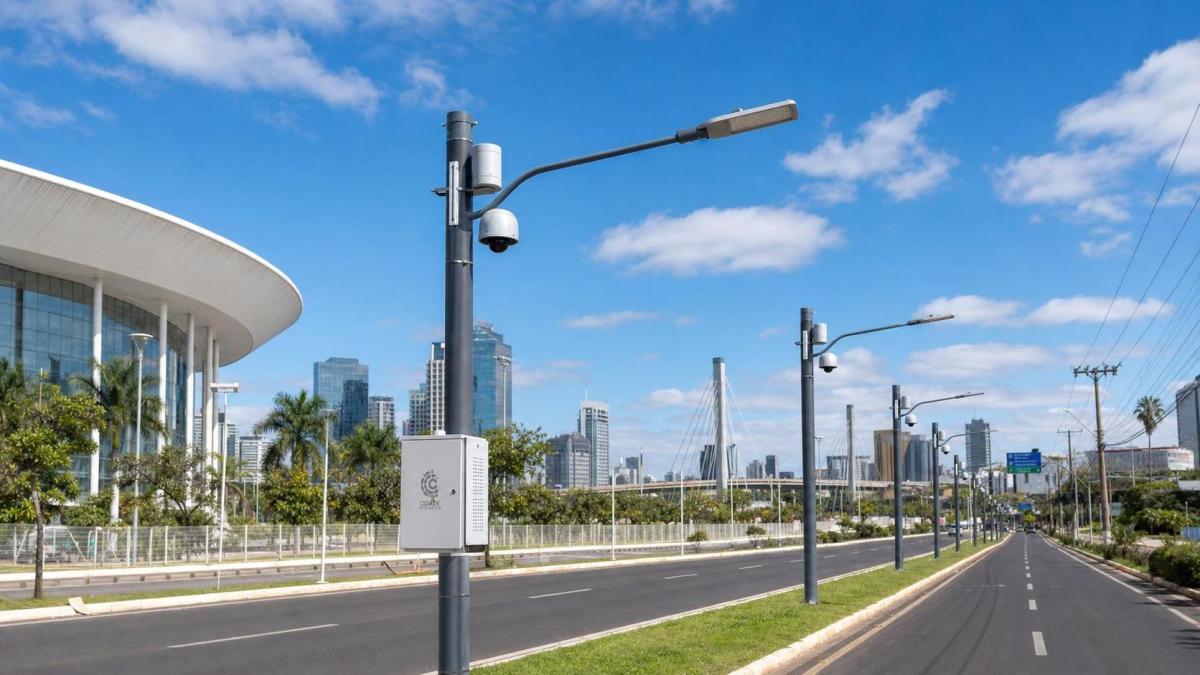
At the Rio Web Summit held from June 8 to 11, 2026, Brazil signaled that AI governance is moving closer to infrastructure execution: the country plans to invest BRL 23 billion in AI and supercomputing capacity by 2028, while also opening the door for Chinese companies to participate in the Rio AI City initiative. For companies involved in municipal IoT, smart lighting, embedded software, certification, and cross-border project delivery, the more immediate point of attention is that Smart Street Lighting IoT has been named among the first cooperation areas, linking policy discussion to concrete technical and operational requirements.
What the Rio announcement clearly establishes
Confirmed information from the event shows three points. First, the 2026 Rio Web Summit placed AI governance at the center of discussion during the June 8 to 11 event window. Second, Brazil stated a plan to invest BRL 23 billion by 2028 to build domestic AI and supercomputing infrastructure. Third, Chinese companies were explicitly welcomed to take part in the construction of the Rio AI City initiative.
The announcement also identified Smart Street Lighting IoT as one of the first cooperation directions. Based on the event summary provided, this creates explicit project-side requirements around compatibility with DALI and Zigbee protocols, edge AI energy-efficiency algorithms, and localized operation and maintenance APIs. For Chinese exporters, the same summary points to two practical priorities: accelerating INMETRO certification and adapting user interfaces for Portuguese-language use.
Why the impact reaches beyond smart poles and lamps
For product exporters, compliance moves closer to the front of the sales cycle
From an industry perspective, exporters of smart lighting hardware and connected control systems may be affected first because the cooperation direction is already tied to technical compatibility and local market access conditions. The impact is likely to show up in pre-sales qualification, tender response readiness, product documentation, and deployment planning rather than only in shipment volume. What deserves closer attention is whether product lines already align with DALI/Zigbee interoperability expectations and whether certification timelines can support municipal procurement schedules.
For software and platform providers, localization becomes part of deliverability
Companies offering lighting control platforms, edge intelligence modules, or operations software may see the strongest pressure in interfaces and service architecture. The summary indicates hard requirements around localized operation and maintenance APIs and Portuguese UI adaptation, which means software readiness may matter alongside device performance. In practice, this can affect integration work, maintenance workflows, field support coordination, and customer acceptance.
For project integrators and service partners, execution capability matters as much as equipment supply
System integrators, local delivery partners, and after-sales service providers may be affected because Smart Street Lighting IoT projects in municipal settings usually depend on coordination across hardware, communications, control software, and maintenance processes. Analysis shows that the commercial opportunity, as framed by this announcement, is not limited to supplying devices; it also depends on whether suppliers can support local deployment logic, interface adaptation, and operating continuity.
What companies should watch now
Separate policy openness from project readiness
It is important to distinguish between a welcoming policy signal and an already finalized project pipeline. The event summary confirms openness to Chinese participation and identifies a first cooperation area, but companies should still track how future official wording, implementation rules, and project requirements evolve before treating the signal as a fully defined order flow.
Prioritize certification and protocol alignment early
For companies already targeting Latin American municipal business, INMETRO certification and protocol compatibility should move forward as early-stage tasks rather than late-stage adjustments. Observably, if DALI/Zigbee support and certification readiness are incomplete, supplier discussions may slow down before commercial terms are even reached.
Prepare Portuguese-facing delivery assets, not only translated screens
Portuguese UI adaptation should be understood as part of service usability, not just a translation exercise. Companies may need to review device interfaces, maintenance dashboards, operator workflows, and API-facing documentation so that localized operation and maintenance can function in real project settings.
Reassess where edge AI creates practical value
The mention of edge AI energy-efficiency algorithms suggests that efficiency logic may become part of project evaluation. Analysis shows that companies should pay attention to how their control strategies, local processing functions, and maintenance logic are presented, especially if procurement discussions begin to compare not only hardware compatibility but also operational performance at the edge.
How this signal is best understood at this stage
Analysis shows that this development is better read as a structured early signal than as a completed market outcome. The reason is that the event already connects public-sector AI strategy with a named implementation area, which gives companies a clearer view of where technical requirements may tighten first. At the same time, the currently confirmed information does not yet establish specific procurement volumes, finalized project scopes, or detailed execution rules.
From an industry perspective, the value of this news lies in how it narrows the field of preparation. Instead of treating AI infrastructure as an abstract policy topic, relevant suppliers can now focus on a smaller set of practical items: protocol compatibility, edge-side efficiency capability, certification readiness, and localized service interfaces. That makes the announcement more actionable than a general policy statement, while still requiring continued verification.
What the market can take from the announcement
The Rio summit message matters because it links AI governance, national infrastructure investment, and municipal IoT cooperation within the same policy window. For businesses, the clearest takeaway is not that demand has already crystallized, but that future participation may increasingly depend on technical compliance and delivery localization rather than price or product claims alone.
It is more appropriate to understand this as a medium- to long-term directional signal with near-term operational implications. Companies that are relevant to smart street lighting, embedded controls, edge AI, and municipal digital infrastructure have a reason to prepare now, while still monitoring how official requirements and project mechanisms develop.
Basis of this article and what still needs verification
This article is based on the user-provided news title, event date, and event summary. The confirmed factual layer used here comes from the stated timeframe of June 8 to 11, 2026, the announced BRL 23 billion plan for AI and supercomputing infrastructure by 2028, the invitation for Chinese companies to join the Rio AI City initiative, and the identification of Smart Street Lighting IoT as a first-round cooperation area.
For this type of industry update, relevant source categories would normally include official event statements, government announcements, company disclosures, industry association materials, authoritative media reporting, and standard-related documentation. A specific official source link was not provided in the input, so further verification remains necessary. The next areas to monitor are any follow-up official wording on implementation, technical requirement clarification, certification expectations, and procurement-related project details.
Recommended News