
Search News
Industry Portal
Hot Articles
EU Requires EN 62443-4-1 for Street Light IoT Gateways
Time
Click Count
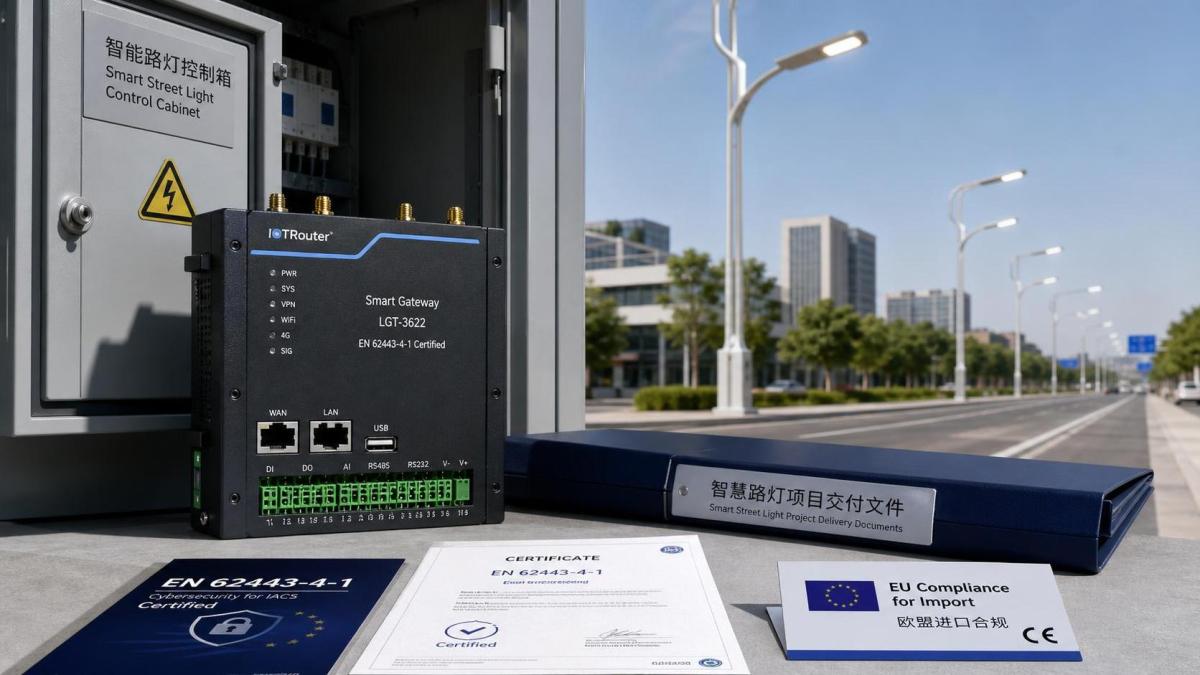
From August 1, 2026, the EU has made IEC/EN 62443-4-1 a mandatory import condition for smart street lighting IoT gateway products entering its market. The immediate point of attention is not only product access, but also procurement screening and delivery risk across exporters, overseas distributors, municipal EPC contractors, and system integrators, because devices without the required certification may be denied customs clearance or face substantial penalties.
What Has Officially Taken Effect
The confirmed change is clear: starting on August 1, 2026, the EU formally requires smart street lighting IoT gateway devices imported into the EU market to complete security development lifecycle certification under IEC/EN 62443-4-1 and undergo third-party assessment. This requirement directly affects the compliance route for Smart Street Lighting IoT products intended for export to the EU. According to the provided information, products that do not obtain the required certification may be refused customs clearance or be exposed to high fines.
Where the Immediate Business Impact Appears
Export-facing manufacturers and trading companies
From an industry perspective, this group is affected first because EU market entry now depends on whether the product has completed the required certification path. The main pressure point is no longer only product shipment, but the ability to demonstrate that the relevant security development lifecycle requirement and third-party evaluation have been completed. What deserves closer attention is whether current export models, quotations, and delivery commitments still align with the new compliance condition.
Distributors handling overseas channel decisions
For overseas distributors, the issue moves directly into supplier selection and transaction risk control. The provided information specifically indicates that procurement decisions should immediately verify supplier certification status. In practice, the affected business link is front-end sourcing and order confirmation, because uncertified products may create customs and penalty exposure after purchase decisions have already been made.
Municipal EPC contractors and system integrators
Municipal EPC contractors and system integrators are likely to face impact at the project delivery level. Analysis shows that where smart street lighting gateway devices are part of a broader project scope, supplier compliance status may affect procurement timing, equipment acceptance, and import-related delivery arrangements. The practical concern is whether the selected gateway supplier can support project implementation without introducing compliance-related interruption.
What Companies Should Check Now
Confirm certification status before procurement commitments
The most immediate task is to verify whether suppliers of smart street lighting IoT gateways have completed the required IEC/EN 62443-4-1 security development lifecycle certification and third-party assessment. This is especially relevant for buyers, distributors, and project contractors making near-term sourcing decisions linked to the EU market.
Review documents tied to customs and transaction execution
Observably, the risk described in the provided information is not abstract. It is connected to customs clearance rejection and potential fines. Companies involved in export, distribution, or project delivery should therefore pay close attention to whether certification-related supporting documents are available, current, and usable in actual import and procurement processes.
Separate policy wording from operational readiness
What deserves closer attention is the difference between knowing the rule exists and being ready to transact under it. A supplier statement alone may not be enough for procurement confidence if the required certification and assessment status cannot be clearly checked. For commercial teams and project teams, this is now a due diligence issue rather than a later-stage legal formality.
Prepare for supplier communication and delivery planning
Where deliveries to the EU are ongoing or under negotiation, companies should focus on supplier communication, order timing, and contingency planning. Analysis shows that the key practical question is whether certification status has already been incorporated into delivery schedules and contract discussions, particularly for projects that depend on imported gateway hardware.
How This News Is Best Understood
Analysis shows that this is better understood as an active compliance threshold than as a general policy signal. The rule has already taken effect as of the stated date, and the consequence described in the source information is tied to market access and customs outcomes. At the same time, it is also a longer-term signal for the Smart Street Lighting IoT segment, because procurement behavior is now being shaped by security development process certification, not only by device function or price.
Observably, the current significance lies in the shift from awareness to verification. For affected market participants, the question is no longer whether this requirement matters, but where it enters the transaction chain first: supplier qualification, import preparation, or project procurement approval.
A Practical Reading of the Current Situation
The industry meaning of this update is straightforward: for smart street lighting IoT gateways entering the EU, certification under IEC/EN 62443-4-1 has become a real access condition from August 1, 2026. It is more appropriate to understand this development as an immediate operational requirement with broader long-term implications for supplier selection and procurement discipline. The near-term focus should remain on certification verification, transaction readiness, and delivery risk, while the broader market response still merits continued observation.
Basis of This Article and Ongoing Verification
This article is based on the user-provided news title, event date, and event summary. For this type of industry update, commonly relevant source categories may include official announcements, company statements, industry association information, authoritative media reporting, and standard organization documents. No specific official source link was provided in the input, so continued verification remains necessary. Follow-up attention should remain on any further official wording, implementation clarification, and how procurement and import-side checks are carried out in practice.
Recommended News