
Search News
Industry Portal
Hot Articles
EU Enforces EN 62443-4-1 for Street Light IoT Gateways
Time
Click Count
From August 1, 2026, the EU has made IEC/EN 62443-4-1:2025 a mandatory requirement for smart street lighting IoT gateway devices imported into the bloc. In practice, this means affected products must complete a third-party assessment of their secure development lifecycle and obtain certification before customs clearance. For manufacturers exporting to Europe, especially suppliers in China, the development is worth close attention because it reaches beyond product documentation and directly touches shipment timing, customs access, and the continued validity of CE-related market entry arrangements.
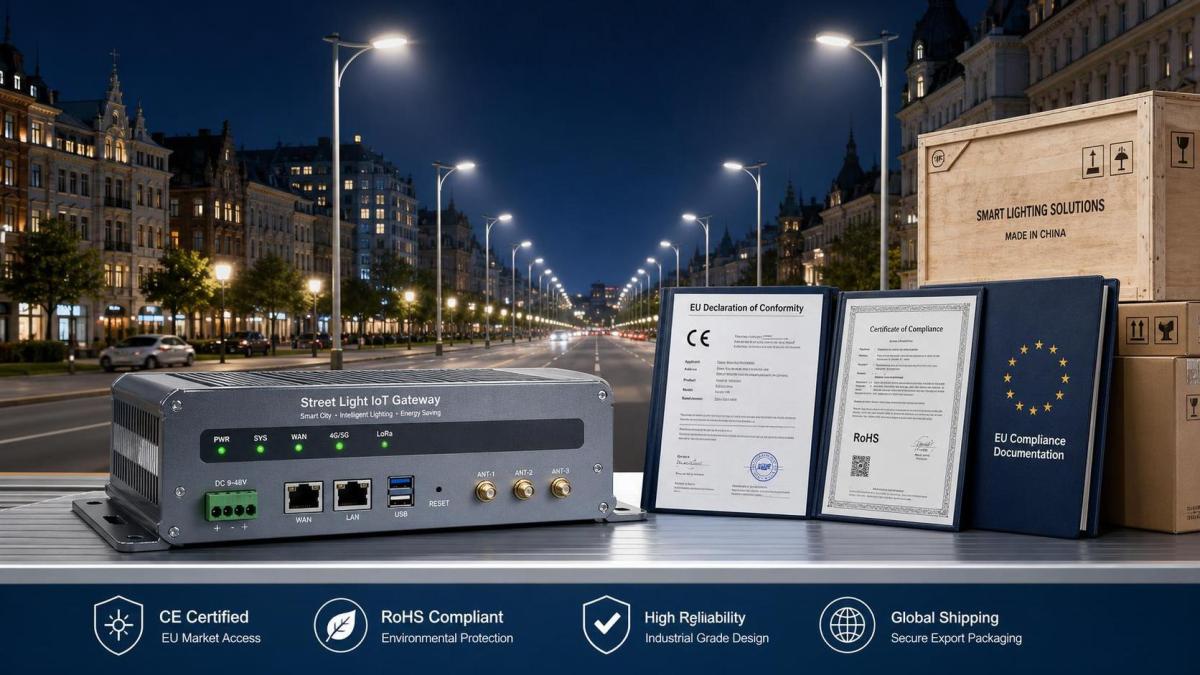
What Has Taken Effect on August 1
The confirmed change is that, as of August 1, 2026, the EU formally requires smart street lighting IoT gateway devices imported into the region to comply with IEC/EN 62443-4-1:2025 through a certified assessment process. The requirement specifically involves a secure development lifecycle compliance evaluation conducted by a third-party certification body, with examples including TÜV Rheinland and DEKRA.
The consequence described in the available information is direct: products that do not obtain the required certificate may be denied entry by customs. The same information also indicates that the rule affects export delivery schedules for Chinese manufacturers and may have implications for the effectiveness of CE marking. Uncertified goods may face return or confiscation risk.
Where the Immediate Pressure Appears in the Supply Chain
Export manufacturers face a compliance-to-delivery gap
From an industry perspective, manufacturers are the first group likely to feel the effect because the requirement is tied to import clearance rather than a later market-stage review. The operational impact is likely to show up in certification preparation, shipment scheduling, and customer delivery commitments. What deserves closer attention is whether existing project timelines assumed customs access based only on prior documentation and whether those assumptions now need to be revised.
Trading companies and channel partners must recheck shipment readiness
Companies handling export transactions or channel distribution may also be affected because customs clearance risk can interrupt the movement of goods even when contracts and production are already in place. Analysis shows that their focus is less on product design itself and more on verifying whether the required certificate is in hand before dispatch, and whether shipment documentation aligns with the new requirement.
Buyers and project-side procurement teams may face delivery uncertainty
Procurement teams sourcing smart street lighting IoT gateway products for EU-bound projects may need to pay closer attention to certification status during vendor selection and delivery planning. Observably, the main concern here is execution risk: if certification is incomplete, delays, returns, or seizure risk can affect procurement schedules and downstream installation planning.
Supply chain service providers may need tighter document control
Logistics and supply chain service providers connected to EU-bound shipments are also part of the practical impact zone. Their exposure is tied to customs handling and document completeness. Analysis shows that the key issue is not only transport execution, but whether the shipment package includes proof that the required third-party assessment and certificate have already been secured.
What Companies Should Watch Now
Whether certification has been built into export lead times
The available information already points to delivery-cycle pressure. For that reason, companies involved in EU shipments should pay close attention to whether certification timing has been incorporated into production and dispatch plans, rather than treated as a parallel formality.
Whether product scope and market scope are being checked accurately
The requirement described here applies to smart street lighting IoT gateway devices imported into the EU. In practical terms, firms should carefully confirm whether the products they classify for shipment fall within that scope and whether the destination market triggers the mandatory requirement at customs.
Whether supplier qualifications and documents can withstand customs review
What deserves closer attention is the readiness of compliance records. Where shipments rely on external manufacturers, OEM partners, or component-integrated delivery models, companies should confirm that the relevant third-party certificate has actually been obtained and can be matched to the goods being shipped.
Whether customer communication and fallback plans are in place
Because the stated risks include refusal of entry, returns, and confiscation, firms with active EU orders should consider how they communicate certification status, delivery timing, and contingency arrangements with customers. This is not a prediction of disruption in every case; it is a practical response to the specific enforcement condition described in the source information.
Why This Looks Like More Than a Short-Term Customs Issue
Analysis shows that this development is better understood as an already effective compliance condition, not merely an early policy signal. The reason is straightforward: the available information links the requirement to customs access and certificate possession, which means the issue has moved from discussion into execution.
At the same time, it is more appropriate to understand this as a compliance signal with continuing implications rather than a fully settled endpoint for the wider market. The confirmed facts establish the rule and the immediate risks, but companies will still need to observe how certification practice, document review, and customer requirements develop around it.
How to Read the Development at This Stage
At this stage, the industry significance lies in the fact that secure development lifecycle certification for smart street lighting IoT gateways has become a practical condition of EU market access for the affected imports. The immediate meaning is operational: certification status can now influence whether goods clear customs, whether deliveries proceed on time, and whether existing export assumptions remain valid.
On that basis, it is more appropriate to understand this development as a concrete compliance change with longer-term signaling value. It does not by itself prove broader outcomes beyond the products and process described here, but it clearly raises the importance of certification readiness in EU-bound IoT gateway trade.
Basis of This Article and What Still Needs Verification
This article is based on the user-provided news title, event date, and event summary. It has not introduced unverified market data, company cases, project details, or source links beyond the information supplied.
For this type of development, commonly relevant source categories would include official notices, company announcements, industry association updates, authoritative media reporting, and standard organization documents. A specific official source link was not provided in the input, so continued verification remains necessary. Follow-up attention should focus on any further official wording, implementation clarification, and related customs or certification practice affecting EU-bound smart street lighting IoT gateway shipments.
Recommended News