
Search News
Industry Portal
Hot Articles
EU CE Rule Takes Effect for Smart Lighting IoT Gateways
Time
Click Count
On August 1, 2026, a new CE-related compliance requirement took effect in the EU market for smart street lighting IoT gateways. Under the now-mandatory IEC/EN 62443-4-1 standard, products in this category must complete secure development lifecycle certification and obtain a conformity declaration issued by a third-party body before they can clear customs. For companies involved in exporting, sourcing, certifying, or delivering Smart Street Lighting IoT systems, this is worth close attention because the change reaches beyond product design and directly affects shipment readiness and customs acceptance.
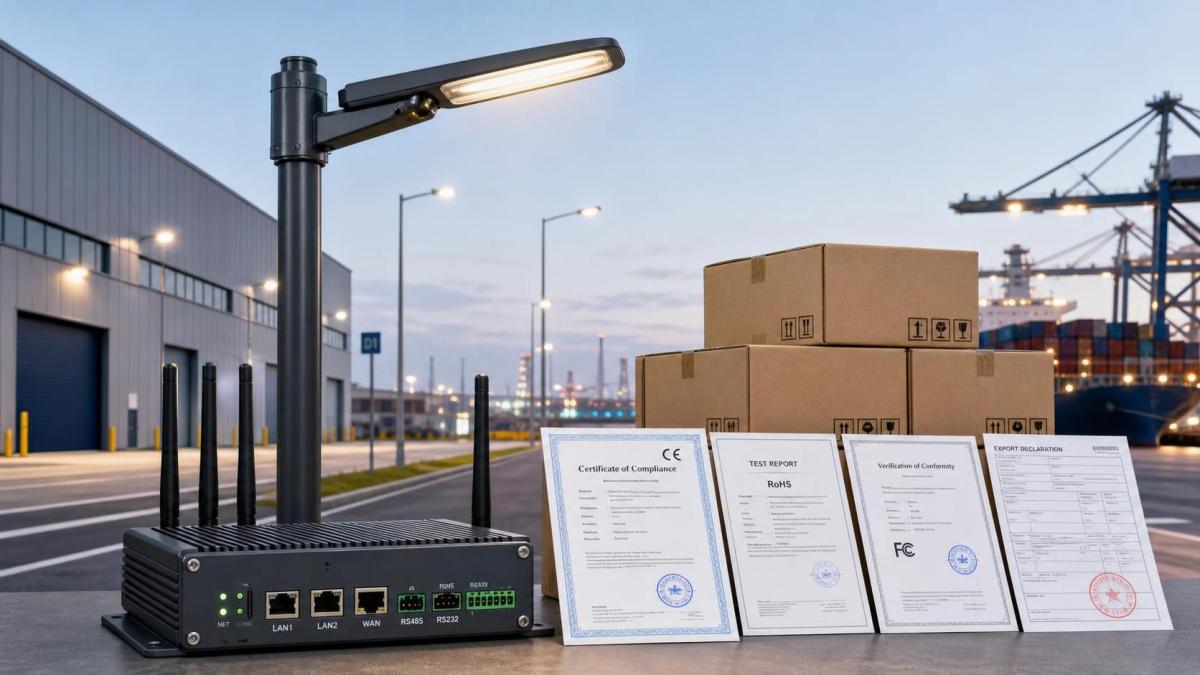
What the Rule Now Requires at the Border
The confirmed change is clear. From August 1, 2026, the EU formally made IEC/EN 62443-4-1 mandatory for smart street lighting IoT gateway devices entering the EU market. The requirement is tied to secure development lifecycle certification, and products must also carry a conformity declaration issued by a third-party organization. The change directly affects key components used in Smart Street Lighting IoT systems supplied to the EU by Chinese exporters. Products that do not obtain the required certification may be refused by customs or returned.
Where the Pressure Will Appear First in the Supply Chain
Export shipments face an immediate document and clearance risk
From an industry perspective, exporters of smart street lighting IoT gateways are likely to feel the effect first because the new requirement is connected to customs clearance. The practical impact is not limited to product eligibility in principle; it extends to whether a shipment can move across the border as planned. What deserves closer attention is the status of certification documents, conformity declarations, and the consistency between product scope and shipment materials before dispatch.
System integrators and project suppliers may need to revisit delivery assumptions
Companies delivering Smart Street Lighting IoT systems may also be affected where the gateway functions as a critical component of the overall system. Even when the broader project remains unchanged, a compliance issue on the gateway can interrupt delivery sequencing, acceptance arrangements, or procurement timing. Observably, this makes component-level compliance a live issue for project execution, not just a matter for final product paperwork.
Procurement teams will need to look beyond price and lead time
For procurement functions, the rule change raises the importance of supplier qualification and certification readiness. Buyers sourcing for EU-facing projects may need to verify whether gateway suppliers have completed the required secure development lifecycle certification and whether a valid third-party conformity declaration is available for the specific product involved. The main change here is that procurement review may need to account for compliance status earlier, rather than treating it as a final shipping formality.
Certification and testing service providers may see a shift in client priorities
Certification-related service providers are also connected to this development because compliance is now a condition tied to market entry for the affected product category. Analysis shows that enterprises will likely pay closer attention to how certification scope, supporting documents, and review procedures align with actual export products and delivery schedules. This does not confirm any specific execution pattern beyond the stated rule, but it does indicate where compliance work may become more time-sensitive.
What Companies Should Review Now
Check whether the affected product scope is already mapped internally
Companies supplying smart street lighting IoT gateways into the EU market should first confirm whether the products they ship fall within the requirement described in this update. The key point is to align internal product classification, export documentation, and customer-facing descriptions with the product scope actually subject to the rule.
Review certification status against shipment planning
Because customs refusal or return is explicitly tied to products without the required certification, companies should compare certification readiness with current and upcoming delivery schedules. Analysis shows this is especially relevant where production, sales, and shipping teams work on different timelines and may otherwise assume that compliance can be handled late in the process.
Recheck technical and tender documentation used in EU-facing business
What deserves closer attention is whether technical files, bid documents, product compliance materials, and contract attachments reflect the new requirement in a consistent way. If the commercial or technical documents used in tenders and project supply still rely on older assumptions, the gap may surface later in customs handling or customer review.
Follow later execution language rather than assuming all details are settled
The confirmed fact is that the requirement is mandatory from the stated date and that uncertified products may be refused or returned. Beyond that, companies should continue monitoring any later official wording, market-side execution language, or document expectations relevant to certification presentation and acceptance. The current information supports immediate compliance attention, but not broad assumptions about every procedural detail.
Why This Looks More Like an Execution Signal Than a Distant Policy Trend
Observably, this update is better understood as a rule that has already moved into the execution stage, not as a preliminary policy discussion. The reason is straightforward: the requirement is tied to customs clearance, and the consequence for non-compliant goods is described in operational terms. At the same time, analysis shows it is still too early to treat all market responses as settled. Industry participants should continue watching how certification expectations appear in procurement documents, project specifications, and routine shipment review.
How the Market Should Read This Development
It is more appropriate to understand this development as an implemented compliance threshold for a specific category of smart street lighting IoT equipment entering the EU market. The immediate significance lies in trade execution and delivery control rather than in abstract policy signaling. For exporters, buyers, and project suppliers, the practical message is that certification status now has a direct bearing on whether goods can move as planned. Any broader assessment of market impact should remain cautious until further execution feedback becomes visible.
Basis of This Article and What Still Needs Verification
This article is based on the user-provided news title, event date, and event summary. For developments of this type, relevant source categories often include official announcements, regulator releases, customs or trade authority notices, industry association updates, standards organization documents, and reporting by established media. No specific official source link was provided in the input, so the exact official publication trail still needs to be verified on an ongoing basis. Further observation should focus on detailed policy wording, certification application in practice, tender document changes, market feedback, and how affected companies are implementing the requirement in actual export and delivery workflows.
Recommended News