
Search News
Industry Portal
Hot Articles
Physical Access Control Gaps That Increase Security Risk in Multi-Site Facilities
Time
Click Count
Where physical access control risk quietly grows across multiple sites
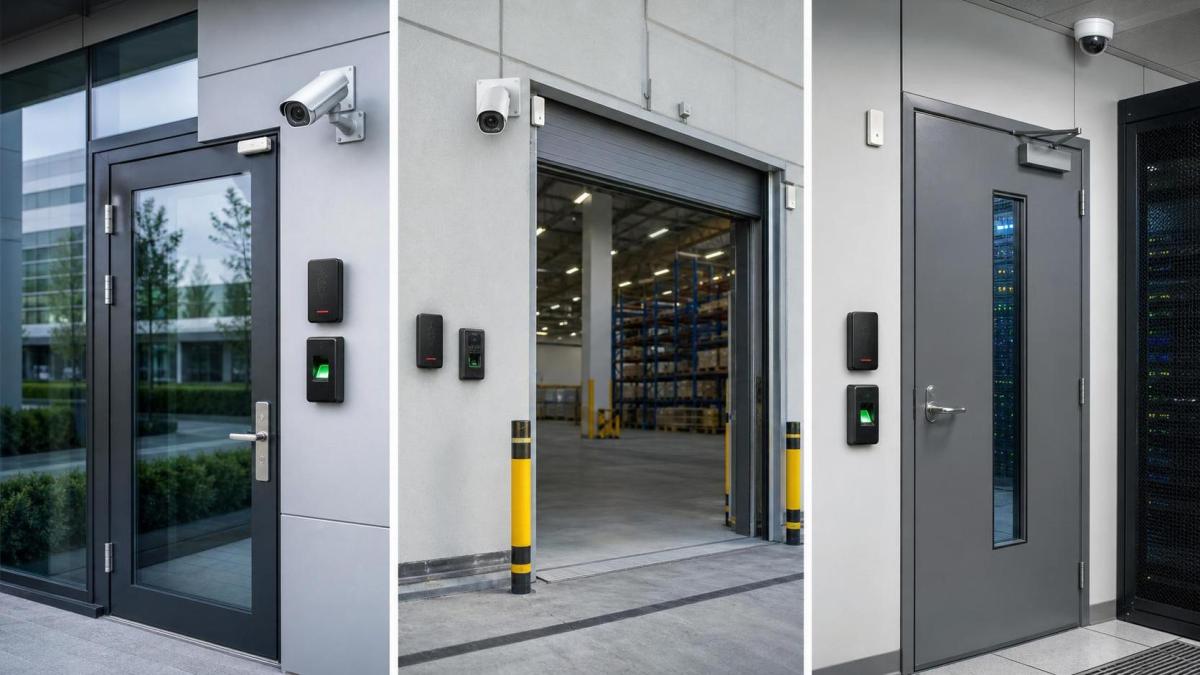
In distributed facilities, physical access control rarely fails through one dramatic breach. Risk usually builds through small inconsistencies between entrances, schedules, credential rules, and maintenance practices.
A warehouse annex may still use aging readers. A regional office may share temporary badges too freely. A data room may have strong locks but weak audit trails.
That unevenness matters because multi-site operations depend on predictable security behavior. When one location treats physical access control differently, the weakest site often sets the practical security standard.
SHSS has long tracked this intersection of mechanical integrity, biometric security, and operational resilience. In practice, the problem is rarely technology alone. It is the mismatch between site conditions and security design.
The more diverse the portfolio, the more important it becomes to judge physical access control by actual usage patterns, not by a single corporate specification sheet.
Why the same physical access control policy works differently by site
Different facilities create different exposure paths. A logistics yard, medical lab, smart office, and municipal operations center may all use door credentials, yet their risk profile is not comparable.
Foot traffic intensity changes the tolerance for friction. Environmental conditions change hardware reliability. Contractor turnover changes credential lifecycle risk. Compliance exposure changes retention and reporting requirements.
More importantly, entry points are not equal. A front lobby, loading dock, rooftop access hatch, and server enclosure each require a different physical access control judgment.
In real operations, stronger control at a headline entrance does not offset weak side doors, unsecured cabinets, or disconnected visitor logs.
A practical way to compare site conditions
Before standardizing any upgrade, compare facilities through operational variables rather than building type alone.
When offices, plants, and mixed-use campuses need different controls
Office environments often focus on convenience first. That is reasonable until shared entries, flexible seating, and mobile credentials start obscuring who actually entered restricted areas.
In these settings, physical access control should emphasize granular permissions, elevator integration, and reliable visitor escort logic. The issue is less forced entry than quiet over-permission.
Industrial plants usually face the opposite problem. Throughput pressure leads teams to prop doors open, bypass damaged closers, or tolerate badge-sharing during shift changes.
Here, physical access control must work with the reality of gloves, dust, vibration, and fast movement. Reader speed, door position monitoring, and ruggedized hardware matter as much as identity policy.
Mixed-use campuses introduce another layer. Public access, delivery routes, contractors, and secure operational rooms coexist. A single rule set usually becomes either too loose or too disruptive.
The better approach is tiered zoning. Public circulation, staff-only areas, critical rooms, and emergency routes need separate physical access control logic, even within one address.
The common weak points are usually not the main lobby
Security reviews often start with front entrances because they are visible. Yet recurring physical access control gaps usually appear in side doors, freight entrances, stairwells, and internal partitions.
Loading areas are a common example. They need speed, vehicle coordination, and temporary access. Without disciplined zone separation, one credential can unintentionally open both goods flow and secure rooms.
Remote utility spaces create another blind spot. Pump rooms, telecom closets, rooftop equipment areas, and lighting control cabinets are often treated as low-priority doors.
That assumption is risky. In smart facilities, these spaces connect to core operations. Weak physical access control there can expose network equipment, energy systems, and safety infrastructure.
Facilities influenced by SHSS-covered technologies often illustrate this clearly. Smart lighting gateways, biometric edge devices, and connected industrial tools all create valuable physical touchpoints that deserve controlled access.
Warning signs worth treating seriously
- Door hardware replacement cycles vary sharply between sites.
- Temporary badges remain active beyond project completion.
- Access logs exist, but nobody reconciles anomalies.
- Critical rooms use stronger policy on paper than at the doorway.
- Legacy readers cannot support newer credential standards or biometrics.
Biometrics, mobile credentials, and legacy badges do not solve the same problem
A frequent mistake is treating every credential technology as a direct substitute. In reality, each physical access control method answers a different operational question.
Legacy cards may still work well for stable staffing and low-friction circulation. Their weakness appears when cloning risk, shared use, or delayed deactivation becomes common.
Mobile credentials improve revocation speed and user convenience, especially across multi-site portfolios. But they also depend on device policies, app adoption, battery behavior, and secure enrollment processes.
Biometric physical access control is most valuable where identity certainty matters more than speed alone. Data centers, research zones, evidence rooms, and executive security perimeters fit this profile.
Still, the decision cannot rest on recognition speed or anti-spoofing claims alone. Storage architecture, privacy law, fallback authentication, and local failure procedures matter just as much.
This is where SHSS’s security and compliance lens becomes useful. Strong biometric security only adds value when legal handling, edge processing choices, and incident traceability are designed together.
What multi-site teams often misjudge before rollout
One common misjudgment is buying physical access control by feature list alone. A system may look standardized yet perform unevenly because door construction, power quality, and local maintenance capacity differ.
Another mistake is focusing on acquisition cost while ignoring service burden. Cheap readers, weak locks, or incompatible controllers can raise labor costs for years.
There is also a planning gap between mechanical and digital layers. High-security readers cannot compensate for misaligned strikes, poor fasteners, warped frames, or failing closers.
That mechanical detail is often overlooked in security discussions, although it directly affects forced-entry resistance and uptime. Physical access control is only as trustworthy as the door assembly supporting it.
Finally, many portfolios underestimate audit visibility. If logs from separate sites cannot be normalized, reviewed, and linked to local events, physical access control becomes harder to govern than to install.
A more reliable way to adapt physical access control by scenario
A workable strategy starts with access tiers, not products. Define which spaces are public, managed, restricted, and mission-critical. Then assign identity strength, hardware grade, and audit depth by tier.
Next, document local exceptions. Outdoor gates, cold storage entries, clean zones, and unmanned substations should not inherit the same assumptions as office corridors.
It also helps to align physical access control with adjacent systems already shaping site behavior.
- Link access events with video for faster incident reconstruction.
- Use smart lighting data to validate occupancy patterns in low-traffic zones.
- Protect maintenance rooms containing networked building controls.
- Match emergency egress rules with local life-safety requirements.
- Set hardware inspection intervals based on actual environmental stress.
This kind of adaptation keeps standardization intact without pretending every site behaves the same way.
The next step is not more hardware, but clearer site-by-site judgment
Improving physical access control across multiple facilities usually begins with better comparison, not broader deployment. The key question is where control logic no longer matches real operational exposure.
Start by mapping entry types, credential lifecycles, mechanical weaknesses, and audit gaps at each site. Then compare which differences are justified and which are simply unmanaged drift.
From there, build a scenario-based standard covering reader technology, biometric use, door hardware, event review, and maintenance intervals. That is how physical access control becomes both stronger and easier to govern.
In multi-site environments, consistency does not mean identical equipment everywhere. It means each location meets the same security intent through controls that fit the way the site actually works.
Recommended News