
Search News
Industry Portal
Hot Articles
Cut-Resistant Clothing: EN Ratings and Real-World Limits
Time
Click Count
Cut-resistant clothing can be the last physical barrier between an operator and a serious laceration, but EN ratings are often misunderstood as absolute guarantees.
In real workplaces, blade type, force, angle, fabric wear, contamination, and garment fit can all change protection performance.
This guide explains how cut-resistant clothing ratings work, where their limits begin, and how protective apparel should match real cutting hazards.
Cut-Resistant Clothing and the Role of EN Ratings
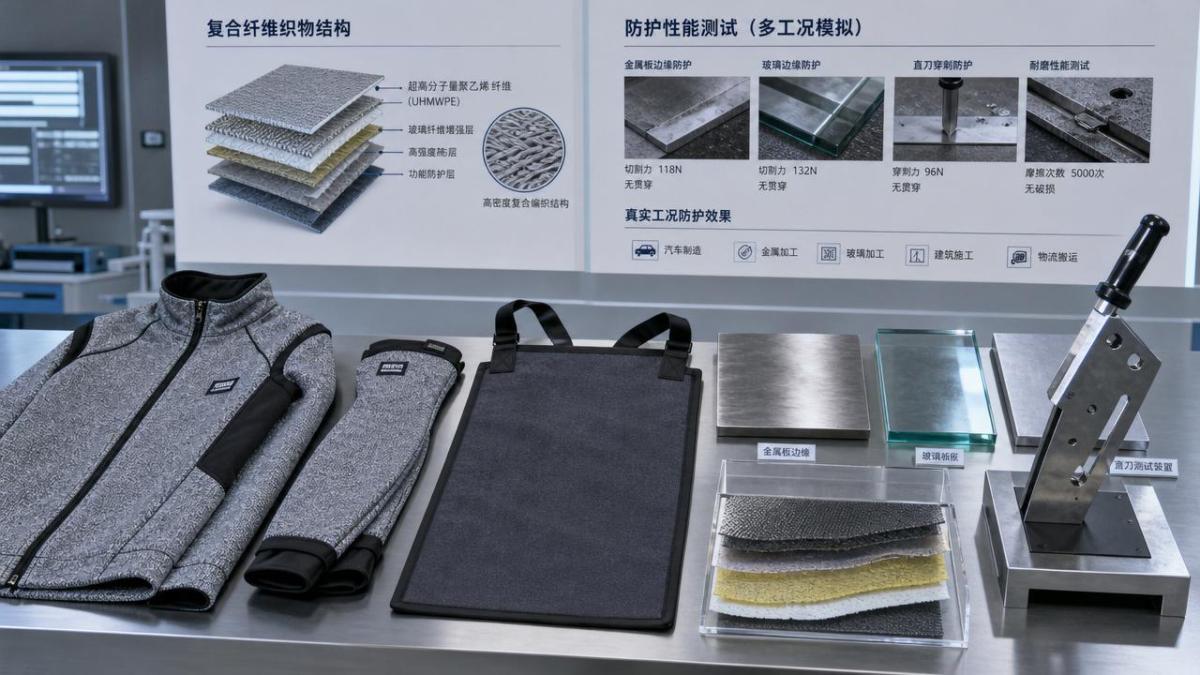
Cut-resistant clothing refers to garments designed to reduce injury from sharp edges, moving blades, glass, sheet metal, and abrasive materials.
It may include sleeves, jackets, trousers, aprons, coveralls, gloves, and layered protective panels for exposed body zones.
Common materials include para-aramid fibers, HPPE, steel yarns, glass fiber blends, nylon, polyester, and engineered composite knits.
The purpose is not to make the body blade-proof. The purpose is to delay penetration and reduce laceration severity.
EN ratings provide a controlled laboratory reference. They help compare cut-resistant clothing under repeatable test conditions.
However, a rating is not a field guarantee. It does not fully reproduce every tool, edge, posture, impact, or contamination condition.
Core EN Standards Behind Cut-Resistant Clothing
The most referenced European framework for protective apparel is EN ISO 13688, which defines general requirements for protective clothing.
It covers ergonomics, harmlessness, sizing, marking, information supplied, and compatibility with intended use.
Cut resistance is usually evaluated through specific standards depending on garment type and hazard category.
EN 388 for Mechanical Risks
EN 388 is widely known for gloves, but its cut methods strongly influence how many people understand cut-resistant clothing.
The older Coup Test used a rotating circular blade moving back and forth across the material.
For high-performance fibers, blade dulling can distort results. This led to greater emphasis on the ISO 13997 TDM method.
ISO 13997 measures the force needed for a straight blade to cut through fabric over a fixed distance.
Results are expressed from level A to F. Level F represents the highest resistance in that method.
EN 381 and Chainsaw Protection
Chainsaw protective clothing follows a different logic. EN 381 and related updates focus on chain speed resistance.
This apparel often uses clogging fibers that jam the chain mechanism. It is not the same as general cut-resistant clothing.
A chainsaw trouser may protect against one hazard yet feel unsuitable for sheet metal handling or knife processing tasks.
EN ISO 13997 and Practical Interpretation
EN ISO 13997 is valuable because it reflects straight-edge loading better than the old circular blade method.
Still, the result is produced on a flat sample under controlled settings. Real garments bend, stretch, wrinkle, and move.
Therefore, cut-resistant clothing should be selected by hazard assessment, not only by the highest available letter.
Current Industry Concerns Around Cut Protection
Advanced manufacturing, construction, logistics, recycling, food processing, and smart city maintenance all involve sharper materials and faster workflows.
As productivity rises, cut-resistant clothing becomes part of the last physical armor around human work.
SHSS views this category as a physical anchor for industrial safety, alongside smart access, tools, lighting, and high-strength hardware.
Several market signals explain why EN ratings now receive closer attention.
- More thin-gauge metals are handled in fabrication and HVAC installation.
- Battery production and glass handling create high-edge-density work zones.
- Recycling operations expose clothing to unknown blades, needles, and jagged waste.
- Lightweight PPE demand increases pressure to balance comfort and resistance.
- Audit systems require clearer documentation of cut-resistant clothing selection.
The challenge is simple: a garment that is too heavy may be avoided, modified, or worn incorrectly.
A garment that is too light may pass casual inspection yet fail under aggressive contact.
Effective cut-resistant clothing must sit between laboratory performance, task movement, thermal comfort, and realistic maintenance discipline.
Application Value Beyond the Label Number
EN ratings are useful because they create a shared language. They reduce guesswork when comparing fabrics and garment designs.
They also support compliance records, supplier evaluation, incident investigation, and replacement planning.
The strongest value appears when ratings are connected with actual hazard energy.
A low-force slicing hazard differs from a sudden impact against an exposed sheet edge.
A clean utility blade differs from a burred metal edge carrying oil, grit, and uneven pressure.
For that reason, cut-resistant clothing should be evaluated through zones of exposure.
- Forearms often face repeated contact during reaching and lifting.
- Thighs and knees face exposure during kneeling, carrying, and sorting.
- Torso protection matters around knives, glass sheets, and tool rebounds.
- Neck and shoulder areas may need attention in overhead tasks.
The business meaning is also measurable. Better cut-resistant clothing can reduce downtime, treatment costs, replacement labor, and investigation disruption.
It can also improve task consistency because workers move with greater confidence around sharp materials.
Typical Scenarios and Garment Selection Logic
Selection should begin with the cutting object, not the catalog page. Edge geometry often matters more than general material category.
A polished blade, serrated knife, broken ceramic, and stamped steel edge can behave very differently.
Layering can improve protection, but only when it preserves mobility and does not create snagging hazards.
Loose cut-resistant clothing may catch on equipment. Overly tight garments may stretch fibers and reduce effective resistance.
Fit matters because cut performance depends on fabric stability at the contact point.
Real-World Limits That EN Ratings Cannot Fully Capture
The first limit is blade condition. A fresh blade, damaged blade, or serrated edge may interact differently with the same fabric.
The second limit is force. Laboratory forces are controlled, while workplace forces change with posture, load weight, and surprise contact.
The third limit is angle. Oblique slicing can spread force, while perpendicular pressure may concentrate energy into fewer fibers.
The fourth limit is fabric aging. Washing, UV exposure, abrasion, sweat, oils, and chemicals can weaken cut-resistant clothing over time.
The fifth limit is contamination. Oil can reduce grip and alter blade travel across the garment surface.
Metal dust, glass fragments, and grinding residue can abrade protective yarns before any visible tear appears.
The sixth limit is garment design. Seams, closures, pockets, cuffs, and ventilation zones may perform differently from tested fabric panels.
Because of these variables, cut-resistant clothing should be treated as risk reduction, not a permission to increase unsafe contact.
Practical Guidance for Selecting and Managing Protection
A practical selection process should combine standards, task observation, wear trials, and documented inspection rules.
The following steps help connect cut-resistant clothing with real workplace hazards.
- Identify the sharp object, its edge type, and likely contact direction.
- Estimate contact force from material weight, body movement, and tool speed.
- Map exposed body zones during normal, awkward, and emergency movements.
- Match EN information with the most relevant test method.
- Check whether heat, flame, chemicals, or hygiene rules also apply.
- Run controlled trials before full adoption of new cut-resistant clothing.
- Set replacement triggers for holes, thinning, stiffness, contamination, or seam failure.
Documentation should record the garment standard, size range, care limits, inspection frequency, and approved task scope.
Care instructions are especially important. Incorrect washing can shrink, soften, contaminate, or degrade protective fibers.
Repairs should never be improvised with ordinary fabric unless the supplier confirms equivalent protection.
Comfort should not be dismissed. Breathability, weight, flexibility, and moisture control influence whether protection stays correctly worn.
Cut-resistant clothing also needs compatibility with gloves, helmets, harnesses, respirators, and high-visibility apparel.
A Balanced Way to Read EN Cut Ratings
A higher rating usually means stronger resistance under the specified test. It does not automatically mean better suitability.
For low-force repetitive tasks, flexibility and coverage may matter as much as the highest cut level.
For unpredictable scrap handling, broader coverage and abrasion durability may be more important than a single impressive test result.
For powered blades, chainsaws, or high-speed equipment, specialized standards and machine guarding remain essential.
Cut-resistant clothing should never replace engineering controls, safe handling methods, proper tooling, or training.
Its role is to provide a final protective layer when other controls cannot remove all sharp-edge exposure.
Next Steps for Safer Implementation
Begin with a task-based cut hazard review. Photograph sharp contact points, observe body movement, and list current injury patterns.
Then compare existing cut-resistant clothing against the relevant EN information and actual wear condition.
Where uncertainty remains, request test data, laundering guidance, and sample garments for structured field evaluation.
The most reliable protection strategy is not the highest number alone. It is the right garment for the actual edge, force, and movement.
Used this way, cut-resistant clothing becomes a disciplined safety system, not just a label sewn into fabric.
Recommended News